

Insurance is often misunderstood because policies contain technical terms, exclusions, conditions, and limitations. As a result, several common beliefs about insurance may not match how an actual policy works.
Understanding these myths can help policyholders develop a clearer idea of their coverage and avoid unrealistic expectations.
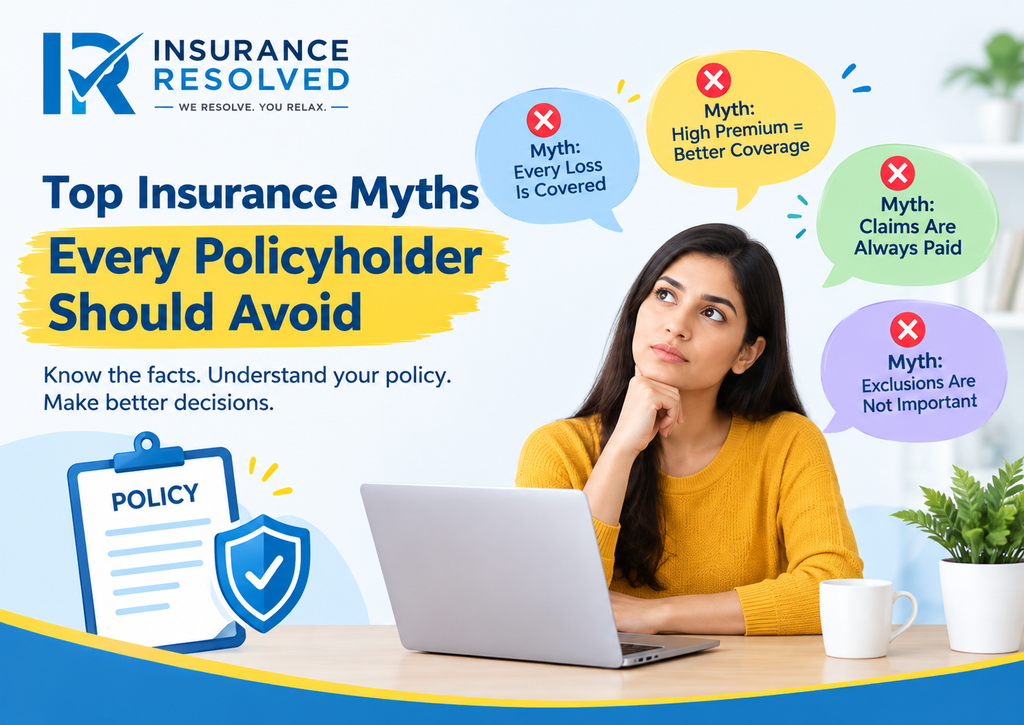
Myth: Having Insurance Means Every Loss Is Covered
Reality: Insurance coverage is limited to the risks and circumstances specified in the policy.
A policy may contain exclusions, deductibles, limits, sub-limits, and specific conditions. Therefore, having an active policy does not automatically mean that every loss will be payable.
The actual policy wording determines the scope of coverage.
Myth: A High Premium Means Better Coverage
Reality: A higher premium does not automatically mean that a policy provides broader protection.
Coverage depends on the benefits, exclusions, limits, conditions, deductibles, and other terms of the particular policy.
Two policies with different premiums may provide different types and levels of protection.
Myth: Insurance Companies Must Pay Every Claim
Reality: Insurers assess claims according to the applicable policy terms and the circumstances of the loss.
A claim may be declined if the event is outside the coverage, an exclusion applies, or another applicable policy provision affects the claim.
At the same time, a claim decision should be understood by examining the specific reason provided and the relevant policy provisions.
Myth: Claim Settlement Ratio Guarantees Your Claim Will Be Paid
Reality: Claim Settlement Ratio is a historical statistic. It does not guarantee the outcome of an individual future claim.
An individual claim depends on factors such as coverage, exclusions, policy conditions, documentation, and the circumstances of the loss.
Claim Settlement Ratio can be one useful piece of information when researching an insurer, but it does not replace reading the policy.
Myth: Everything an Agent Says Is Automatically Part of the Policy
Reality: Verbal explanations given during the sale may not always reflect the complete contractual terms.
The policy document contains important information about coverage, exclusions, conditions, limits, and other provisions.
This is why policyholders should understand the written policy rather than relying solely on verbal descriptions of benefits.
Myth: Exclusions Are Not Very Important
Reality: Exclusions are one of the most important parts of an insurance policy.
They identify situations, losses, or circumstances that may fall outside the coverage.
A policy can appear to offer extensive protection until its exclusions and limitations are examined. Understanding both the coverage and exclusions provides a more complete picture.
Myth: Once a Claim Is Filed, It Will Be Settled Quickly
Reality: Claim processing time can vary depending on the type and complexity of the claim.
Assessment may involve documents, verification, investigation, loss assessment, or other processes depending on the policy and circumstances.
A claim being under review does not by itself mean that it has been accepted or rejected.
Myth: Claim Rejection and Claim Delay Are the Same
Reality: They are different situations.
A claim delay means the claim has not yet reached a final decision or payment stage within the relevant circumstances.
A claim rejection means the insurer has declined the claim.
Understanding this difference is important when discussing an insurance concern.
Myth: A Rejected Claim Can Never Be Questioned
Reality: A claim rejection is a decision that can be examined against the applicable policy terms and the reasons communicated by the insurer.
The relevant documents, policy wording, exclusions, conditions, and circumstances of the claim can help explain whether the decision is consistent with the policy.
The outcome of any dispute depends on its specific facts and applicable rules.
Myth: Short Settlement Means the Claim Was Rejected
Reality: A short-settled claim and a rejected claim are different.
In a rejection, the insurer declines the claim.
In a short settlement, the insurer accepts the claim or part of the claim but the amount offered or paid is lower than the amount expected or claimed.
The reason for the difference should be understood from the claim assessment and applicable policy terms.
Myth: Reading the Policy Is Only Necessary When There Is a Claim
Reality: Understanding the policy before a claim arises can be equally important.
Knowing the coverage, exclusions, limits, deductibles, conditions, and important definitions can help policyholders understand what protection they actually have.
It can also help identify misunderstandings about the insurance product.
Myth: All Insurance Policies Work in the Same Way
Reality: Insurance policies can differ significantly.
Life, health, motor, property, travel, marine, commercial, and liability insurance involve different risks and contractual provisions.
Even policies within the same category can have different coverage, exclusions, limits, and conditions.
Myth: Insurance Problems Are Always the Insurer’s Fault
Reality: Insurance disputes can arise for many reasons.
There may be differences in understanding, documentation issues, policy exclusions, coverage limitations, claim assessment, communication problems, or other circumstances.
The appropriate way to understand a dispute is to examine the specific policy terms, facts, and reasons involved rather than making assumptions.
Final Thoughts
Insurance myths can create unrealistic expectations about coverage and claims. A policyholder’s understanding should be based on the actual policy document, including its coverage, exclusions, limits, conditions, and definitions.
Claim Settlement Ratio, advertisements, verbal explanations, and general assumptions can provide context, but they do not replace the terms of the individual insurance policy.
Understanding the policy can make it easier to recognize what protection is available and better understand an insurance issue if one arises.
Need Help With an Insurance Concern?
Insurance Resolve helps policyholders understand and address concerns related to claim rejection, claim delays, short settlement, insurance mis-selling, and service issues.
Website: www.insuranceresolve.com
Email: help@insuranceresolve.com
Phone: +91 9910352249

