
Insurance is designed to provide financial protection against unexpected risks. However, misleading sales practices can sometimes create confusion when a policy is presented differently from its actual terms, benefits, exclusions, or conditions. When customers make decisions based on incomplete or inaccurate information, they may later face difficulties at the time of a claim.
Understanding misleading sales practices is therefore important for anyone purchasing or holding an insurance policy.
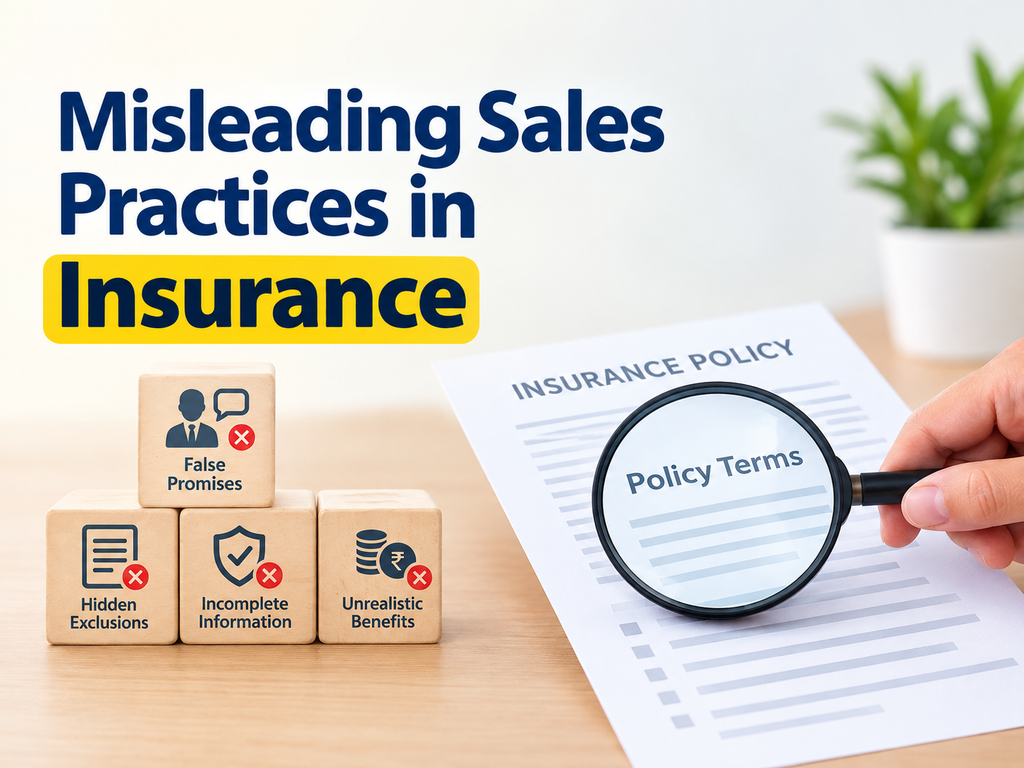
What Are Misleading Sales Practices in Insurance?
Misleading sales practices occur when insurance products are promoted or explained in a way that can create a false or incomplete understanding of the policy.
This may involve overstating benefits, failing to properly explain exclusions, presenting assumptions as guaranteed benefits, or providing information that does not accurately reflect the policy documents.
The issue can arise during conversations with agents, intermediaries, sales representatives, or through advertisements and promotional material.
Common Examples of Misleading Insurance Sales
Several situations can lead to misunderstandings between customers and insurers.
A policy may be presented as offering benefits that are subject to specific conditions. Similarly, a customer may focus on the advertised benefit while important exclusions or limitations receive less attention.
Some commonly reported forms of misleading sales communication include:
- Describing insurance benefits as guaranteed when they depend on policy conditions
- Not clearly explaining important exclusions
- Providing incomplete information about waiting periods or eligibility conditions
- Presenting an insurance product as something different from its actual nature
- Giving unrealistic expectations about claim settlement
- Focusing on returns or benefits without adequately explaining associated conditions and risks
- Selling a policy without properly explaining important terms and limitations
The actual nature of a particular case depends on the policy documents, communications, representations made during the sale, and applicable regulations.
Why Misleading Sales Can Become a Problem
Insurance policies are contractual documents containing specific terms and conditions. A customer’s understanding of the policy may therefore differ from the actual contractual coverage.
Problems often become visible when the policyholder makes a claim or tries to use a particular benefit. If the expected benefit is not covered under the policy, the customer may feel that the product was not represented accurately during the sale.
This can result in disputes concerning policy benefits, exclusions, premiums, refunds, surrender values, claim eligibility, or other contractual matters.
Mis-selling and Misleading Information
The terms mis-selling and misleading sales practices are closely related but can involve different circumstances.
Mis-selling generally refers to situations where an insurance product is sold inappropriately or on the basis of misleading, incomplete, or inaccurate representations. Misleading sales practices can include the communication or presentation methods that contribute to such a situation.
Whether a particular transaction constitutes mis-selling depends on the facts and evidence available.
The Importance of Policy Documents
Policy documents provide the formal terms governing insurance coverage. Marketing statements or verbal explanations should not be considered a substitute for understanding the actual policy wording.
Important information can include:
- Coverage and insured risks
- Exclusions
- Conditions and warranties
- Premium and payment terms
- Waiting periods
- Claim-related conditions
- Limits and deductibles
- Cancellation or surrender provisions
- Renewal conditions
Understanding these terms can help policyholders identify differences between what was communicated during the sale and what the policy actually provides.
When Sales Representations and Policy Terms Differ
A disagreement may arise when a customer believes that a particular benefit was promised during the purchase of the policy but the written policy does not provide that benefit.
Evidence such as proposal forms, brochures, emails, messages, recorded communications where legally obtained, illustrations, and other sales-related documents can become relevant when examining what was communicated.
The significance of any particular piece of evidence depends on the circumstances and applicable rules.
Consumer Awareness and Insurance Transparency
Transparent communication is important in insurance because policies can contain technical terms and conditions that are not always easy for customers to understand.
Customers benefit from receiving clear information about what a policy covers, what it does not cover, and what conditions apply to its benefits.
Greater awareness of policy terms can also help reduce misunderstandings between policyholders, intermediaries, and insurance companies.
Misleading Sales Practices and Insurance Complaints
When a policyholder believes that an insurance product was misrepresented or important information was not properly communicated, the matter may become the subject of a complaint or dispute.
The appropriate resolution depends on the nature of the issue, the available documentation, the insurer’s response, and the applicable insurance grievance and regulatory framework.
Insurance-related disputes should therefore be examined based on the specific facts rather than assumptions about every sales transaction.
Conclusion
Misleading sales practices in insurance can create a significant gap between what a customer expects and what an insurance policy actually provides. Clear communication, accurate representation of benefits, and awareness of policy terms are important elements of a transparent insurance relationship.
For policyholders, understanding the difference between sales representations and the actual contractual terms can be particularly important when questions arise about coverage or claims.
Insurance Resolve
Insurance Resolve helps policyholders understand and address insurance-related concerns, including issues involving mis-selling, claim rejection, claim delays, short settlement, lapsed policies, and service-related problems.
Website: www.insuranceresolve.com
Email: help@insuranceresolve.com
Phone: +91 9910352249

