
Introduction
When policyholders file an insurance claim, they generally expect a timely response from their insurance company. However, there are situations where the claim is either delayed or rejected. Although these two terms are often used interchangeably, they have very different meanings and implications.
Understanding the difference between a claim rejection and a claim delay is important because it helps policyholders better understand the claim process and avoid unnecessary confusion. Knowing why these situations occur also enables individuals to make informed decisions regarding their insurance policies.
What is a Claim Delay?
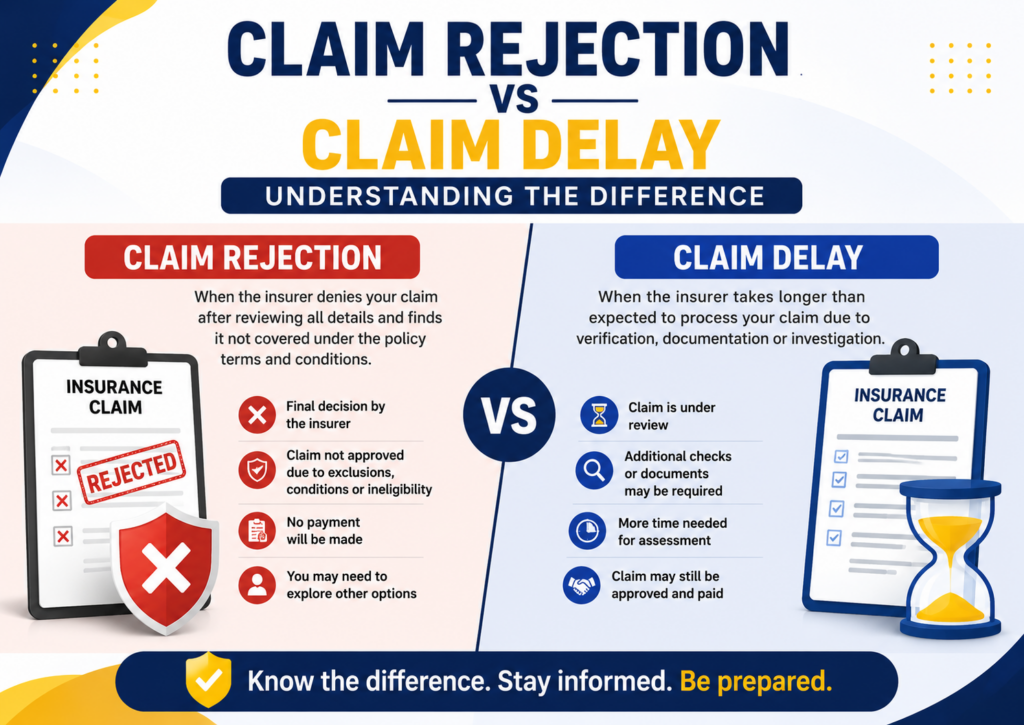
A claim delay occurs when the insurance company takes longer than the expected time to review, process, or settle a claim. During this period, the claim remains under consideration and no final decision has been made.
A delay does not necessarily indicate that the claim will be rejected. In many cases, the insurer may still approve the claim after completing the required verification and assessment.
What is a Claim Rejection?
A claim rejection means the insurance company has completed its review and decided not to approve the claim. This decision is generally based on the policy terms, available documents, exclusions, or other relevant factors considered during the evaluation process.
Unlike a delayed claim, a rejected claim represents a final decision unless it is reviewed through the insurer’s internal processes or applicable grievance redressal mechanisms.
Claim Delay vs Claim Rejection
| Claim Delay | Claim Rejection |
|---|---|
| The claim is still under review. | The claim has been declined after evaluation. |
| No final decision has been made. | A final decision has been communicated. |
| Additional verification may be ongoing. | The insurer has completed the assessment. |
| Settlement may still be possible. | The claim has not been approved. |
| Often related to documentation, investigation, or processing. | Often related to policy conditions, exclusions, or other evaluation findings. |
Common Reasons for Claim Delays
1. Incomplete Documentation
Missing or incorrect documents can require additional verification, increasing the processing time.
2. Investigation Process
Some claims require detailed investigation before a decision can be made.
3. High Claim Volume
Natural disasters or large-scale incidents may increase the number of claims received by insurance companies, resulting in processing delays.
4. Administrative or Technical Reasons
Internal approvals, system upgrades, or operational procedures may also contribute to delays.
Common Reasons for Claim Rejection
1. Policy Exclusions
The claim may relate to a situation specifically excluded under the policy.
2. Incorrect or Incomplete Information
Providing inaccurate information during policy purchase or claim submission can affect claim eligibility.
3. Policy Conditions Not Met
If the claim does not satisfy the terms and conditions of the insurance policy, it may not be approved.
4. Lapsed Policy
A policy that is no longer active due to non-payment of premiums may not provide claim benefits according to its terms.
Why Understanding the Difference Matters
Confusing a delayed claim with a rejected claim can create unnecessary anxiety. A delayed claim is still under evaluation, while a rejected claim indicates that the insurer has reached a decision based on its assessment.
Understanding these differences also helps policyholders interpret communications from insurance companies more accurately and maintain realistic expectations throughout the claim process.
Importance of Policy Awareness
Insurance policies contain detailed information regarding coverage, exclusions, waiting periods, documentation requirements, and claim conditions. Reading and understanding these terms can reduce misunderstandings during claim settlement.
Awareness of policy provisions also helps policyholders understand why certain claims may be delayed or rejected.
Conclusion
Claim delay and claim rejection are two different stages in the insurance claim process. While a delayed claim means the insurer is still evaluating the request, a rejected claim indicates that the insurer has declined the claim after completing its assessment.
Understanding these differences helps policyholders gain better insight into the insurance claim process and encourages informed decision-making. Staying aware of policy terms, maintaining accurate documentation, and understanding insurance conditions can contribute to a smoother insurance experience.
📞 +91 99103 52249
🌐 www.insuranceresolve.com
✉️ help@insuranceresolve.com