

Marine insurance provides financial protection against certain risks associated with the transportation of goods and other insured interests. Despite its name, marine insurance is not limited to sea transportation. Depending on the policy, it can cover goods transported by sea, road, rail, air, or a combination of transportation methods.
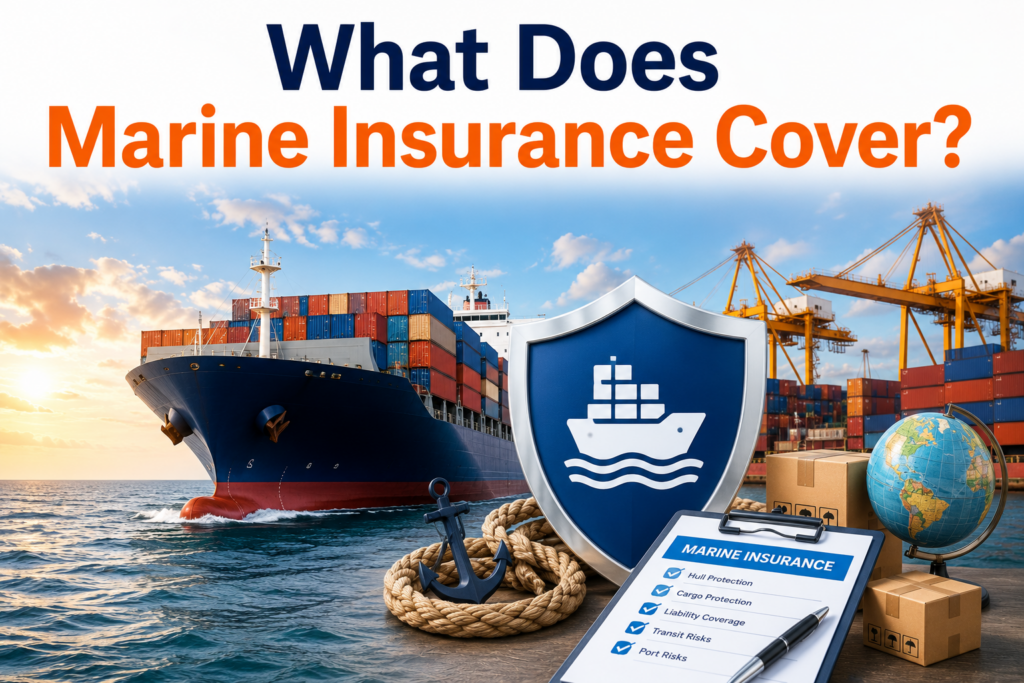
Marine insurance is commonly used by importers, exporters, manufacturers, traders, logistics businesses, and other companies involved in the movement of goods.
The exact coverage depends on the policy terms, insured risks, exclusions, limits, and conditions.
What Is Marine Insurance?
Marine insurance is designed to protect insured goods or other specified interests against covered losses or damage during transportation.
Depending on the type of policy, it may cover:
- Cargo being transported
- Imported and exported goods
- Domestic goods in transit
- Machinery and equipment
- Commercial shipments
- Other specified transportation-related interests
The coverage depends on the particular marine insurance policy.
What Does Marine Insurance Usually Cover?
Damage to Goods in Transit
Marine insurance can provide coverage for physical loss or damage to insured goods during transportation when the cause of loss is covered by the policy.
Damage may occur during loading, transportation, unloading, or other insured stages of transit, depending on the policy.
Loss of Cargo
Certain marine insurance policies provide protection when insured cargo is lost during an insured journey.
The circumstances of the loss and the applicable policy conditions determine whether compensation is payable.
Theft of Goods
Some marine insurance policies can cover theft or pilferage of insured goods during transit, subject to the specific terms and conditions.
The scope of theft coverage can vary between policies.
Fire Damage
Fire can cause significant damage to goods during transportation.
Where fire is an insured risk, marine insurance may provide compensation for covered cargo losses resulting from such an event.
Water Damage
Goods transported by sea or other methods can sometimes suffer damage from water exposure.
Depending on the policy, water-related damage may be covered when it results from an insured event.
Transportation-Related Risks
Marine insurance can cover various transportation risks depending on the type of policy.
These may include certain losses arising during:
- Loading
- Unloading
- Storage during transit
- Sea transportation
- Road transportation
- Rail transportation
- Air transportation
The actual scope depends on the policy wording.
Types of Marine Insurance Coverage
Marine insurance can take different forms depending on what is being insured.
Marine Cargo Insurance
Marine cargo insurance protects goods or merchandise being transported from one location to another against specified risks.
It is commonly used for domestic and international shipments.
Hull Insurance
Hull insurance generally relates to physical damage to vessels and ships.
It is different from cargo insurance because the subject of insurance is the vessel itself rather than the goods being transported.
Freight Insurance
Freight-related insurance can provide protection for specified financial interests connected with freight, depending on the applicable policy.
What Does Marine Insurance Usually Not Cover?
Marine insurance policies contain exclusions and limitations.
Depending on the policy, these may include:
- Normal wear and tear
- Inherent defects in goods
- Improper packing
- Certain excluded risks
- Intentional loss or damage
- Uninsured property
- Losses outside the insured transit
- Other exclusions specified in the policy
The actual exclusions vary according to the policy and type of marine insurance.
Marine Insurance and Policy Limits
Marine insurance coverage is generally subject to a specified insured value or policy limit.
The amount payable for a loss can also depend on factors such as the value of the goods, extent of damage, deductibles, valuation provisions, and applicable policy conditions.
Therefore, the total value of a shipment does not necessarily mean that every type of loss will be fully compensated.
Marine Insurance Claims
A marine insurance claim may arise when insured cargo, goods, or another insured interest suffers a covered loss.
The insurer may consider factors such as:
- Nature of the loss
- Cause of damage
- Condition of the goods
- Transportation details
- Policy coverage
- Exclusions
- Insured value
- Supporting evidence
The final claim decision depends on the applicable policy and circumstances.
Insurance Resolve – Marine Insurance Solutions
Insurance Resolve helps policyholders understand insurance concerns including marine insurance claim rejection, claim delays, short-settled claims, insurance mis-selling, policy disputes, service issues, and other insurance problems.
📞 Phone: +91 99103 52249
📧 Email: help@insuranceresolve.com
🌐 Website: www.insuranceresolve.com
Frequently Asked Questions
1. What does marine insurance cover?
Marine insurance can cover specified loss or damage to goods, cargo, vessels, or other insured interests during transportation, depending on the policy.
2. Does marine insurance cover goods transported by road?
Yes. Depending on the policy, marine cargo insurance can cover goods transported by road as well as sea, rail, or air.
3. Does marine insurance cover theft?
Some marine insurance policies provide coverage for theft or pilferage, subject to the applicable terms and conditions.
4. Does marine insurance cover fire damage?
Fire damage may be covered when fire is an insured risk under the applicable marine insurance policy.
5. Does marine insurance cover water damage?
Water-related damage may be covered depending on the cause of the damage and the terms of the marine insurance policy.
6. What is marine cargo insurance?
Marine cargo insurance provides financial protection for insured goods during transportation against specified risks.
7. Does marine insurance cover every type of cargo loss?
No. Coverage depends on the insured risks, exclusions, policy limits, conditions, and circumstances of the loss.
Conclusion
Marine insurance provides financial protection against specified risks affecting goods, cargo, vessels, and other insured interests during transportation. It can cover risks such as physical damage, theft, fire, water damage, and certain transportation-related losses, depending on the policy.
The actual coverage depends on the policy wording, exclusions, limits, valuation, and conditions. Understanding these factors is important for businesses involved in transporting goods because the financial impact of cargo loss or damage can be significant.

