
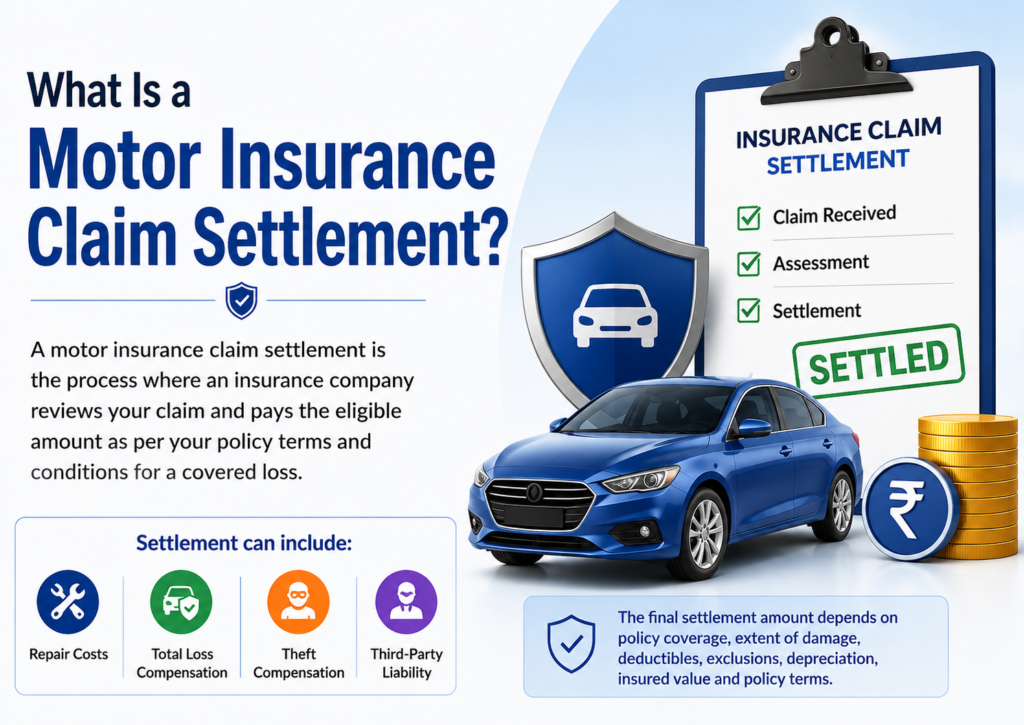
A motor insurance claim settlement is the process through which an insurance company determines the amount payable for a covered vehicle loss and settles the eligible claim according to the policy terms and conditions.
A claim may arise after an accident, theft, fire, natural calamity, or another insured event. The settlement amount depends on factors such as the type of policy, extent of damage, insured value, depreciation, deductibles, exclusions, and applicable policy limits.
What Does Motor Insurance Claim Settlement Mean?
Motor insurance claim settlement refers to the financial resolution of a valid insurance claim.
Depending on the policy, a claim may involve:
- Repair of the insured vehicle
- Reimbursement of eligible repair expenses
- Compensation for total loss
- Compensation in case of vehicle theft
- Third-party liability compensation
The exact settlement depends on the coverage available under the motor insurance policy.
Types of Motor Insurance Claim Settlement
Own-Damage Claim Settlement
An own-damage claim relates to loss or damage suffered by the insured vehicle. Comprehensive or own-damage insurance may provide protection against specified risks such as accidents, fire, theft, and natural calamities.
Third-Party Claim Settlement
A third-party claim relates to legal liability arising from injury, death, or property damage caused to another person by the insured vehicle.
Total Loss Settlement
When a vehicle is damaged beyond economical repair or meets the applicable conditions for total loss, the settlement may be based on the policy’s applicable insured value and terms.
Theft Claim Settlement
If an insured vehicle is stolen and the claim is covered, settlement depends on the policy conditions and applicable valuation provisions.
How Is the Motor Insurance Settlement Amount Determined?
The amount payable can depend on several factors, including:
- Extent of vehicle damage
- Repair or replacement costs
- Insured Declared Value (IDV)
- Depreciation
- Deductibles
- Policy limits
- Exclusions
- Applicable add-on covers
- Salvage value, where relevant
Therefore, the amount claimed by a policyholder and the amount finally settled by the insurer may be different.
Why Can a Motor Insurance Claim Be Partially Settled?
A motor insurance claim may be settled for less than the amount claimed because certain expenses may not be covered under the policy.
Common factors include depreciation, deductibles, policy exclusions, non-covered parts or expenses, policy limits, and differences in the assessment of repair costs.
This is commonly referred to as a partial or short settlement.
Motor Insurance Claim Rejection vs Settlement
A claim settlement means the insurer accepts liability for an eligible loss and pays an applicable amount.
A claim rejection means the insurer determines that the claim is not payable under the applicable policy terms or circumstances.
A claim can also be partially settled, where the insurer accepts part of the loss but does not pay the entire amount claimed.
Role of Policy Terms in Claim Settlement
The policy document plays an important role in determining claim settlement.
Coverage, exclusions, deductibles, insured value, depreciation provisions, add-ons, and other conditions can all affect the final amount payable.
This is why two vehicles involved in similar accidents may receive different settlement amounts because their insurance coverage may differ.
Insurance Resolve – Motor Insurance Claim Solutions
Insurance Resolve helps policyholders understand motor insurance concerns, including claim rejection, claim delays, short-settled claims, insurance mis-selling, policy disputes, service issues, and other insurance problems.
📞 Phone: +91 99103 52249
📧 Email: help@insuranceresolve.com
🌐 Website: www.insuranceresolve.com

