
Motor insurance provides financial protection against specified losses involving a vehicle. However, not every accident, theft, or vehicle-related loss is automatically covered by an insurance policy.
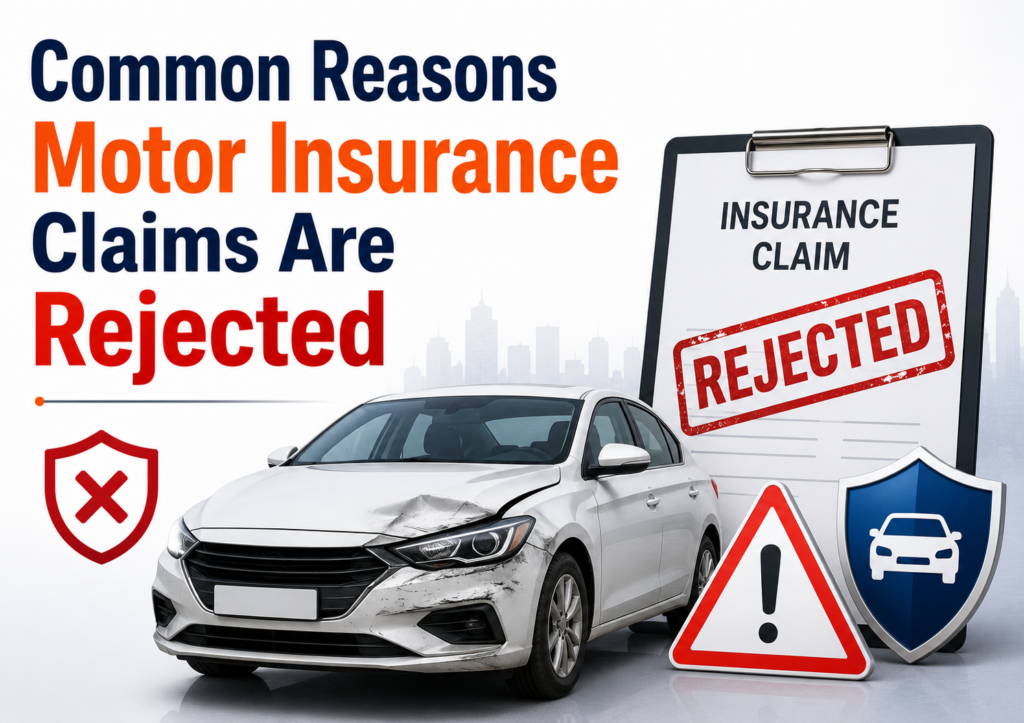
A motor insurance claim rejection occurs when an insurer determines that the reported loss is not payable under the applicable policy terms, conditions, exclusions, or circumstances.
Understanding the common reasons behind claim rejection can help vehicle owners better understand how motor insurance coverage works.
Policy Was Not Active
A motor insurance policy generally provides coverage only during its valid policy period. If an accident, theft, or other insured event occurs after the policy has expired or coverage has otherwise ended, the loss may not be covered.
Driving Without a Valid Licence
A valid driving licence is an important requirement under motor insurance and applicable law. If the vehicle was being driven by a person without the required licence at the time of the incident, it can affect the insurer’s liability depending on the circumstances and policy terms.
Vehicle Used for an Unauthorised Purpose
Motor insurance policies specify how an insured vehicle may be used. For example, a vehicle insured for private use may have different conditions from a vehicle used for commercial purposes.
If the vehicle is being used in a manner outside the permitted use under the policy, it may affect claim coverage.
Policy Exclusions Apply
Motor insurance policies contain exclusions that identify situations or losses that are not covered.
Examples can include certain types of mechanical failure, normal wear and tear, intentional damage, or other specifically excluded circumstances.
The presence of vehicle damage alone does not guarantee that the loss is covered.
Driving Under the Influence
If an accident occurs while the vehicle is being driven under the influence of alcohol or prohibited substances, the claim can be affected by the applicable policy terms and legal provisions.
Such circumstances are treated differently from ordinary accidental losses.
Vehicle Modifications Not Disclosed
Certain modifications to a vehicle can be relevant to insurance coverage and risk assessment.
If significant modifications have been made without appropriate disclosure or compliance with applicable requirements, they may affect a claim depending on the circumstances and policy provisions.
Misrepresentation or Non-Disclosure
Insurance coverage is based on information provided when the policy is issued or renewed.
If important information about the vehicle, its use, ownership, or other relevant circumstances was incorrectly provided or not disclosed, it can affect the assessment of a claim.
Damage Falls Outside the Policy Coverage
The type of motor insurance determines the protection available.
For example, basic third-party insurance generally covers specified third-party liabilities but does not normally cover damage to the insured vehicle itself.
Therefore, a claim for own-vehicle damage under a third-party-only policy would generally fall outside that coverage.
Policy Conditions Are Not Satisfied
Motor insurance policies contain various conditions relating to the use and protection of the insured vehicle.
A significant breach of an applicable policy condition can affect the insurer’s liability, depending on the nature of the condition and circumstances of the claim.
Claim Involves Fraudulent Information
Insurance is intended to provide protection against genuine insured losses. If an insurer finds evidence of deliberate misrepresentation, fabricated loss, or fraudulent information, the claim can face rejection and other consequences under the policy and applicable law.
Claim Rejection vs Partial Settlement
A claim rejection and a partial settlement are different outcomes.
A rejected claim means the insurer determines that the claim is not payable under the applicable policy.
A partial or short settlement means the insurer accepts liability for part of the loss but pays less than the amount claimed. This can occur because of depreciation, deductibles, policy limits, exclusions, valuation differences, or non-covered expenses.
Insurance Resolve – Motor Insurance Claim Solutions
Insurance Resolve helps policyholders understand motor insurance concerns, including claim rejection, claim delays, short-settled claims, insurance mis-selling, policy disputes, service issues, and other insurance problems.
📞 Phone: +91 99103 52249
📧 Email: help@insuranceresolve.com
🌐 Website: www.insuranceresolve.com
Frequently Asked Questions
Why are motor insurance claims rejected?
Claims can be rejected because of an inactive policy, policy exclusions, invalid licence, unauthorised vehicle use, non-disclosure, or other circumstances affecting coverage.
Can a claim be rejected if the vehicle is being used for commercial purposes?
It can affect coverage if the vehicle’s actual use is outside the permitted use specified in the insurance policy.
Does third-party insurance cover damage to my own vehicle?
Generally, no. Third-party insurance primarily covers specified liabilities toward third parties.
Can drinking and driving affect a motor insurance claim?
Yes. Driving under the influence can affect claim liability depending on the circumstances, policy terms, and applicable law.
Is every accident covered by comprehensive motor insurance?
No. Comprehensive insurance provides broader coverage, but exclusions, deductibles, policy conditions, and limits still apply.
Can a rejected motor insurance claim be different from a short-settled claim?
Yes. Rejection means the insurer does not accept liability for the claim, while short settlement means only part of the claimed amount is accepted and paid.
Conclusion
Motor insurance claim rejection can occur for several reasons, including an inactive policy, invalid licence, unauthorised vehicle use, policy exclusions, non-disclosure, unauthorised modifications, or circumstances that fall outside the insured coverage.
The exact outcome of a claim depends on the policy wording, applicable exclusions, circumstances of the incident, and relevant legal provisions. Understanding these factors provides a clearer picture of how motor insurance claims are assessed.

