

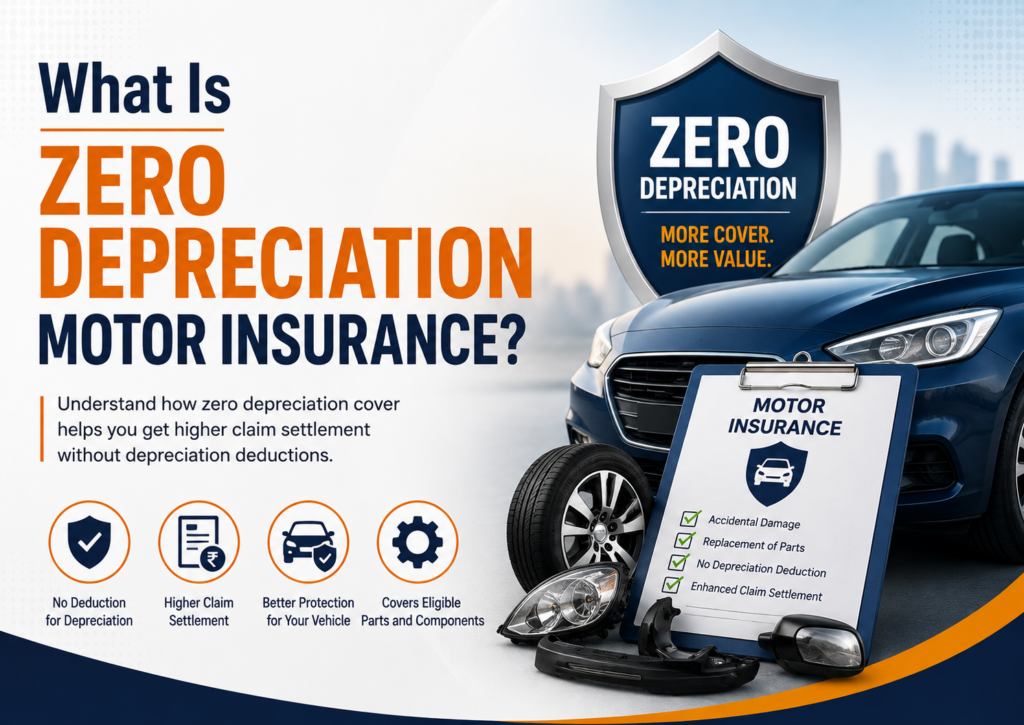
Zero depreciation motor insurance, also known as zero dep or nil depreciation cover, is an add-on available with certain motor insurance policies. It is designed to reduce the impact of depreciation when calculating the claim amount for covered damage to the insured vehicle.
Under a standard motor insurance policy, depreciation may be deducted from the value of certain vehicle parts when a claim is settled. With zero depreciation cover, the insurer may provide compensation for depreciation on eligible parts, subject to the policy terms, limits, and applicable conditions.
How Does Depreciation Affect Motor Insurance Claims?
Vehicle parts lose value over time due to age and usage. When a damaged part needs to be replaced after an accident, the insurer may calculate the claim after applying depreciation to that part.
For example, if a damaged part has a replacement cost of ₹20,000 and depreciation is applicable, the amount payable toward that part may be lower than its full replacement cost.
Zero depreciation cover is intended to reduce this deduction for covered parts.
What Does Zero Depreciation Cover?
The exact coverage varies between insurers and policies, but zero depreciation cover may apply to depreciation on eligible parts such as:
- Plastic and rubber components
- Fibre parts
- Certain metal components
- Other parts specified in the policy
The coverage generally applies when the vehicle suffers covered accidental damage. The policy wording determines which parts and situations are eligible.
What Are the Benefits of Zero Depreciation Cover?
The main advantage is that it can result in a higher claim amount compared with a similar claim under a standard comprehensive policy where depreciation is deducted.
It can be particularly useful for owners of newer vehicles because repair and replacement costs can be significant after an accident.
However, zero depreciation does not mean that every repair expense will automatically be paid in full.
What Is Not Covered?
Zero depreciation is an add-on, not unlimited coverage. Depending on the policy, certain expenses or losses may remain outside the cover.
For example, the policy may not cover:
- Deductibles payable by the policyholder
- Damage specifically excluded under the motor policy
- Mechanical or electrical breakdown not caused by an insured accident
- Normal wear and tear
- Certain consumable expenses unless separately covered
- Losses exceeding applicable policy limits
The actual exclusions can differ between insurance providers.
Zero Depreciation vs Comprehensive Motor Insurance
A comprehensive motor insurance policy provides broader protection for the insured vehicle and may cover accidental damage, theft, fire, natural calamities, and other insured risks according to its terms.
Zero depreciation is generally an additional cover attached to the motor policy. It mainly affects how depreciation is treated when an eligible claim is assessed.
Therefore, zero depreciation should not be considered a replacement for comprehensive motor insurance.
Is Zero Depreciation Available for Every Vehicle?
Availability can depend on the vehicle’s age, insurer, policy type, renewal conditions, and other factors.
Some insurers may restrict zero depreciation cover to vehicles within a particular age range, while others may offer it subject to specific conditions.
The availability and terms should therefore be checked in the individual policy.
Why Policy Terms Matter
The phrase “zero depreciation” does not necessarily mean that there will be no deduction of any kind from a motor insurance claim.
A claim can still involve deductibles, exclusions, policy limits, depreciation on items outside the add-on, and other applicable conditions.
The policy schedule, add-on wording, exclusions, and claim terms together determine the actual coverage.
Final Understanding
Zero depreciation motor insurance can provide valuable additional protection by reducing depreciation-related deductions on eligible vehicle parts during covered claims. It can help policyholders manage out-of-pocket repair expenses, particularly after accidental damage.
However, the cover is subject to the insurer’s specific terms and does not guarantee that every part of a motor insurance claim will be paid without deductions.
Understanding the difference between standard comprehensive coverage and zero depreciation add-on can help vehicle owners better understand the protection available under their motor insurance policy.
Phone: +91 99103-52249
Email: help@insuranceresolve.com
Website: www.insuranceresolve.com

