
Motor insurance is more than just a legal requirement—it is a financial safety net that protects vehicle owners from unexpected expenses arising from accidents, theft, natural disasters, and third-party liabilities. When a motor insurance policy is not renewed before its expiry date, the coverage ends, and the policy is considered lapsed. Understanding the consequences of a lapsed motor insurance policy can help vehicle owners appreciate the importance of maintaining continuous coverage.
Loss of Insurance Coverage
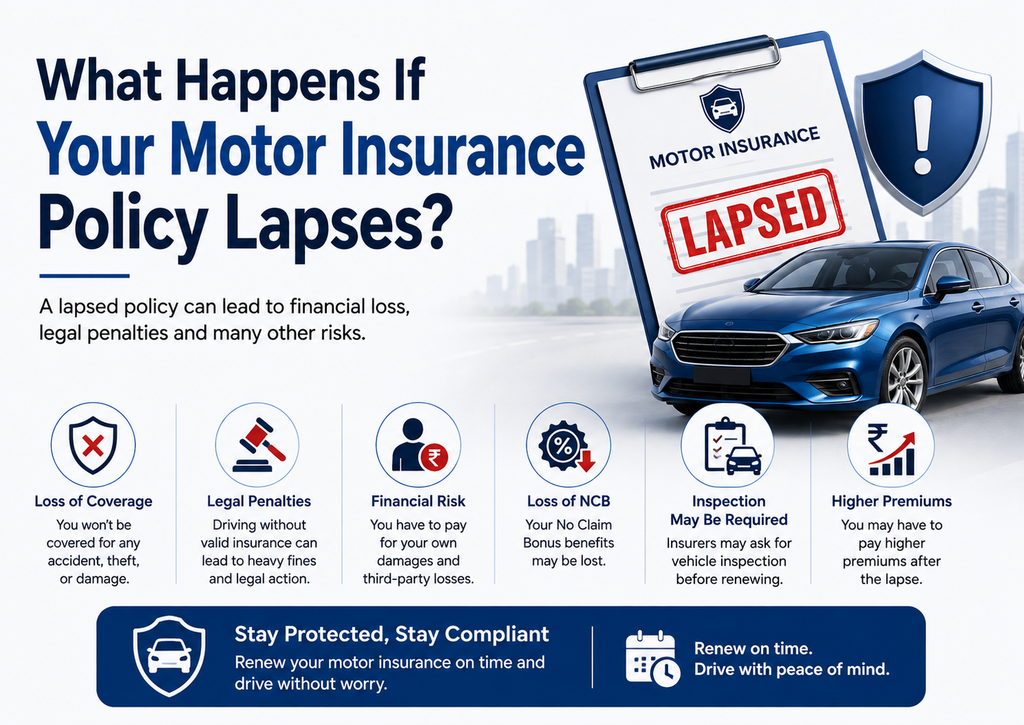
The most immediate effect of a motor insurance policy lapse is the loss of protection. Once the policy expires, the insurer is no longer responsible for covering damages, losses, or liabilities that occur after the expiration date. Any accident or damage to the vehicle during the uninsured period must be paid for by the vehicle owner.
Financial Burden After an Accident
A valid motor insurance policy can help cover repair costs and compensation expenses following an accident. However, if the policy has lapsed, the vehicle owner must bear all costs personally. Depending on the severity of the accident, these expenses can be significant and may create an unexpected financial burden.
No Protection Against Theft
Comprehensive motor insurance typically provides coverage against vehicle theft. If a vehicle is stolen after the policy has lapsed, the insurer will not compensate the owner for the loss. This can result in substantial financial damage, particularly for high-value vehicles.
Impact on Third-Party Liability
Third-party motor insurance is mandatory under Indian law. If a vehicle causes injury, death, or property damage to another person while uninsured, the vehicle owner may be personally liable for compensation and legal expenses. Such liabilities can be financially devastating and may involve lengthy legal proceedings.
Loss of No Claim Bonus (NCB)
Many insurers reward claim-free policyholders with a No Claim Bonus (NCB), which reduces renewal premiums. If the policy remains expired beyond the insurer’s permitted renewal period, the accumulated NCB may be lost. Losing this benefit can increase future insurance costs.
Possible Vehicle Inspection Requirements
When renewing insurance after a prolonged lapse, insurers may require a physical inspection of the vehicle before issuing a new policy. The inspection helps assess the vehicle’s current condition and identify any existing damages. This process can delay policy issuance and may affect premium calculations.
Higher Insurance Costs
A break in insurance coverage may influence the insurer’s assessment of risk. In some situations, policyholders may face higher premiums when purchasing a new policy after a lengthy lapse. Continuous coverage often helps maintain smoother renewals and policy benefits.
Legal Consequences of Driving Uninsured
Driving without valid third-party motor insurance is a violation of the Motor Vehicles Act. Authorities may impose fines, penalties, or other legal actions against vehicle owners who operate uninsured vehicles on public roads. Maintaining active insurance helps ensure compliance with legal requirements.
Importance of Continuous Coverage
Continuous motor insurance coverage offers peace of mind and financial security. It protects vehicle owners from unexpected losses, preserves policy benefits, and ensures compliance with the law. Renewing a policy on time helps avoid unnecessary risks and complications.
Conclusion
A motor insurance policy lapse can lead to serious financial, legal, and practical consequences. From loss of coverage and No Claim Bonus benefits to increased liability and legal penalties, the risks associated with driving uninsured are substantial. Maintaining uninterrupted motor insurance coverage is one of the simplest ways to protect yourself, your vehicle, and your finances from unforeseen events.

