
Insurance mis-selling occurs when an insurance policy is sold to a customer through misrepresentation, incomplete information, misleading promises, or unsuitable recommendations. It can leave policyholders with coverage that does not meet their actual needs and may create difficulties when making a claim.
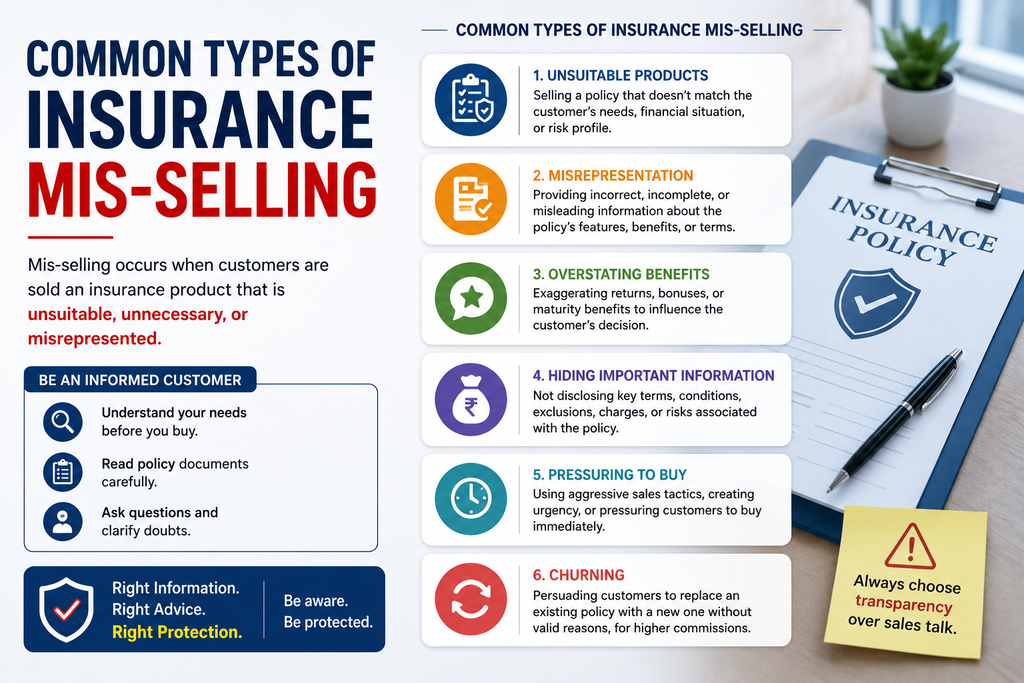
Understanding common types of insurance mis-selling can help customers make informed decisions and identify potential problems with their insurance policies.
Selling an Unsuitable Policy
A policy may be considered mis-sold when it is recommended without properly understanding the customer’s requirements, financial situation, business activities, or risk exposure.
For example, a business may purchase a policy that does not adequately cover its actual operational risks.
Misrepresentation of Policy Benefits
Mis-selling can occur when an intermediary or representative makes promises about coverage that are not supported by the actual policy wording.
Customers may be told that certain risks are covered, only to discover later that the coverage is subject to exclusions or conditions.
Hiding or Not Explaining Exclusions
Insurance policies contain exclusions that specify situations where coverage may not apply.
Failing to properly explain important exclusions can result in customers believing they have broader protection than they actually have.
Incorrect Information About Premiums
Providing misleading information about the premium, additional charges, deductibles, taxes, or other costs can also contribute to insurance mis-selling.
Customers should always check the final premium and policy documents before accepting coverage.
Misleading Claims About Returns
In certain insurance products, customers may be given unrealistic or incomplete information about returns, bonuses, maturity benefits, or investment performance.
Any expected returns or benefits should be understood from the official policy documentation rather than verbal assurances alone.
Selling Insurance Without Proper Disclosure
Customers should receive important information about the policy, including its benefits, limitations, exclusions, terms, and conditions.
Failure to provide relevant information can make it difficult for customers to understand what they are actually purchasing.
Unnecessary Add-On Covers
Additional covers or riders can sometimes be added without properly explaining their purpose, cost, or suitability.
Customers should understand whether an add-on is genuinely useful for their individual circumstances before paying for it.
Pressure to Purchase Insurance
Using excessive sales pressure or creating unnecessary urgency can prevent customers from properly comparing policies and understanding the terms before purchasing.
Insurance decisions should be based on the customer’s actual requirements rather than pressure to complete a sale.
Incorrect Information in the Proposal Form
Mis-selling can also involve incorrect or incomplete information being entered into a proposal form without the customer’s proper understanding.
Since the information provided in the proposal can affect underwriting and claims, customers should carefully verify all details before signing or submitting the form.
Promising Guaranteed Claim Settlement
No legitimate insurance policy should be presented as guaranteeing payment of every future claim. Claims are assessed according to the policy terms, coverage, exclusions, documentation, and circumstances of the loss.
Promises of guaranteed claim settlement can therefore be misleading.
How to Protect Yourself From Insurance Mis-Selling
Before purchasing an insurance policy:
- Read the policy terms and conditions carefully.
- Check the coverage and exclusions.
- Compare policies from different insurers.
- Verify the premium and applicable charges.
- Ask questions about unclear terms.
- Keep copies of proposal forms and policy documents.
- Do not rely solely on verbal promises.
- Check that the information submitted in the proposal form is accurate.
- Seek professional assistance when dealing with complex insurance requirements.
Conclusion
Insurance mis-selling can result in inadequate coverage, unexpected costs, and claim-related disputes. Understanding how mis-selling can occur allows policyholders to make better-informed insurance decisions.
If you believe an insurance policy may have been mis-sold or you need assistance understanding your insurance coverage, Insurance Resolve can help you review your insurance concerns.
Contact Insurance Resolve
📞 Call: 99103-52249
📧 Email: help@insuranceresolve.com

