
Employer Liability Insurance is a type of insurance that protects an employer against financial liabilities arising when an employee suffers injury, illness, disability, or death in connection with their employment.
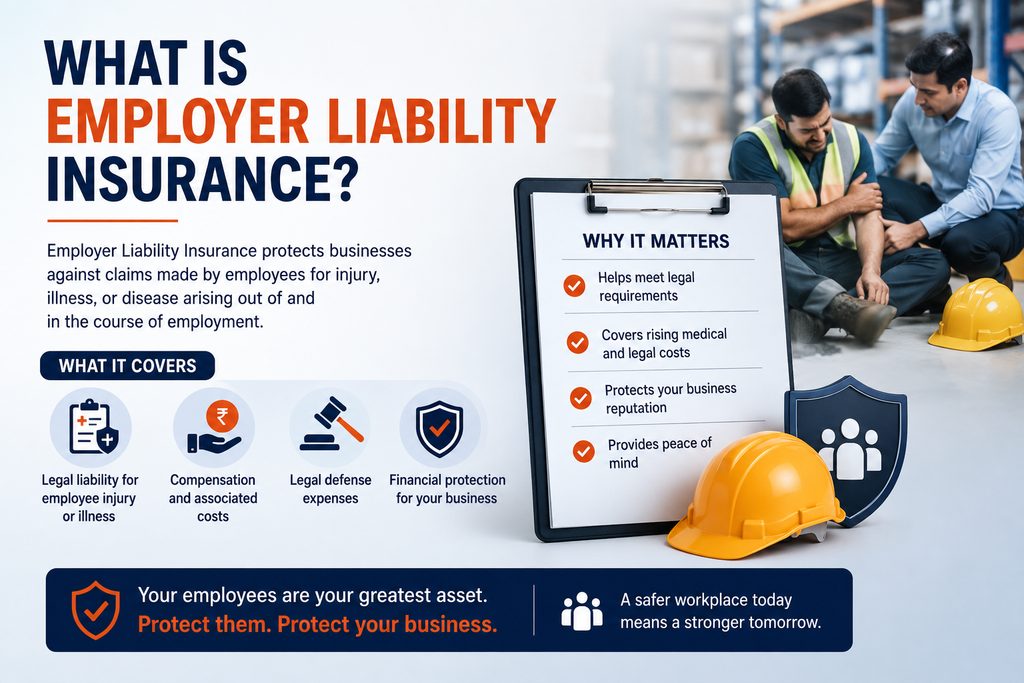
It can help cover compensation, legal expenses, and other costs that an employer may become legally responsible for, depending on the policy terms and applicable laws.
Why Is Employer Liability Insurance Important?
Employees may face risks while performing their regular duties, particularly in industries involving machinery, construction, transportation, manufacturing, warehouses, or other hazardous work environments.
If an employee suffers an accident or work-related injury, the employer may face:
- Compensation claims from employees
- Legal expenses
- Medical or related costs
- Financial liability arising from workplace accidents
- Claims relating to occupational injuries or illnesses
Employer Liability Insurance can provide financial protection against covered liabilities.
What Does Employer Liability Insurance Cover?
Coverage depends on the policy and applicable legal requirements, but it may generally include liabilities arising from:
- Accidental workplace injuries
- Occupational diseases or illnesses
- Permanent disability
- Temporary disability
- Employee death resulting from a workplace accident
- Legal costs associated with covered claims
What Is Usually Not Covered?
Certain situations may be excluded depending on the policy wording. Common exclusions can include:
- Intentional injury
- Liabilities outside the scope of the policy
- Certain contractual liabilities
- Fines and penalties
- Claims arising from excluded activities or circumstances
Businesses should always review the specific policy terms and exclusions before relying on the coverage.
Who Needs Employer Liability Insurance?
Employer Liability Insurance can be particularly important for businesses that employ workers and face workplace risks, including:
- Manufacturing companies
- Construction businesses
- Factories
- Warehouses
- Logistics and transportation companies
- Hotels and restaurants
- Retail businesses
- Offices and service providers
- Other organisations employing staff
Employer Liability Insurance vs. Workers’ Compensation
Although the terms are sometimes used interchangeably, they can refer to different aspects of employee-related protection depending on the country and legal framework.
Workers’ compensation generally focuses on statutory benefits available to employees for work-related injury or illness.
Employer liability insurance generally protects the employer against legal liability arising from employee injury, illness, or death.
The exact requirements and coverage depend on the applicable laws and the insurance policy.
Conclusion
Employer Liability Insurance helps businesses manage the financial risks associated with employee injuries, occupational illnesses, and related legal liabilities. Having appropriate insurance can help employers handle covered claims while protecting the financial stability of the business.
Before purchasing a policy, employers should carefully review the coverage, exclusions, limits, deductibles, and applicable legal requirements to ensure the policy is suitable for their business.
Contact Insurance Resolve
For assistance with Employer Liability Insurance and other business insurance requirements:
Insurance Resolve
📞 Call: 99103-52249
📧 Email: help@insuranceresolve.com

