
Insurance is designed to provide financial protection against unexpected losses. However, certain mistakes made by policyholders can reduce the value of that protection, increase financial exposure, or create difficulties when a claim arises.
Understanding these common insurance mistakes can help policyholders make more informed decisions and better understand their insurance coverage.
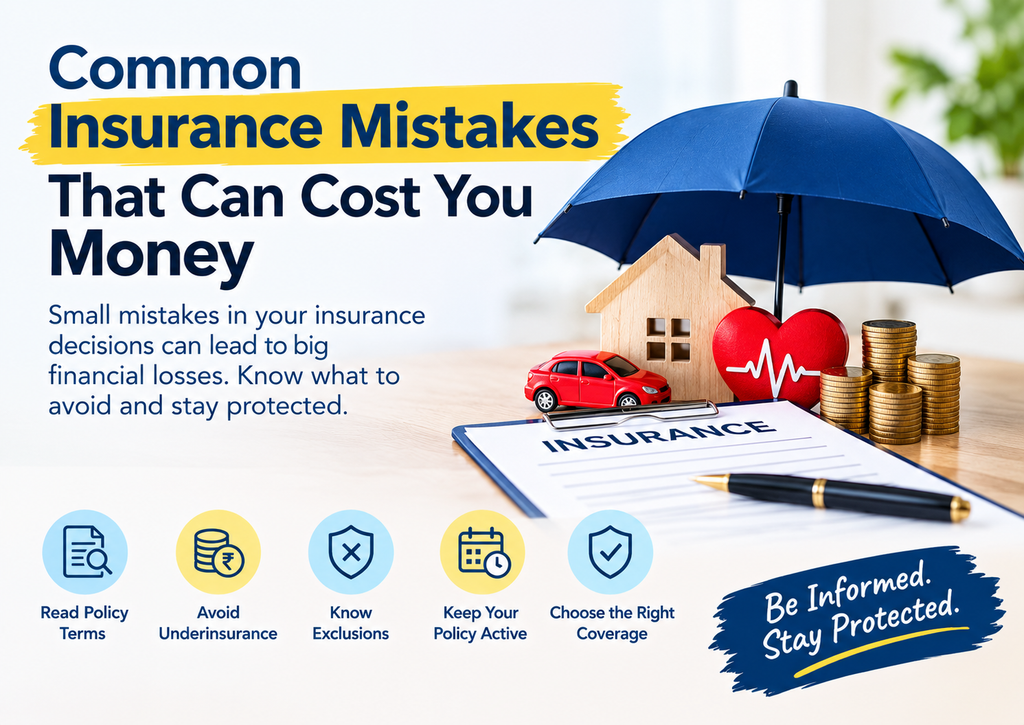
1. Not Reading the Policy Terms
One of the most common mistakes is purchasing an insurance policy without properly understanding its terms and conditions.
Important details such as coverage limits, exclusions, deductibles, waiting periods, and conditions may affect whether a particular loss is covered. Assuming that every type of loss is automatically covered can lead to unexpected expenses.
2. Choosing the Cheapest Policy
Premium is an important consideration, but choosing insurance solely because it is inexpensive can sometimes result in inadequate protection.
A lower premium may come with lower coverage limits, higher deductibles, fewer benefits, or additional exclusions. The cheapest policy may therefore not always provide the most suitable financial protection.
3. Underinsuring Assets
Underinsurance occurs when the insured value of an asset is lower than its actual value or replacement cost.
For example, inadequate coverage for a home, vehicle, business property, or other valuable asset can leave the policyholder responsible for a significant portion of the loss.
4. Providing Incorrect or Incomplete Information
Insurance policies are generally based on information provided by the policyholder.
Incorrect information about the insured person, vehicle, property, occupation, business activity, previous claims, or other relevant circumstances can create problems with coverage and claims.
Accurate disclosure is therefore an important part of maintaining appropriate insurance protection.
5. Ignoring Policy Exclusions
Every insurance policy has limitations and exclusions. These identify circumstances, losses, or situations that may not be covered.
Ignoring exclusions can create a false sense of security. A policyholder may believe they are protected against a particular risk when the policy specifically excludes it.
6. Letting the Policy Expire
Allowing an insurance policy to lapse can result in a period without coverage.
A policy that is not active when an insured event occurs may not provide the expected financial protection. Policy renewal and continuity are therefore important considerations.
7. Not Updating Policy Information
Personal and financial circumstances can change over time. Vehicles may be replaced, property values may increase, businesses may expand, or ownership details may change.
If policy information is not kept current, the coverage may no longer accurately reflect the policyholder’s circumstances.
8. Not Understanding Deductibles and Policy Limits
A deductible is the amount that may be borne by the policyholder before the insurer pays the covered portion of a loss.
Similarly, policy limits determine the maximum amount payable under particular coverage.
Failing to understand these amounts can result in unexpected out-of-pocket expenses.
9. Assuming Every Claim Will Be Approved
Having an insurance policy does not necessarily mean that every reported loss will be payable.
Claims are generally assessed according to the policy’s coverage, conditions, exclusions, limits, and circumstances of the loss. A claim may be questioned, delayed, reduced, or rejected when the relevant policy requirements are not satisfied.
10. Ignoring Changes in Asset Value
The value of property, vehicles, equipment, inventory, and other insured assets can change over time.
If insurance coverage does not keep pace with those changes, the policyholder may have insufficient protection when a major loss occurs.
11. Purchasing Unnecessary Coverage
Another common mistake is paying for insurance benefits that do not match actual needs.
While adequate protection is important, unnecessary or overlapping coverage can increase insurance costs without providing meaningful additional financial protection.
12. Not Comparing Coverage Properly
Comparing insurance policies only on the basis of premium can be misleading.
Two policies with similar premiums may have significantly different coverage limits, exclusions, deductibles, benefits, and conditions. A proper comparison involves understanding the overall protection rather than simply looking at the price.
How These Mistakes Can Cost Policyholders Money
Insurance mistakes can have both direct and indirect financial consequences. A policyholder may face higher premiums, inadequate coverage, unexpected deductibles, uncovered losses, or significant out-of-pocket expenses.
In some situations, misunderstandings about policy terms can also contribute to disputes between policyholders and insurers.
Importance of Understanding Your Insurance Coverage
Insurance is a financial protection tool, and its value depends largely on whether the coverage matches the policyholder’s actual needs and circumstances.
Understanding policy terms, exclusions, limits, deductibles, and disclosure requirements can help policyholders have a clearer picture of the protection they have purchased.
Conclusion
Common insurance mistakes such as choosing coverage only on price, underinsuring assets, ignoring exclusions, providing incorrect information, or failing to understand policy limits can potentially cost policyholders money.
Better awareness of insurance terms and coverage can help individuals and businesses make more informed insurance decisions and avoid unnecessary financial exposure.
📞 Call: 99103-52249
📧 Email: help@insuranceresolve.com
🌐 Website: www.insuranceresolve.com

