

When people buy insurance, they usually focus on what the policy covers. However, understanding what the policy does not cover is equally important.
These limitations are known as insurance exclusions. They explain specific situations, losses, events, or circumstances for which the insurer may not provide coverage under the policy terms.
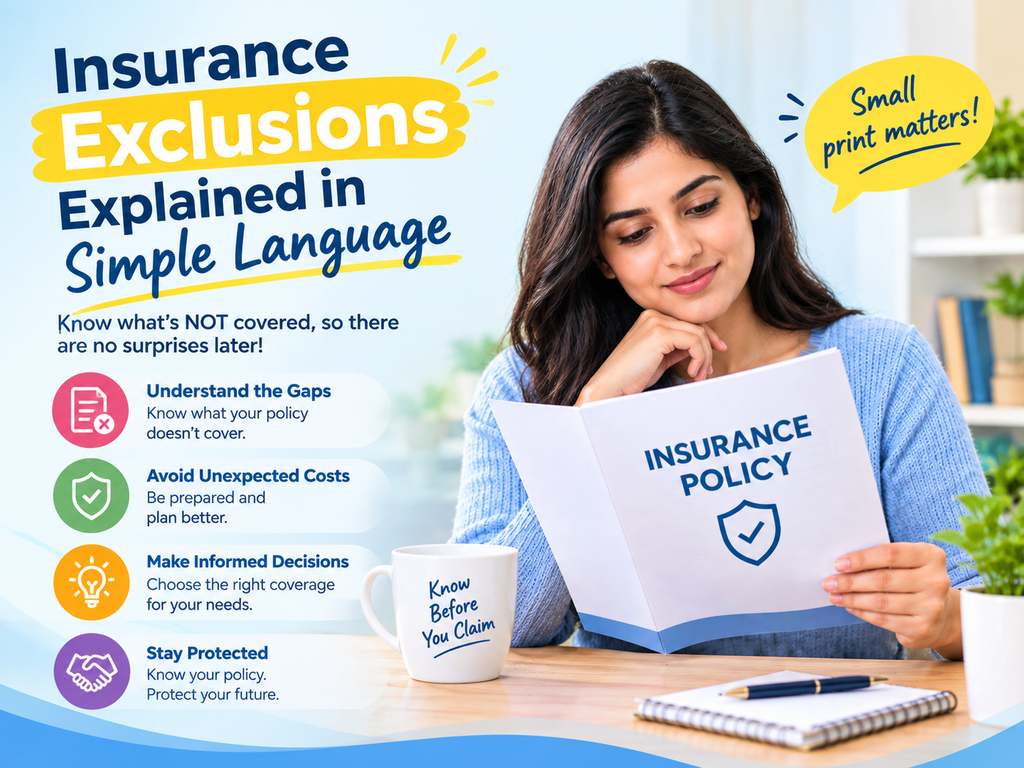
What Are Insurance Exclusions?
Insurance exclusions are provisions in an insurance policy that identify situations or losses that are outside the scope of coverage.
For example, a property insurance policy may cover certain accidental damage but exclude particular types of damage or specific circumstances. Similarly, a travel insurance policy may cover certain travel-related losses while excluding particular events.
The exact exclusions depend on the type of insurance and the wording of the individual policy.
Why Do Insurance Policies Have Exclusions?
Insurance policies are designed to provide protection against defined risks. Exclusions help establish the boundaries of that protection.
An exclusion can clarify:
- Which risks are not insured
- Which circumstances are outside the coverage
- Which types of losses are limited
- When a particular benefit may not apply
- Conditions under which a claim may not be payable
Therefore, exclusions are an important part of understanding the actual scope of an insurance policy.
Common Types of Insurance Exclusions
Exclusions vary considerably between policies, but some commonly encountered categories include:
Wear and Tear
Normal deterioration, ageing, or gradual damage may not be covered under many types of insurance.
For example, property insurance generally distinguishes between sudden accidental damage and deterioration that happens gradually over time.
Intentional Damage
Insurance is generally designed for covered risks rather than losses deliberately caused by the insured.
Policies may therefore contain provisions relating to intentional acts or deliberate damage.
Uninsured Events
A policy may cover only specifically defined risks. Events that fall outside those defined risks may not be covered.
This is why the policy’s coverage section and exclusions should be considered together.
Certain Natural or Catastrophic Events
Some policies may contain specific conditions or exclusions relating to particular natural events or catastrophic risks. In some cases, separate coverage or an additional extension may be available.
The applicable terms depend on the policy.
Illegal or Unlawful Activities
Insurance policies can contain exclusions relating to losses connected with unlawful activities or violations of applicable law.
The exact wording and circumstances are important when considering such provisions.
Exclusions Can Differ Between Similar Policies
Two insurance policies may appear similar but contain different exclusions, limits, and conditions.
For example, two property insurance policies may both advertise protection for property damage but differ in the specific events covered, deductibles, sub-limits, and exclusions.
This is one reason why comparing only the premium or coverage amount may not provide the complete picture.
Exclusions and Insurance Claims
An exclusion can become particularly important when an insurance claim is not accepted.
If an insurer relies on an exclusion, the relevant policy wording and circumstances generally need to be examined to understand the basis of the decision.
A claim rejection does not automatically mean that an exclusion has been correctly applied, nor does it automatically mean that the insurer’s decision is incorrect. The actual policy terms and facts of the claim are important.
Exclusions Are Not the Same as Policy Conditions
Exclusions and conditions serve different purposes.
Exclusions generally identify circumstances or losses that are outside the coverage.
Policy conditions generally describe requirements or obligations associated with the insurance contract.
Both can affect the handling of a claim, but they should not be treated as the same thing.
Why Reading Exclusions Matters
Understanding exclusions can help policyholders develop a realistic understanding of their insurance protection.
Important areas to pay attention to include:
- Covered events
- Excluded events
- Policy limits
- Deductibles
- Sub-limits
- Definitions
- Conditions
- Special exclusions or endorsements
The policy wording provides the most relevant information about what the insurance actually covers.
Exclusions and Mis-Selling Concerns
Sometimes a policyholder may believe that a particular risk was covered because of how the insurance product was explained during the sale.
If the actual policy contains an exclusion that was not understood, there may be confusion between the expectations created during the sale and the written policy terms.
This is why understanding exclusions is also important when considering possible insurance mis-selling concerns.
Final Thoughts
Insurance exclusions are a normal and important part of insurance contracts. They define the boundaries of coverage and help explain when a particular loss may fall outside the policy.
Knowing the exclusions, along with the coverage, limits, conditions, and definitions, gives policyholders a clearer understanding of their insurance protection.
When a claim is rejected or disputed because of an exclusion, the specific policy wording and circumstances should be carefully considered rather than relying only on the name of the exclusion.
Need Help With an Insurance Concern?
Insurance Resolve helps policyholders understand and address concerns related to insurance claims, claim rejection, claim delays, short settlement, mis-selling, and service issues.
Website: www.insuranceresolve.com
Email: help@insuranceresolve.com
Phone: +91 9910352249
