

Introduction
Insurance is designed to provide financial protection when unexpected events occur. Whether it is a health, life, motor, or property insurance policy, policyholders expect their claims to be settled within a reasonable time. However, claim settlement is not always immediate. In some cases, delays may occur due to various reasons, causing uncertainty and financial stress.
Understanding why claim settlement may be delayed can help policyholders better understand the insurance process and avoid unnecessary confusion. It is important to remember that a delayed claim does not automatically mean the claim has been rejected.
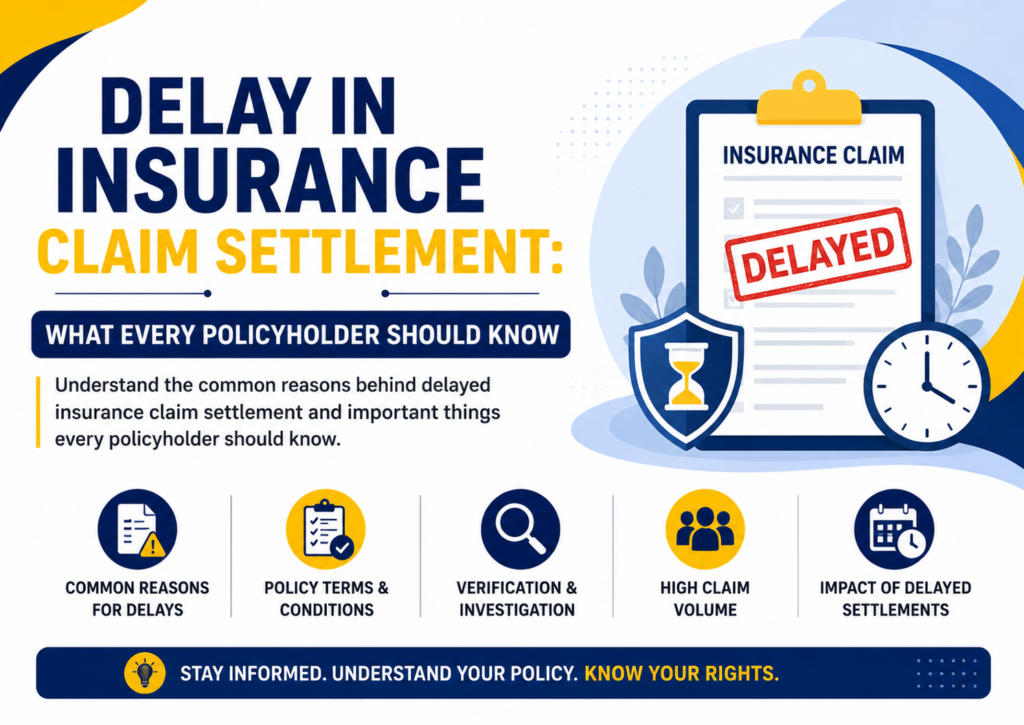
What is a Delay in Insurance Claim Settlement?
A delay in insurance claim settlement occurs when an insurance company takes longer than the expected time to assess, process, or settle a claim. The length of time may vary depending on the type of insurance policy, the complexity of the claim, and the information required during the evaluation process.
Delays can happen in any type of insurance, including life insurance, health insurance, motor insurance, travel insurance, and property insurance.
Common Reasons for Delay in Insurance Claim Settlement
1. Incomplete Documentation
Insurance companies require specific documents to evaluate a claim. Missing, incomplete, or incorrect documents can result in additional verification and may extend the claim processing time.
2. Additional Investigation
Certain claims require a detailed investigation to verify the facts and circumstances of the insured event. This is common in high-value or complex claims.
3. Verification of Information
Insurance companies may verify medical records, accident reports, police reports, hospital records, or other supporting documents before making a final decision.
4. Policy Terms and Conditions
Every insurance policy contains specific terms, conditions, exclusions, and coverage limits. If the insurer needs additional time to determine whether the claim falls within the policy coverage, settlement may be delayed.
5. High Claim Volume
Natural disasters, pandemics, floods, or large-scale accidents can result in a significant increase in claim submissions. During such periods, insurance companies may require additional time to process claims.
6. Communication Gaps
Delays can occur if there is a lack of communication between the policyholder, hospital, repair workshop, surveyor, employer, or other parties involved in the claim.
7. Technical or Administrative Issues
System upgrades, operational changes, internal approvals, or administrative procedures may also contribute to longer claim processing times.
8. Requirement for Additional Documents
Sometimes, after reviewing the initial documents, the insurer may request further clarification or additional records. This naturally increases the overall settlement timeline.
How Claim Settlement Delays Affect Policyholders
Delayed claim settlements can create financial pressure, especially in health and life insurance cases where immediate funds may be required. Apart from financial concerns, prolonged uncertainty may also lead to emotional stress and inconvenience for policyholders and their families.
Why Understanding Your Insurance Policy Matters
Many claim-related misunderstandings arise because policyholders are not fully aware of the terms and conditions of their insurance policy. Knowing the scope of coverage, exclusions, waiting periods, and documentation requirements helps in understanding how claims are evaluated.
Reading the policy document carefully before and after purchasing insurance can help set realistic expectations regarding claim settlement.
Are All Claim Delays Unreasonable?
No. Some delays are part of the normal claim assessment process, particularly when verification or investigation is necessary. Insurance companies are responsible for ensuring that claims are genuine and comply with policy conditions before making payments.
However, if a claim remains pending for an unusually long period without proper communication or a valid explanation, policyholders should be aware of their rights and the available grievance redressal mechanisms.
Importance of Transparency in the Claim Process
Transparency benefits both the insurer and the policyholder. Providing accurate information during policy purchase and claim submission helps reduce unnecessary delays. Similarly, timely communication from the insurance company builds trust and improves the overall customer experience.
Conclusion
A delay in insurance claim settlement can be frustrating, but it does not always indicate that the claim will be rejected. Various factors such as document verification, policy review, investigations, and administrative procedures may contribute to the processing time.
Understanding how the claim settlement process works enables policyholders to make informed decisions and better manage their expectations. Staying informed about policy terms, maintaining accurate records, and being aware of consumer rights can contribute to a smoother insurance experience.
📞 Call: +91 99103-52249
🌐 Website: www.insuranceresolve.com
📧 Email: help@insuranceresolve.com

