
Public liability insurance provides financial protection to businesses against certain legal liabilities arising when a third party suffers injury, death, or property damage in connection with the insured business activities.
It is particularly relevant to businesses that interact with customers, visitors, contractors, suppliers, or members of the public. An accident at a shop, office, factory, event venue, or other business premises can potentially result in a liability claim.
The exact coverage depends on the policy terms, limits, exclusions, and circumstances of the incident.
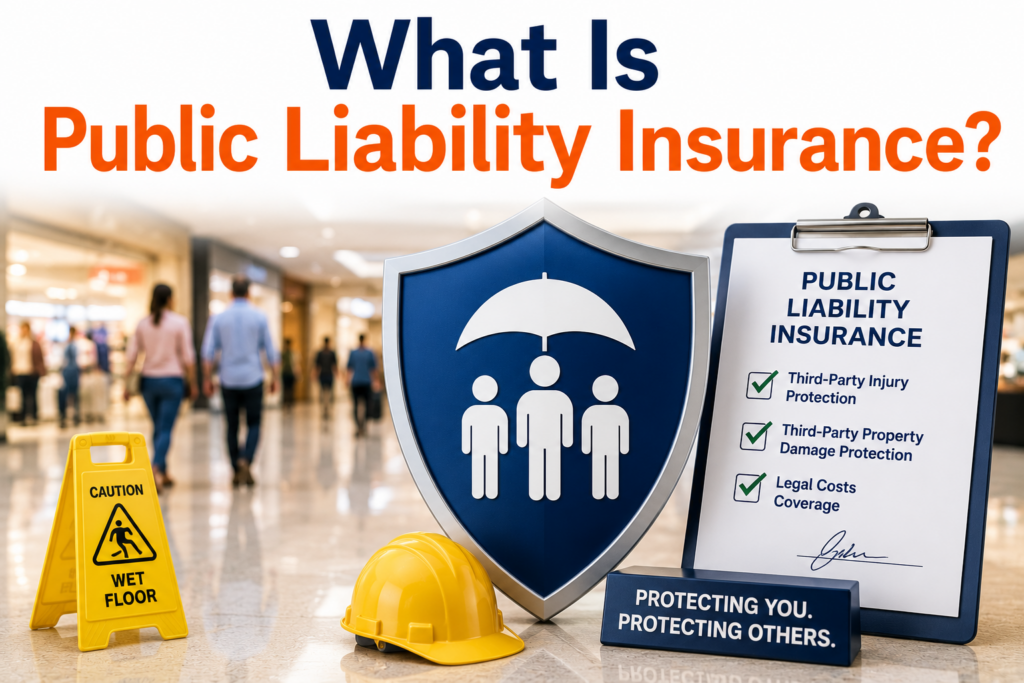
What Is Public Liability Insurance?
Public liability insurance is a type of liability insurance designed to protect a business against covered claims made by third parties.
For example, a customer visiting a business premises may suffer an injury because of an accident. If the business is legally responsible, the customer may seek compensation. A public liability policy may provide financial protection against the covered liability.
The policy generally relates to third-party claims rather than damage to the business’s own property.
Who Can Need Public Liability Insurance?
Public liability insurance can be relevant to many types of businesses and organisations, including:
- Retail shops
- Restaurants and hotels
- Offices
- Factories
- Construction businesses
- Event organisers
- Contractors
- Service providers
- Property owners
- Businesses that regularly interact with the public
The need for coverage depends on the nature of the business and its potential liability risks.
What Does Public Liability Insurance Cover?
Depending on the policy, public liability insurance may cover certain legal liabilities arising from:
Third-Party Bodily Injury
If a member of the public suffers an injury because of an incident connected with the insured business, the policy may provide protection against covered legal liability.
Third-Party Property Damage
A business may also face claims if its activities cause damage to property belonging to another person.
For example, accidental damage to a customer’s property may fall within the scope of a public liability policy if the circumstances are covered.
Legal Liability
Public liability insurance can provide financial protection for covered legal liability claims, including certain associated legal expenses, subject to the policy terms and limits.
Examples of Public Liability Risks
Businesses can face various situations that may result in third-party liability claims.
Examples include:
- A customer slipping on a wet floor.
- A visitor being injured inside business premises.
- Accidental damage to a customer’s property.
- Injury caused during a business activity or event.
- Damage caused by business operations at a third-party location.
Whether a particular incident is covered depends on the policy and circumstances.
What Is Not Usually Covered?
Public liability insurance does not cover every type of business loss.
Depending on the policy, exclusions may include:
- Intentional damage
- Employee-related claims covered under other insurance
- Professional negligence
- Damage to the business’s own property
- Certain contractual liabilities
- Known or excluded risks
- Pollution-related liabilities in certain circumstances
- Other exclusions specified in the policy
The exact exclusions vary between policies.
Public Liability vs Professional Liability Insurance
Public liability and professional liability insurance protect against different types of risks.
Public liability insurance generally relates to third-party bodily injury or property damage arising from business activities.
Professional liability insurance is generally associated with claims relating to professional advice, services, errors, or omissions.
A business may require one or both depending on its activities.
Public Liability Insurance for Businesses
Public liability insurance can be particularly useful for businesses that have regular interaction with customers or members of the public.
A liability claim can result in compensation demands, legal expenses, and other financial consequences.
Insurance can help protect a business against covered liabilities, subject to the policy’s terms and limits.
Policy Limits and Deductibles
Public liability policies generally contain a maximum liability limit.
The insurer’s responsibility may also be affected by deductibles, exclusions, policy conditions, and other limitations.
Therefore, the existence of a public liability policy does not mean that every third-party claim will automatically be paid.
Insurance Resolve – Liability Insurance Solutions
Insurance Resolve helps businesses and policyholders understand insurance concerns, including liability claim rejection, claim delays, short-settled claims, insurance mis-selling, policy disputes, service issues, and other insurance problems.
📞 Phone: +91 99103 52249
📧 Email: help@insuranceresolve.com
🌐 Website: www.insuranceresolve.com
Frequently Asked Questions
1. What is public liability insurance?
Public liability insurance provides financial protection against certain legal liabilities arising from third-party injury, death, or property damage connected with business activities.
2. Who needs public liability insurance?
Businesses that interact with customers, visitors, contractors, suppliers, or the general public may benefit from public liability insurance, depending on their risk exposure.
3. Does public liability insurance cover customer injuries?
It may cover eligible legal liability arising from customer or third-party injuries, subject to the policy terms and circumstances.
4. Does public liability insurance cover property damage?
Yes, eligible third-party property damage caused in connection with covered business activities may be covered.
5. Does public liability insurance cover employees?
Generally, employee-related liabilities are handled through other forms of insurance or applicable employment-related coverage rather than standard public liability insurance.
6. What is the difference between public liability and professional liability insurance?
Public liability generally relates to third-party injury or property damage, while professional liability generally relates to errors, omissions, or problems associated with professional services.
7. Does public liability insurance cover every third-party claim?
No. Coverage depends on the policy’s insured risks, exclusions, limits, deductibles, and conditions.
Conclusion
Public liability insurance provides businesses with protection against certain legal liabilities arising from third-party injury, death, or property damage connected with their business activities.
It can be particularly relevant to businesses that regularly interact with the public. However, coverage is subject to policy limits, exclusions, deductibles, and other conditions.
Understanding the scope of public liability insurance helps businesses recognise the difference between third-party liability protection and other forms of commercial insurance.

