

Fire insurance is designed to protect property owners from the financial impact of fire-related damage. However, having a fire insurance policy does not automatically guarantee full compensation after a loss. One of the most common yet overlooked issues in property insurance is underinsurance.
Understanding Underinsurance
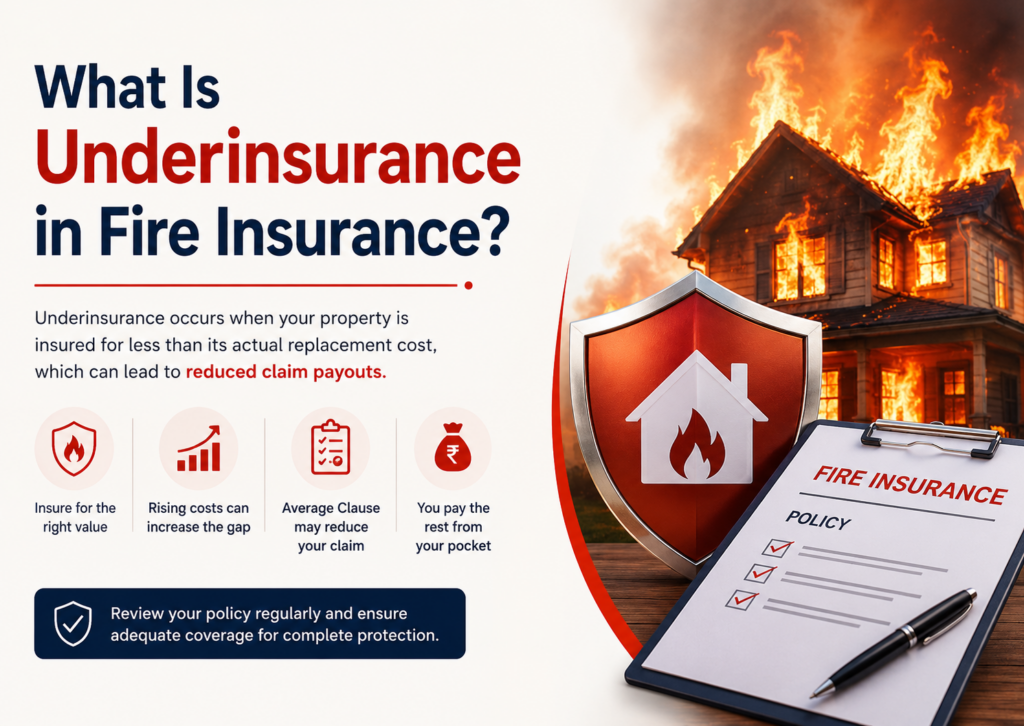
Underinsurance occurs when a property is insured for a value that is lower than its actual replacement or reinstatement cost. In simple terms, the sum insured mentioned in the policy is not sufficient to cover the full cost of rebuilding or restoring the property if a fire causes significant damage.
For example, if a commercial building would cost ₹1 crore to rebuild but is insured for only ₹60 lakh, the property is underinsured by 40%.
Why Does Underinsurance Happen?
Many property owners underestimate the actual cost of rebuilding a structure. Construction costs, labor charges, material prices, and inflation can increase significantly over time. If insurance coverage is not reviewed regularly, the insured value may no longer reflect the property’s true replacement cost.
Other common reasons include:
- Lack of professional property valuation
- Attempting to reduce insurance premiums by choosing a lower sum insured
- Failure to account for renovations or property improvements
- Rising construction costs due to inflation and market changes
- Misunderstanding the difference between market value and reinstatement value
The Average Clause and Its Impact
Most fire insurance policies contain an Average Clause, which is designed to discourage underinsurance. Under this clause, if a property is insured for less than its actual value, the insurer may reduce the claim amount proportionately.
This means that even a partial loss can result in a reduced settlement. The policyholder effectively shares part of the loss because the property was not insured for its full value.
The Average Clause ensures that policyholders contribute fairly to the insurance pool and do not intentionally insure assets for lower amounts while expecting full compensation during a claim.
Financial Consequences of Underinsurance
Underinsurance can have serious financial implications for both homeowners and businesses. After a fire, the gap between the actual restoration cost and the insurance payout must be covered by the property owner.
Potential consequences include:
- Significant out-of-pocket expenses
- Delays in rebuilding or repairs
- Business interruption due to insufficient recovery funds
- Increased financial stress during an already difficult situation
- Difficulty restoring the property to its original condition
For businesses, underinsurance can be particularly damaging because it may affect operations, revenue, and long-term sustainability.
How Property Values Change Over Time
A property’s insurance needs are not static. Construction costs can rise due to changes in material prices, labor shortages, regulatory requirements, and economic conditions. A building that was adequately insured five years ago may be substantially underinsured today.
Regular reviews of property values help ensure that insurance coverage keeps pace with changing costs and market conditions.
The Importance of Adequate Fire Insurance Coverage
Adequate insurance coverage provides financial security and peace of mind. It ensures that, in the event of a fire, sufficient funds are available to repair, rebuild, or replace damaged property without creating a major financial burden.
Accurate valuation and periodic policy reviews are essential parts of effective risk management. By maintaining appropriate coverage levels, property owners can protect themselves against unexpected financial losses and avoid the complications associated with underinsurance.
Conclusion
Underinsurance in fire insurance occurs when the insured value of a property is lower than its actual replacement cost. While it may seem like a way to reduce premium expenses, it can lead to reduced claim settlements and substantial financial losses after a fire. Understanding underinsurance and maintaining adequate coverage are crucial steps in ensuring that a fire insurance policy delivers the protection it is intended to provide.
Phone: +91 99103-52249
Email: help@insuranceresolve.com
Website: www.insuranceresolve.com

