
Liability insurance can protect businesses and individuals against certain legal and financial liabilities arising from covered incidents. However, not every liability insurance claim is automatically accepted.
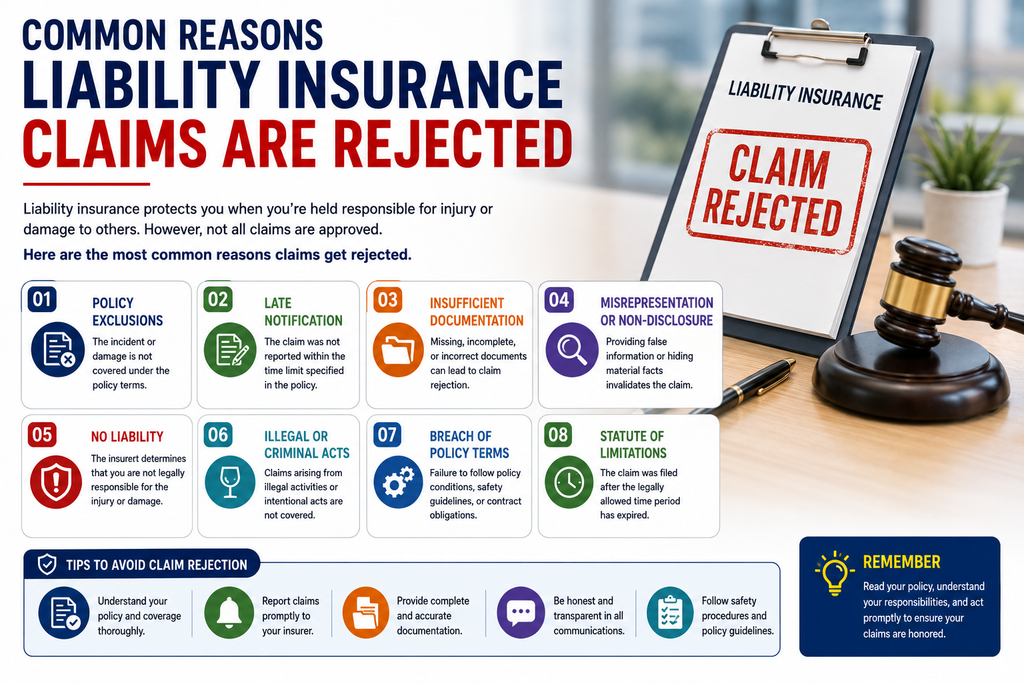
A claim may be rejected or disputed when it falls outside the policy coverage, does not meet the policy conditions, or lacks sufficient supporting evidence.
The Incident Is Excluded Under the Policy
One of the most common reasons for claim rejection is that the incident falls under a specific policy exclusion.
Insurance policies may exclude certain activities, risks, circumstances, or types of liability. Policyholders should carefully review the exclusions before purchasing coverage.
The Policy Was Not Active
A claim may not be covered if the incident occurred before the policy started or after the policy expired.
Businesses should ensure that their liability insurance remains active and is renewed on time.
The Incident Is Outside the Scope of Coverage
A liability policy only covers the risks described in the policy. If the claim arises from an activity, location, product, service, or circumstance that is not covered, the insurer may reject the claim.
Late Notification of the Claim
Many liability policies require the insured to notify the insurer about an incident or potential claim within a specified period.
Delays in notification can create difficulties in investigating the circumstances and may affect the claim.
Failure to Provide Required Documents
Insurers may request documents and evidence to assess a liability claim.
These may include:
- Incident reports
- Contracts
- Invoices
- Photographs
- Correspondence
- Legal notices
- Witness statements
- Medical records, where relevant
- Other supporting evidence
Failure to provide relevant information can delay or affect the claim assessment.
Misrepresentation or Incorrect Information
Providing inaccurate or incomplete information when purchasing insurance can create serious problems during a claim.
For example, if a business does not accurately disclose its activities or risk exposure, the insurer may question whether the policy provides coverage for the incident.
Breach of Policy Conditions
Insurance policies contain certain conditions that the policyholder must follow.
A failure to comply with applicable policy conditions may affect the insurer’s liability, depending on the wording of the policy and applicable law.
Intentional or Fraudulent Acts
Insurance generally does not provide protection for deliberately caused losses or fraudulent claims.
If an insurer determines that a claim involves intentional wrongdoing or fraudulent information, the claim may be rejected.
Contractual Liability Not Covered by the Policy
Some liabilities arise solely because of obligations accepted under a contract. Depending on the policy, such contractual liabilities may be excluded or subject to specific conditions.
Businesses should understand how their insurance responds to contractual obligations before entering into important agreements.
Claim Amount Exceeds the Policy Limit
A claim may be covered but still be subject to the maximum limit of liability stated in the policy.
If the liability exceeds the available coverage limit, the policyholder may have to bear the remaining amount, subject to the policy terms.
Failure to Take Reasonable Precautions
Some policies require the insured to take reasonable steps to prevent accidents, injuries, or property damage.
Failure to follow reasonable safety measures may become relevant when assessing a claim, depending on the circumstances and policy wording.
How to Reduce the Risk of a Liability Claim Rejection
Businesses and policyholders can take several steps to reduce claim-related problems:
- Read the policy wording carefully.
- Understand exclusions and coverage limits.
- Provide accurate information when purchasing insurance.
- Notify the insurer promptly after an incident.
- Keep detailed records and supporting documents.
- Follow applicable safety and contractual requirements.
- Cooperate with the insurer during claim investigation.
- Seek clarification when policy terms are unclear.
What to Do If a Liability Claim Is Rejected
If your liability insurance claim has been rejected, carefully review the claim rejection letter and the relevant policy wording.
Check the specific reason given by the insurer and determine whether the decision is consistent with the coverage, exclusions, conditions, and facts of the incident.
If you believe the claim has been incorrectly rejected, you may consider raising a formal complaint with the insurer and providing additional documents or clarification where appropriate.
Conclusion
Liability insurance claims can be rejected for several reasons, including policy exclusions, inadequate documentation, late notification, incorrect information, coverage limitations, and breaches of policy conditions.
Understanding your policy before a claim occurs can help reduce the risk of unexpected coverage issues and make the claims process easier.
Contact Insurance Resolve
For assistance with liability insurance claims, claim rejections, policy reviews, and insurance-related concerns:
📞 Call: 99103-52249
📧 Email: help@insuranceresolve.com

