

Business insurance can help protect companies against financial losses arising from covered events such as property damage, theft, liability claims, and business interruptions. However, businesses may face several challenges when filing or settling an insurance claim.
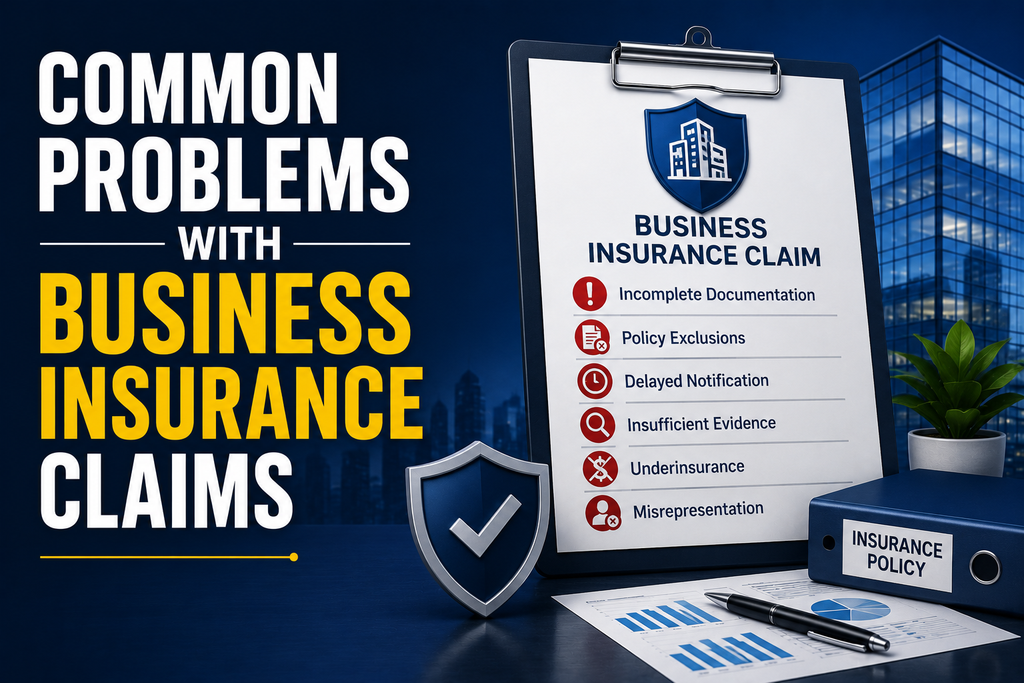
Understanding these common problems can help businesses prepare better and reduce unnecessary claim delays or disputes.
Missing or Incomplete Documents
One of the most common problems with business insurance claims is incomplete documentation.
Depending on the type of claim, the insurer may request:
- Insurance policy documents
- Invoices and purchase records
- Repair estimates
- Photographs of damage
- Stock records
- Financial statements
- Police or fire reports
- Contracts
- Other supporting evidence
Missing documents can delay the claim assessment.
Delayed Claim Notification
Businesses may sometimes delay informing the insurer after an incident.
Many policies contain specific requirements regarding notification of a loss or potential claim. Delayed reporting can make it more difficult to investigate the circumstances.
Policy Exclusions
A business may assume that a particular loss is covered when the policy actually excludes it.
Common exclusions can relate to:
- Wear and tear
- Poor maintenance
- Certain natural disasters
- Pollution
- Cyber risks
- Intentional damage
- Contractual liabilities
- Other specifically excluded circumstances
The exact exclusions depend on the policy.
Underinsurance
A business may insure its property, equipment, stock, or other assets for less than their appropriate value.
Underinsurance can affect the amount recoverable under certain policies, particularly where an average clause or similar provision applies.
Disputes Over the Cause of Loss
The insurer may need to establish what caused the loss before determining whether it is covered.
For example, damage may result from an insured event, gradual deterioration, poor maintenance, or another excluded cause.
Disagreement Over the Claim Amount
Businesses and insurers may sometimes disagree about the value of the loss.
Disputes can involve:
- Repair costs
- Replacement costs
- Stock valuation
- Business interruption losses
- Depreciation
- Salvage value
- Policy limits and deductibles
Additional evidence may be required to resolve the difference.
Survey or Loss Assessment Delays
For significant property or commercial claims, an insurer may appoint a surveyor, loss assessor, engineer, accountant, or other specialist.
Delays in inspection or assessment can extend the overall claim process.
Business Interruption Claim Complications
Business interruption claims can be more complex because the business must demonstrate the financial impact of the insured event.
The insurer may need to review:
- Historical turnover
- Profit records
- Fixed expenses
- Loss period
- Additional expenses
- Financial projections
Incorrect Information
Incorrect information provided during the policy application or claim process can create coverage problems.
Businesses should ensure that details about their activities, property, locations, assets, turnover, and risks are accurate.
Policy Conditions Not Followed
Business insurance policies may contain conditions relating to security, maintenance, safety measures, notification, documentation, or other requirements.
Failure to comply with relevant conditions can affect a claim depending on the policy wording and circumstances.
How to Avoid Common Business Insurance Claim Problems
Businesses can reduce claim-related difficulties by:
- Reviewing policy coverage and exclusions regularly.
- Maintaining adequate sums insured.
- Keeping accurate business and financial records.
- Reporting incidents promptly.
- Photographing and documenting damage.
- Preserving relevant evidence.
- Maintaining required safety and security measures.
- Providing accurate information to the insurer.
- Responding promptly to requests for documents.
What to Do If a Business Insurance Claim Is Delayed or Rejected
If a claim is delayed or rejected, the business should request the insurer’s written explanation.
Review the reason against the policy wording and supporting evidence. If additional documents can clarify the situation, provide them to the insurer. Where the issue remains unresolved, the business may consider using the insurer’s formal grievance process.
Conclusion
Business insurance claims can become difficult because of missing documents, policy exclusions, delayed notification, underinsurance, valuation disputes, complex investigations, and policy conditions.
Understanding the insurance policy before a loss occurs and maintaining proper business records can help make the claims process more efficient.
Contact Insurance Resolve
For assistance with business insurance claims, delayed settlements, claim rejections, policy reviews, and insurance-related concerns:
📞 Call: 99103-52249
📧 Email: help@insuranceresolve.com

