
Insurance mis-selling occurs when an insurance policy is sold to a customer through misleading information, incomplete disclosure, unsuitable recommendations, or incorrect representation of the policy’s benefits and conditions.
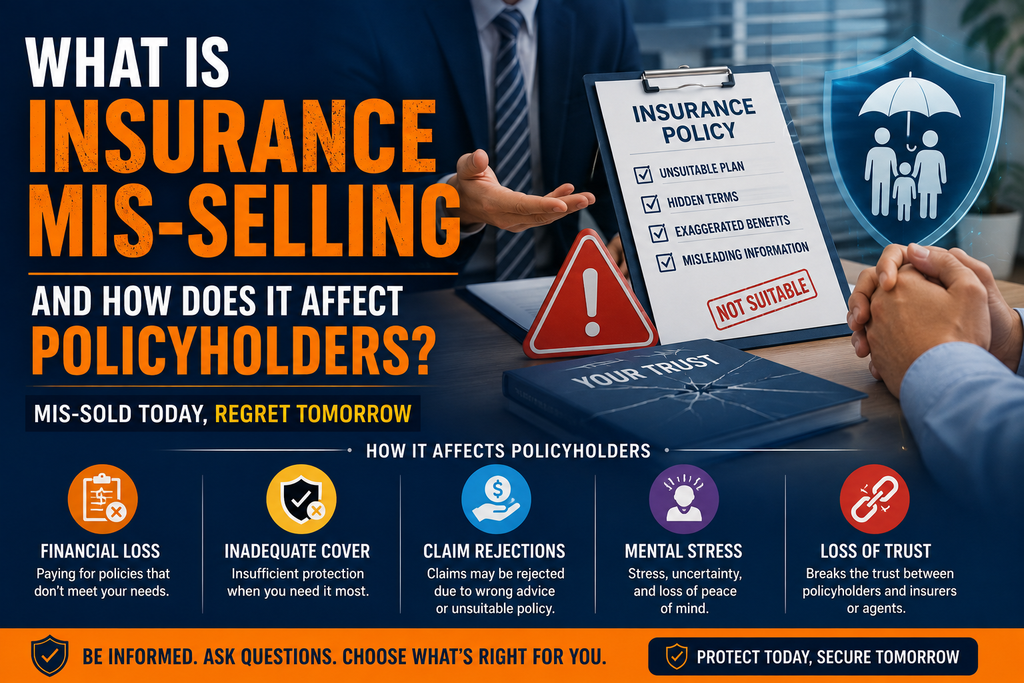
Mis-selling can leave policyholders with insurance coverage that does not match their actual needs and may create problems when they later try to make a claim.
What Is Insurance Mis-Selling?
Insurance mis-selling can happen when a customer is not given clear or accurate information before purchasing a policy.
Examples may include:
- Promising benefits that are not included in the policy
- Failing to explain important exclusions
- Selling unsuitable coverage
- Providing incorrect information about premiums or returns
- Adding unnecessary riders or covers
- Giving misleading information about claim settlement
- Not explaining important policy conditions
- Entering incorrect information in the proposal form
The actual policy document should always be checked rather than relying only on verbal promises made during the sale.
Common Types of Insurance Mis-Selling
Misrepresentation of Benefits
A customer may be told that a particular event or loss is covered when the policy does not actually provide such coverage.
Hidden or Unexplained Exclusions
Important exclusions may not be properly explained, causing the policyholder to believe they have broader protection than they actually do.
Selling an Unsuitable Policy
A policy may not be appropriate for the customer’s needs, circumstances, risk exposure, or financial requirements.
Misleading Information About Premiums
Customers may not receive clear information about premiums, deductibles, taxes, charges, or other applicable costs.
Unnecessary Add-On Covers
Additional covers or riders may sometimes be sold without adequately explaining their benefits, limitations, and costs.
False or Misleading Claim Promises
A customer may be given unrealistic assurances that a future claim will definitely be paid. However, claims are generally assessed according to the policy terms, coverage, exclusions, and circumstances of the loss.
How Does Insurance Mis-Selling Affect Policyholders?
Insurance mis-selling can have several consequences for policyholders.
Inadequate Coverage
A policyholder may discover that the policy does not provide the protection they expected.
Claim Rejection or Dispute
When an uncovered event occurs, the policyholder may face a rejected or disputed claim because the actual policy terms differ from what they believed they had purchased.
Unexpected Financial Loss
If adequate coverage was not purchased, the policyholder may have to pay significant expenses personally.
Unnecessary Premium Costs
Customers may end up paying for additional covers or products that do not provide meaningful protection for their circumstances.
Loss of Trust
Mis-selling can create frustration and reduce confidence in insurance providers and intermediaries.
How Can Policyholders Identify Insurance Mis-Selling?
Policyholders should look for inconsistencies between what was promised during the sale and what is actually stated in the policy.
Warning signs may include:
- Verbal promises that are not documented
- Unclear explanations of exclusions
- Pressure to purchase immediately
- Unexpected charges
- Benefits that are difficult to verify
- Incorrect personal or risk information
- Coverage that does not match the customer’s requirements
What Should You Do If You Suspect Insurance Mis-Selling?
If you believe an insurance policy was mis-sold:
- Collect the policy document and proposal form.
- Keep emails, messages, brochures, and other sales communications.
- Identify the specific information that was incorrectly represented or not disclosed.
- Compare the sales representations with the actual policy wording.
- Contact the insurer or intermediary and raise the concern.
- Follow the insurer’s formal grievance process if the issue is not resolved.
- Seek professional assistance when the matter involves a significant financial or claim dispute.
How to Avoid Insurance Mis-Selling
Customers can reduce the risk of mis-selling by:
- Reading the policy wording before accepting the cover.
- Checking exclusions and limitations.
- Asking questions about anything unclear.
- Comparing suitable insurance options.
- Verifying the premium and additional charges.
- Keeping copies of all documents.
- Avoiding decisions based solely on verbal assurances.
- Ensuring the information in the proposal form is accurate.
Conclusion
Insurance mis-selling can leave policyholders with unsuitable coverage, unexpected expenses, and difficulties during claims. Understanding the policy before purchasing it and keeping proper records of the information provided during the sale can help protect policyholders.
If you believe your insurance policy may have been mis-sold, carefully review the policy wording and the information provided when the policy was purchased.
Contact Insurance Resolve
For assistance with insurance mis-selling concerns, policy reviews, claim disputes, and insurance-related matters:
📞 Call: 99103-52249
📧 Email: help@insuranceresolve.com

