

Insurance plays an important role in protecting individuals, families, and businesses against financial losses. Whether it is life insurance, health insurance, motor insurance, or property insurance, policyholders expect their insurance policies to provide the protection promised under the agreed terms and conditions.
However, policyholders may sometimes face challenges such as claim rejection, delayed settlements, misleading policy information, incorrect charges, or difficulties in receiving appropriate service. Understanding insurance consumer protection in India can help people become more aware of their rights and the options available when problems arise.
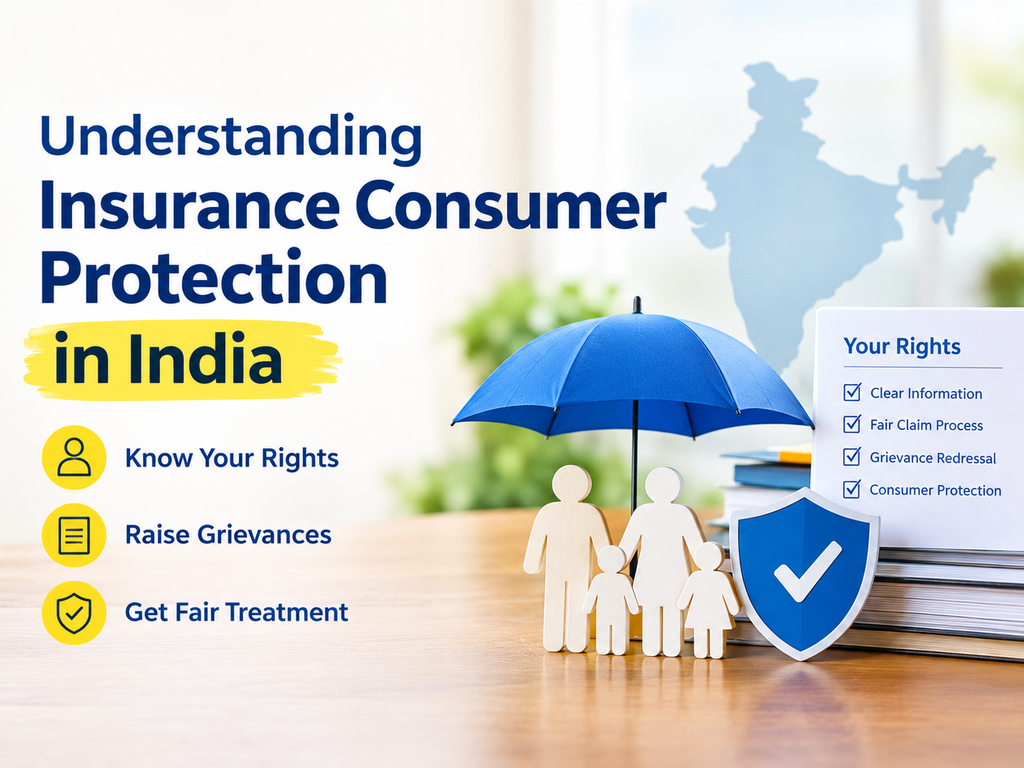
Insurance consumer protection refers to the laws, regulations, and mechanisms designed to protect policyholders and other insurance consumers from unfair practices and help ensure transparency, accountability, and fair treatment.
What Is Insurance Consumer Protection?
In India, the Insurance Regulatory and Development Authority of India (IRDAI) regulates the insurance sector and establishes requirements intended to protect policyholders’ interests. Insurance companies are expected to follow applicable regulations, communicate policy terms appropriately, and handle claims and grievances in accordance with relevant requirements.
Consumer protection does not mean that every insurance claim must be approved. Claims are assessed according to the policy terms, coverage, exclusions, supporting documents, and applicable regulations. However, policyholders should have access to clear information and appropriate channels to raise concerns when they believe an issue has not been handled fairly.
Important Rights of Insurance Policyholders
Insurance consumers should understand the protections available to them under applicable laws and regulations.
- Right to clear information: Policyholders should receive relevant information about policy coverage, exclusions, premiums, benefits, and conditions.
- Protection against mis-selling: Misleading representations about policy benefits or terms can be raised as a grievance.
- Fair claim assessment: Claims should be assessed according to the applicable policy terms and regulatory requirements.
- Access to grievance redressal: Policyholders can approach the insurer’s grievance redressal officer when they face unresolved issues.
- Access to appropriate complaint forums: Eligible complaints may be escalated through regulatory grievance channels or taken to the Insurance Ombudsman, subject to applicable rules. IndiaCode+1
Common Insurance Consumer Problems in India
Despite the protections available, consumers may experience several types of insurance-related difficulties.
Insurance mis-selling: A policyholder may purchase a policy based on misleading promises or an incomplete explanation of its features.
Claim rejection: An insurer may reject a claim because of exclusions, coverage limitations, alleged non-disclosure, or other reasons. A policyholder who disagrees with the decision can review the stated grounds and supporting evidence.
Claim delays: Delays in processing or settling claims can create financial pressure, particularly during medical emergencies or after an unexpected loss.
Short settlement: A policyholder may receive less than the amount claimed and may need clarification about deductions, assessment findings, or policy limits.
Policy servicing issues: Problems involving premium payments, policy records, corrections, cancellations, or other servicing matters can also lead to complaints.
Understanding the nature of the problem is important when deciding how to raise a concern and which supporting documents may be required.
How to Raise an Insurance Complaint in India
Policyholders have established channels for addressing insurance grievances.
The following is a general overview of the available complaint mechanisms.
Contact the insurance company
Submit a written complaint to the insurer’s Grievance Redressal Officer (GRO). Explain the issue clearly and include relevant documents. Keep the complaint reference number and acknowledgement.
Approach IRDAI through Bima Bharosa
If the insurer does not resolve the complaint within the applicable timeline, or the response is unsatisfactory, policyholders can use the official Bima Bharosa portal to register or escalate a grievance as appropriate. Bima Bharat+1
Consider the Insurance Ombudsman
Eligible complaints involving matters such as claim rejection, claim delays, premium disputes, misrepresentation, or policy servicing may be brought before the Insurance Ombudsman, subject to the applicable eligibility requirements and procedure. Details are available at the Council for Insurance Ombudsmen. Government of India+1
The appropriate route depends on the nature of the grievance, the response already received, and the applicable procedural requirements.
Why Supporting Documents Matter
A well-documented complaint helps explain what happened and why the policyholder disagrees with the insurer’s decision. Relevant records may include:
- A copy of the insurance policy and schedule.
- The proposal form and relevant communications, where available.
- Claim forms, bills, reports, and other supporting evidence.
- The insurer’s claim decision or rejection letter.
- Previous complaint emails and reference numbers.
- Any response received from the insurance company’s grievance department.
Maintaining accurate records can make it easier to identify discrepancies, understand the insurer’s reasoning, and present the matter clearly during a review.
The Role of Insurance Consumer Support Services
Understanding insurance rules and grievance procedures can be difficult, especially when a case involves technical policy language, disputed facts, or multiple communications with the insurer.
Insurance consumer support services can help policyholders understand the issue, organise relevant documents, review the reasons provided by the insurance company, and identify possible options for addressing the grievance.
The purpose of such support is to help consumers understand their situation and make informed decisions. No service can guarantee that an insurer will reverse its decision or approve a claim.
Conclusion
Insurance consumer protection is an important part of building trust between policyholders and insurance companies in India. Knowing the applicable policy terms, maintaining accurate records, and understanding the available grievance redressal mechanisms can help consumers respond more effectively when problems arise.
Whether the concern involves mis-selling, claim rejection, delays, short settlement, or policy servicing, understanding the facts and following the appropriate complaint process can be an important step towards seeking a fair resolution.
Insurance Resolve helps policyholders understand and address insurance-related problems.
Visit www.insuranceresolve.com to learn more.
Contact Insurance Resolve
- Website: https://insuranceresolve.com/
- Email: help@insuranceresolve.com
- Phone: +91 9910352249

