

Insurance provides financial protection during unexpected situations, but receiving the benefits of a policy often depends on the documents submitted during the claim process. Whether it is a health, life, motor, property, or business insurance claim, documentation plays an important role in helping the insurance company understand the circumstances and assess the claim.
Even when a claim is genuine, missing information, incomplete records, or inconsistencies between documents may create difficulties during the assessment process. This is why proper documentation is an essential part of insurance claim support.
The Importance of Documentation in Insurance Claims
Insurance companies rely on relevant documents to verify the policyholder’s information, understand the incident, and determine whether the claim falls within the policy’s terms and conditions.
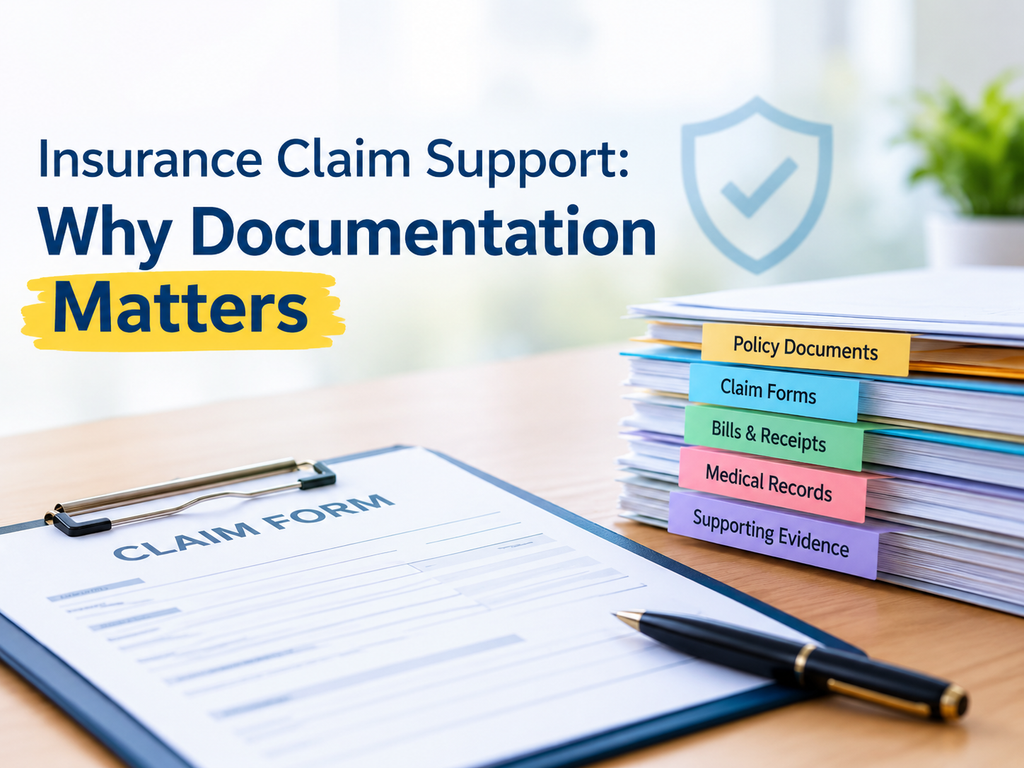
Documents such as policy copies, claim forms, bills, medical records, repair estimates, incident reports, and other supporting evidence help establish the facts of a case. When these records are accurate and consistent, they can make the claim assessment process clearer and more efficient.
How Missing Documents Can Affect a Claim
Incomplete documentation may lead to requests for additional information, delays in claim processing, or difficulties in verifying the loss. In some situations, the insurer may raise questions about the claim because the submitted records do not adequately support the circumstances reported.
However, missing documents do not automatically mean that a claim will be rejected. The impact depends on the nature of the missing information, the applicable policy conditions, and the insurer’s assessment.
Consistency Between Documents Is Equally Important
Providing documents is not enough; the information contained in them must also be accurate and consistent.
For example, differences in dates, names, amounts, medical history, vehicle details, or descriptions of an incident may require further clarification. Such discrepancies can complicate the assessment, even when they arise from an honest mistake.
Clear and consistent records help reduce confusion and allow the relevant facts to be evaluated more effectively.
Documentation Across Different Types of Insurance
The documents required for a claim vary according to the type of insurance and the circumstances of the loss.
- Life Insurance: Policy details, claim forms, death certificates, and other relevant supporting records.
- Health Insurance: Medical records, hospital bills, prescriptions, diagnostic reports, and discharge summaries.
- Motor Insurance: Policy documents, repair estimates, bills, photographs, and incident or police reports where applicable.
- Property Insurance: Proof of ownership, damage photographs, repair estimates, invoices, and incident reports.
- Business Insurance: Financial records, invoices, inventory details, loss assessments, and supporting evidence related to the interruption or damage.
The exact requirements depend on the policy, the type of claim, and the circumstances involved.
Documentation and Claim Rejection
Sometimes, an insurance company raises concerns about missing records, inconsistencies, or insufficient supporting evidence while assessing a claim. These concerns may contribute to a delay, reduced settlement, or rejection, depending on the facts and applicable policy provisions.
When a claim is rejected, the reasons stated in the rejection letter should be reviewed carefully. It is important to understand whether the decision relates to a policy exclusion, a coverage limitation, missing evidence, incorrect information, or another issue.
A clear understanding of the insurer’s reasons and the available supporting documents can help a policyholder evaluate the situation and determine whether further clarification or escalation is appropriate.
The Role of Insurance Claim Support
Insurance claim support can help policyholders understand documentation requirements, review the available records, identify inconsistencies, and understand the concerns raised by an insurance company.
A review of the case may help clarify whether important information has been overlooked or whether additional supporting documents could address the insurer’s concerns. The outcome will depend on the merits of the case, the policy terms, and the applicable rules.
Proper documentation cannot guarantee claim approval, but it can help present the case clearly and support a more informed assessment.
Conclusion
Documentation is a fundamental part of the insurance claim process. Accurate records, complete information, and consistency between supporting documents can help reduce avoidable confusion and make it easier to assess a claim.
When documentation-related concerns arise, understanding the issue and reviewing the available evidence can be an important step toward resolving the matter.
Insurance Resolve helps policyholders understand and address insurance-related problems, including claim rejection, claim delays, short settlements, and other claim-related concerns.
Visit www.insuranceresolve.com to learn more about our services.
Contact Insurance Resolve
- Website: https://insuranceresolve.com/
- Email: help@insuranceresolve.com
- Phone: +91 9910352249

