

When an insurance policyholder submits a claim, the insurance company may review the details before approving or settling it. In certain situations, the insurer may conduct an investigation to understand the circumstances of the incident and verify whether the claim is covered under the policy.
An insurance claim investigation is an important part of the claim assessment process. It helps insurance companies examine the facts, supporting documents, and other relevant information before making a decision.
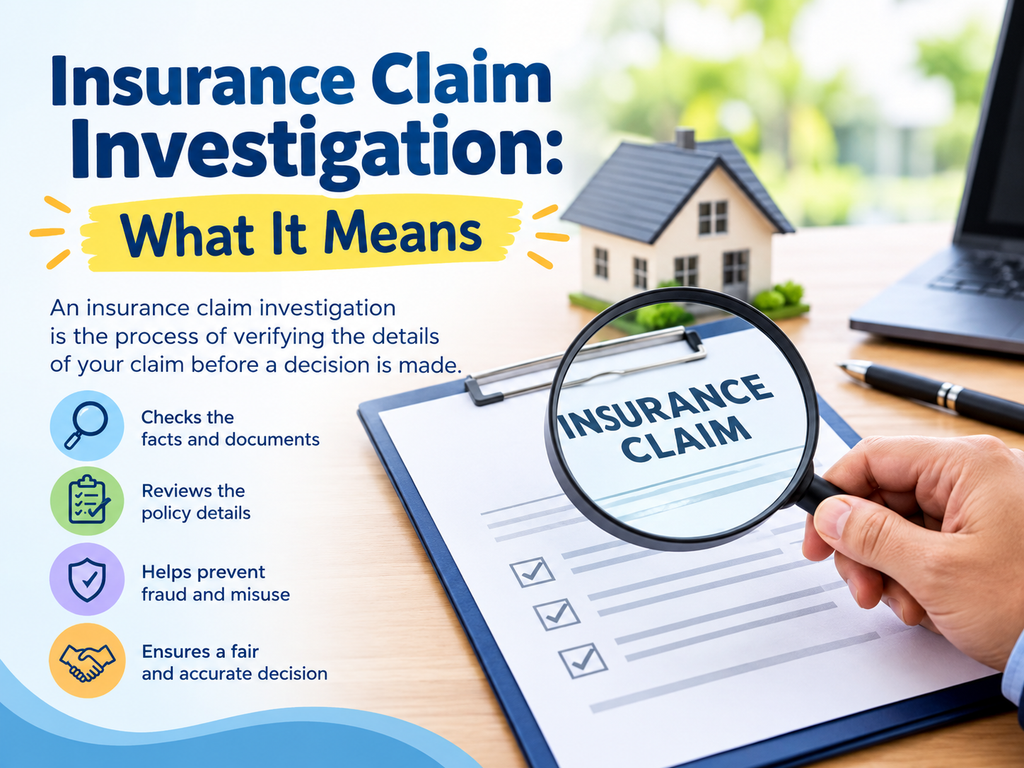
What Is Insurance Claim Investigation?
Insurance claim investigation refers to the process through which an insurance company examines a submitted claim to verify its accuracy, circumstances, and eligibility under the policy.
The investigation may involve reviewing policy documents, medical records, bills, photographs, incident reports, statements, and other relevant evidence.
The purpose is to establish whether the reported loss or damage actually occurred and whether it falls within the coverage provided by the insurance policy.
Why Do Insurance Companies Investigate Claims?
Insurance companies may investigate claims for several reasons, including:
- Verification of the information provided in the claim.
- Understanding the circumstances of an accident or loss.
- Checking the authenticity of submitted documents.
- Identifying possible inconsistencies in claim details.
- Verifying whether policy conditions have been fulfilled.
- Examining whether any policy exclusion applies.
- Assessing the actual extent of the loss or damage.
An investigation does not automatically mean that the policyholder has done something wrong. It may simply be part of the insurer’s claim verification process.
Types of Insurance Claims That May Require Investigation
Different types of insurance claims may involve different investigation procedures.
Health Insurance Claims: Insurers may examine medical records, hospital bills, diagnosis details, treatment history, and other relevant medical information.
Life Insurance Claims: Investigations may involve verifying the circumstances of death, medical history, policy information, and supporting records, depending on the nature of the claim.
Motor Insurance Claims: In vehicle-related claims, insurers may examine accident details, vehicle damage, photographs, repair estimates, and police reports where applicable.
Property Insurance Claims: Investigations may focus on the cause of damage, extent of loss, property ownership, photographs, and supporting documents.
Commercial Insurance Claims: Business-related claims may require examination of financial records, damaged assets, operational losses, and incident-related evidence.
What Does an Insurance Investigator Examine?
The information examined during an investigation depends on the type and circumstances of the claim.
Common areas of examination include:
- Policy coverage and exclusions.
- Claim forms and supporting documents.
- Date and circumstances of the incident.
- Medical or treatment records, where applicable.
- Bills, invoices, and financial records.
- Photographs and inspection reports.
- Statements from relevant individuals.
- Previous claim information, where relevant.
The investigation is intended to help the insurer understand the claim and assess it against the applicable policy provisions.
Does Claim Investigation Mean Claim Rejection?
No. An insurance claim investigation does not automatically mean that the claim will be rejected.
A claim may be approved after the investigation confirms that the loss is covered and the applicable policy requirements are satisfied.
However, if the investigation identifies relevant inconsistencies, missing information, policy exclusions, or other grounds affecting eligibility, the insurer may seek further clarification or make a decision based on the policy terms and applicable regulations.
The final outcome depends on the facts of the case and the relevant policy provisions.
Why Can Insurance Claims Get Delayed During Investigation?
Claim investigations can sometimes take additional time because the insurer may need to verify information from different sources.
Common reasons include:
- Additional document verification.
- Medical record examination.
- Inspection of damaged property or vehicles.
- Verification of accident circumstances.
- Differences in the information submitted.
- Delays in receiving reports from external agencies.
However, an investigation should not become an unreasonable reason for keeping a genuine claim pending indefinitely. Applicable claim-processing timelines and regulatory requirements remain important.
What Happens When an Investigation Raises Questions?
If an investigation identifies missing information or inconsistencies, the insurance company may seek clarification or additional supporting documents.
The insurer’s assessment should be based on relevant facts, policy wording, and applicable regulations. A policyholder should also be able to understand the reasons behind a claim decision.
If a claim is rejected or settled for a lower amount, the reasons and relevant policy provisions become important in understanding whether the decision is justified.
Understanding Your Rights as a Policyholder
Policyholders have an interest in receiving fair and transparent claim assessment.
An investigation should be relevant to the claim and should not be treated as automatic proof of fraud or wrongdoing.
Insurance companies are expected to follow applicable regulatory requirements and policy conditions while assessing claims. Policyholders can seek clarification when they do not understand the investigation findings or the reasons for a claim decision.
Conclusion
Insurance claim investigation is a process used by insurance companies to verify claim information and assess whether a reported loss is covered under the insurance policy.
Although investigations are sometimes necessary, they do not automatically indicate a problem with the policyholder’s claim. The outcome depends on the available evidence, policy terms, and applicable regulations.
Understanding the investigation process can help policyholders better understand claim delays, additional verification requests, rejections, and settlement decisions.
Need Help With an Insurance Claim Issue?
Insurance Resolve helps policyholders address insurance-related problems, including claim rejection, claim delays, short settlement, mis-selling, and other insurance service issues.
Contact Insurance Resolve
📞 Phone: +91 9910352249
📧 Email: help@insuranceresolve.com
🌐 Website: www.insuranceresolve.com
Insurance Resolve – We Resolve. You Relax.

