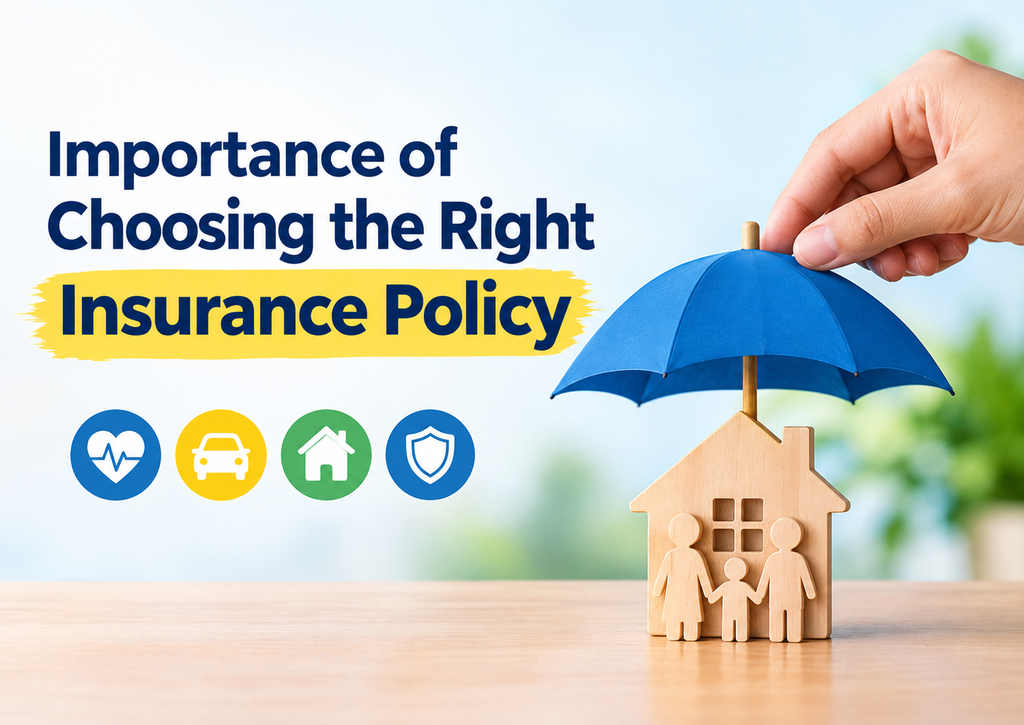

Insurance plays an important role in protecting individuals, families, and businesses from unexpected financial losses. However, simply purchasing an insurance policy is not enough. Choosing the right policy is equally important because every insurance product offers different coverage, benefits, exclusions, and conditions.
A suitable insurance policy can provide financial security and peace of mind, while an unsuitable policy may leave you with inadequate protection when you need it most.
What Does Choosing the Right Insurance Policy Mean?
Choosing the right insurance policy means selecting coverage that matches your financial needs, personal circumstances, assets, and potential risks. It also involves understanding the policy’s terms, benefits, limitations, and premium obligations.
A policy that works well for one person may not be suitable for another. Therefore, insurance decisions should be based on individual requirements rather than promotional offers or premium costs alone.
Why Is Choosing the Right Insurance Policy Important?
1. Financial Protection
The primary purpose of insurance is to reduce the financial burden of unexpected events. The right policy can help cover eligible medical expenses, property damage, vehicle losses, or other insured risks, subject to the policy terms.
2. Suitable Coverage
Different policies offer different levels of protection. Selecting appropriate coverage helps reduce the risk of being underinsured or discovering that an important risk is not covered.
3. Protection for Your Family
Life and health insurance can play an important role in protecting family members against financial difficulties arising from death, illness, or medical emergencies.
4. Better Claim Experience
Understanding the policy’s coverage, exclusions, waiting periods, deductibles, and documentation requirements can help set realistic expectations about claim settlement.
5. Long-Term Financial Security
The right insurance coverage can help individuals and businesses manage unexpected expenses without placing excessive pressure on savings or other financial resources.
Common Types of Insurance Policies
Different insurance policies address different needs.
Life Insurance: Provides financial protection to beneficiaries in the event of the insured person’s death, according to the policy terms.
Health Insurance: Helps cover eligible medical and hospitalisation expenses, subject to the policy’s benefits and limitations.
Motor Insurance: Provides coverage for specified vehicle-related risks, depending on the type of policy and applicable conditions.
Home and Property Insurance: Protects insured property against specified risks, such as fire or certain types of damage.
Business Insurance: Helps businesses manage covered risks involving property, equipment, liability, and other business-related exposures.
Understanding the purpose of each type of insurance helps policyholders make more informed decisions.
Risks of Choosing an Unsuitable Insurance Policy
Selecting an unsuitable policy can create problems that may not become apparent until a claim is made.
- Insufficient coverage: The sum insured may not be enough to meet the financial loss.
- Unexpected exclusions: Certain illnesses, events, or losses may not be covered.
- Premium affordability issues: High premiums may become difficult to maintain over time.
- Mis-selling: A policy may be presented with misleading promises or an inaccurate explanation of its benefits.
- Claim disputes: Differences in understanding policy terms can lead to disagreements over coverage or settlement.
These risks highlight the importance of understanding what a policy actually provides before relying on it for financial protection.
Understanding Policy Terms and Conditions
Insurance policies contain important details that determine the extent of protection available. The sum insured, exclusions, waiting periods, deductibles, co-payments, sub-limits, renewal conditions, and claim requirements can all influence the benefits received.
For example, a health insurance policy may advertise a substantial sum insured but include specific limits on certain treatments. Similarly, a property insurance policy may apply particular conditions when calculating compensation for damage.
Reading and understanding these provisions helps policyholders recognise the scope and limitations of their coverage.
The Role of Transparency in Insurance
Transparency is essential when purchasing insurance. Policyholders should receive clear information about the policy’s purpose, benefits, exclusions, premium obligations, and important limitations.
Misleading explanations or unrealistic promises can result in a mismatch between a customer’s expectations and the actual policy coverage. Clear communication helps people understand their insurance decisions and reduces the likelihood of future misunderstandings.
Conclusion
Choosing the right insurance policy is an important part of financial planning. Suitable coverage can help protect your health, family, property, vehicle, and business against unexpected financial risks.
The best policy is not necessarily the cheapest or the one offering the highest advertised benefits. It is the policy whose coverage, conditions, and costs align with your actual needs and financial circumstances.
Taking the time to understand policy terms and limitations can help you make informed decisions and avoid unnecessary insurance-related problems.
Facing an Insurance-Related Problem?
Insurance Resolve helps policyholders address insurance-related issues, including claim rejection, claim delays, short settlements, mis-selling, lapsed policies, and service-related problems.
Website: https://insuranceresolve.com/
Email: help@insuranceresolve.com
Contact / WhatsApp: +91 9910352249
Insurance Resolve – We Resolve. You Relax.