
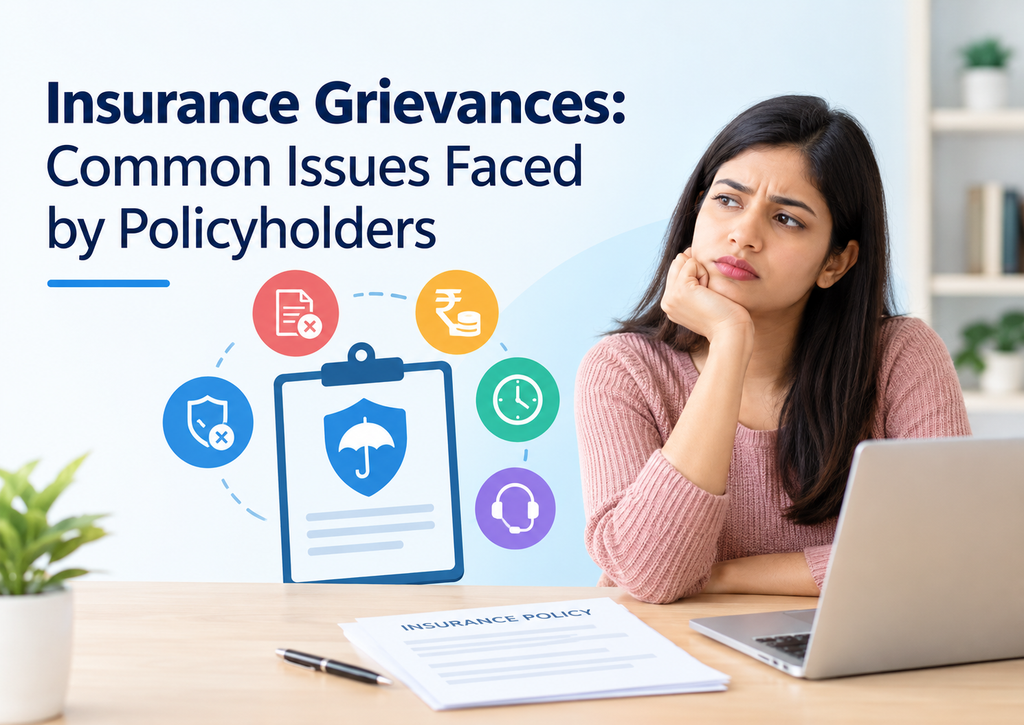
Insurance provides financial protection against unexpected events. However, policyholders sometimes face difficulties when dealing with insurance companies. These problems may involve claim rejection, delayed settlements, insufficient claim payments, misleading sales practices, or poor customer service.
Such insurance grievances can cause financial stress and uncertainty, especially when people depend on their policies during medical emergencies, accidents, or other difficult situations.
What Are Insurance Grievances?
Insurance grievances are complaints or concerns raised by policyholders regarding their insurance policies, claims, premiums, services, or the conduct of an insurance company or intermediary.
These grievances may arise because of misunderstandings, administrative errors, differences in interpreting policy terms, or disagreements over claim decisions.
Common Insurance Grievances Faced by Policyholders
1. Insurance Claim Rejection
One of the most common insurance grievances occurs when an insurance company rejects a claim. A claim may be rejected because of policy exclusions, incomplete documentation, non-disclosure of relevant information, or other reasons specified in the policy.
However, policyholders may disagree with the decision when they believe their claim meets the policy requirements or the rejection reasons are unclear.
2. Delay in Claim Settlement
Delayed claim settlement can create serious financial difficulties. For example, a family may be waiting for reimbursement of medical expenses, or a vehicle owner may need funds to repair a damaged vehicle.
Delays may arise from pending documents, investigations, administrative issues, or disputes regarding the claim. Policyholders may reasonably expect clear communication about the status and reasons for any delay.
3. Short Settlement of Insurance Claims
Sometimes, an insurance company approves a claim but pays less than the amount requested by the policyholder.
This is known as a short settlement. It may occur because of deductibles, co-payments, policy limits, depreciation, exclusions, or differences in the assessment of losses.
A policyholder may raise a grievance if the settlement calculation appears inconsistent with the policy terms or the available evidence.
4. Insurance Mis-Selling
Insurance mis-selling occurs when a policy is sold through misleading information, inaccurate promises, or an inadequate explanation of its features and limitations.
For example, a customer may believe they are purchasing a fixed-return deposit when the product is actually an insurance policy. In other cases, important exclusions, charges, or conditions may not be adequately explained.
Such situations can result in financial loss and dissatisfaction.
5. Lapsed Policy Issues
A policy may lapse when required premiums are not paid within the applicable period or grace period, subject to the policy terms.
Policyholders may experience difficulties understanding revival conditions, outstanding premiums, eligibility requirements, or the effect of a lapse on policy benefits.
The consequences depend on the type of policy and its specific conditions.
6. Poor Customer Service
Policyholders may also face difficulties obtaining clear answers, receiving policy documents, correcting personal details, updating nominee information, or getting timely responses to complaints.
Repeated communication gaps can make even routine insurance matters frustrating.
7. Disputes Over Policy Terms and Conditions
Insurance policies contain exclusions, waiting periods, sub-limits, deductibles, co-payments, and other conditions that affect coverage.
Disputes may arise when policyholders believe a particular expense or event is covered, while the insurer applies a limitation or exclusion.
Clear explanations of the relevant policy provisions are important when assessing such disagreements.
Why Do Insurance Grievances Occur?
Insurance grievances can arise for several reasons, including:
- Incomplete or misleading information at the time of purchase.
- Differences in understanding policy terms and exclusions.
- Delays in submitting or processing required documents.
- Disagreements over claim assessments and settlement amounts.
- Administrative errors or communication gaps.
- Unclear explanations of claim rejection decisions.
Understanding the reason behind a grievance is important because different issues may require different forms of resolution.
Why Is Proper Communication Important?
Clear communication helps policyholders understand the status of their claims and the reasons behind an insurance company’s decision.
When a grievance arises, the relevant policy documents, claim correspondence, settlement calculations, and written reasons for rejection can help clarify the matter.
A well-documented understanding of the issue may also help when the policyholder seeks a review through the insurer’s grievance redressal mechanism or another appropriate forum.
How Can Insurance Grievances Affect Policyholders?
Insurance disputes can create financial uncertainty, emotional stress, and a loss of confidence in insurance services. Delays may affect household budgets, while inadequate settlements can leave individuals responsible for expenses they expected their insurance to cover.
For businesses, unresolved insurance disputes may also affect cash flow, repairs, and normal operations.
This is why understanding policy terms and knowing the available complaint-resolution channels are important parts of being an informed policyholder.
Conclusion
Insurance grievances are a common concern for policyholders and may involve claim rejection, delayed payments, short settlements, mis-selling, lapsed policies, or inadequate customer service.
Every grievance should be considered on its own facts, supporting documents, and applicable policy terms. Understanding the reason for a dispute is an important part of identifying the available options for addressing it.
Greater transparency, clear communication, and awareness of policyholder rights can help people navigate insurance-related challenges more confidently.
Facing an Insurance-Related Problem?
Insurance Resolve helps policyholders address insurance-related problems, including claim rejection, claim delays, short settlements, mis-selling, lapsed policies, and service-related issues.
Contact Insurance Resolve
- Phone / WhatsApp: +91 9910352249
- Email: help@insuranceresolve.com
- Website: https://insuranceresolve.com/
Insurance Resolve – We Resolve. You Relax.

