

Introduction
Insurance provides financial protection against unexpected events. However, the effectiveness of an insurance policy depends on several factors, including the accuracy of the information provided when applying for coverage.
When purchasing life, health, motor, or general insurance, applicants are expected to provide complete and correct information. Incorrect, incomplete, or misleading details may create problems during policy issuance or when a claim is filed.
Understanding the importance of accurate information can help policyholders avoid unnecessary complications and make informed decisions.
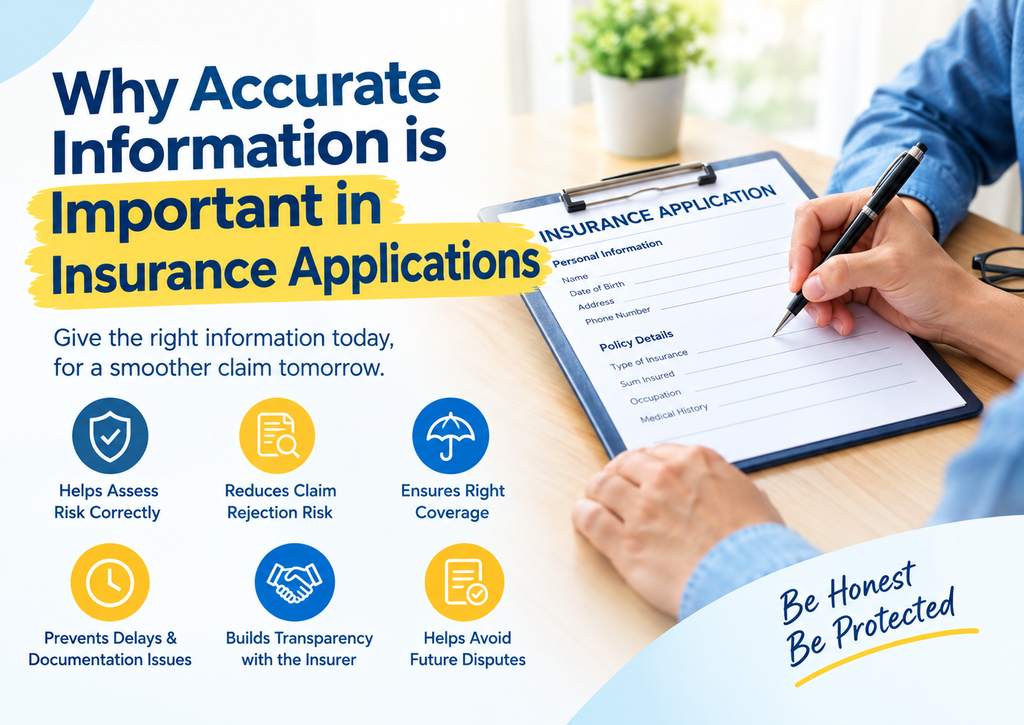
1. Helps the Insurance Company Assess Risk Correctly
Insurance companies use the information provided in an application to evaluate the risk associated with providing coverage. Details such as age, occupation, medical history, income, and previous claims may be relevant, depending on the type of policy.
If the information is inaccurate, the insurer may not be able to assess the risk properly. This can lead to complications regarding policy terms, premiums, or coverage eligibility.
2. Reduces the Risk of Claim Rejection
One of the most important reasons to provide accurate information is to avoid disputes during claim processing.
For example, if an applicant fails to disclose relevant medical information when applying for health or life insurance, the insurer may examine that omission when assessing a claim.
Depending on the policy terms, the nature of the information, and applicable law, a material misrepresentation or non-disclosure may affect claim admissibility. However, not every mistake automatically results in claim rejection.
3. Ensures Appropriate Policy Coverage
Insurance applications help determine the coverage suitable for an applicant’s circumstances. Providing incorrect information about assets, occupation, medical history, or the intended use of a vehicle may result in a policy that does not adequately reflect the actual risk.
Accurate information helps insurers assess the application correctly and enables customers to understand the coverage being offered.
4. Prevents Delays and Documentation Issues
Inconsistent information across application forms, identity documents, medical records, income documents, and other supporting papers can lead to requests for clarification.
These discrepancies may delay policy issuance, underwriting, or claim settlement while the insurer verifies the details.
Reviewing all information before submitting an application can help reduce avoidable errors and documentation-related delays.
5. Builds Transparency Between the Policyholder and Insurer
An insurance contract depends on the information exchanged between the applicant and the insurance company. Providing truthful information supports transparency and helps both parties understand their respective responsibilities.
Policyholders should also carefully review the application before signing it, particularly when an agent or intermediary assists with filling out the form.
Applicants should ensure that the information entered reflects their actual circumstances and that they understand the declarations they are making.
6. Helps Avoid Future Disputes
Disagreements can arise when the information recorded in an application differs from the policyholder’s actual circumstances.
For instance, incorrect details about a vehicle’s usage, a person’s occupation, or an existing medical condition may become relevant when a claim is investigated.
Keeping application forms, submitted documents, policy schedules, and written communications can help policyholders clarify what information was provided and what coverage was agreed upon.
7. The Importance of Reviewing Your Application
Before submitting an insurance application, it is important to review the information carefully. Pay attention to personal details, medical disclosures, occupation, income, previous insurance history, and any other information requested by the insurer.
If you discover an error after submission, contact the insurance company promptly and request a correction through the appropriate process. Keep written confirmation of the correction for future reference.
Applicants should never assume that an incorrect entry is unimportant simply because it was made unintentionally.
Conclusion
Accurate information is an essential part of the insurance process. It helps insurers assess risk, supports appropriate coverage decisions, reduces documentation issues, and can prevent avoidable disputes during claim settlement.
Policyholders should read application forms carefully, disclose relevant information honestly, verify the details entered on their behalf, and retain copies of all submitted documents.
A little attention at the application stage can help prevent significant complications later.
Need Assistance With an Insurance-Related Problem?
If you are facing an insurance claim rejection, claim delay, short settlement, policy mis-selling, or another insurance-related service issue, Insurance Resolve can help you understand your concern and explore appropriate options for further action.
Contact Insurance Resolve
- Phone/WhatsApp: +91 9910352249
- Email: help@insuranceresolve.com
- Website: https://insuranceresolve.com/
Insurance Resolve – We Resolve. You Relax.

