
Introduction
Insurance is designed to provide financial protection and peace of mind during uncertain times. However, many policyholders discover that the insurance policy they purchased does not match what was promised to them. This situation is commonly known as mis-selling of an insurance policy.
Insurance mis-selling is a serious concern that affects thousands of consumers every year. It can lead to financial losses, denied claims, and disappointment when policyholders realize they were given incorrect or incomplete information at the time of purchase. Understanding your rights as a consumer is essential to protect yourself and make informed insurance decisions.
What is Mis-selling of an Insurance Policy?
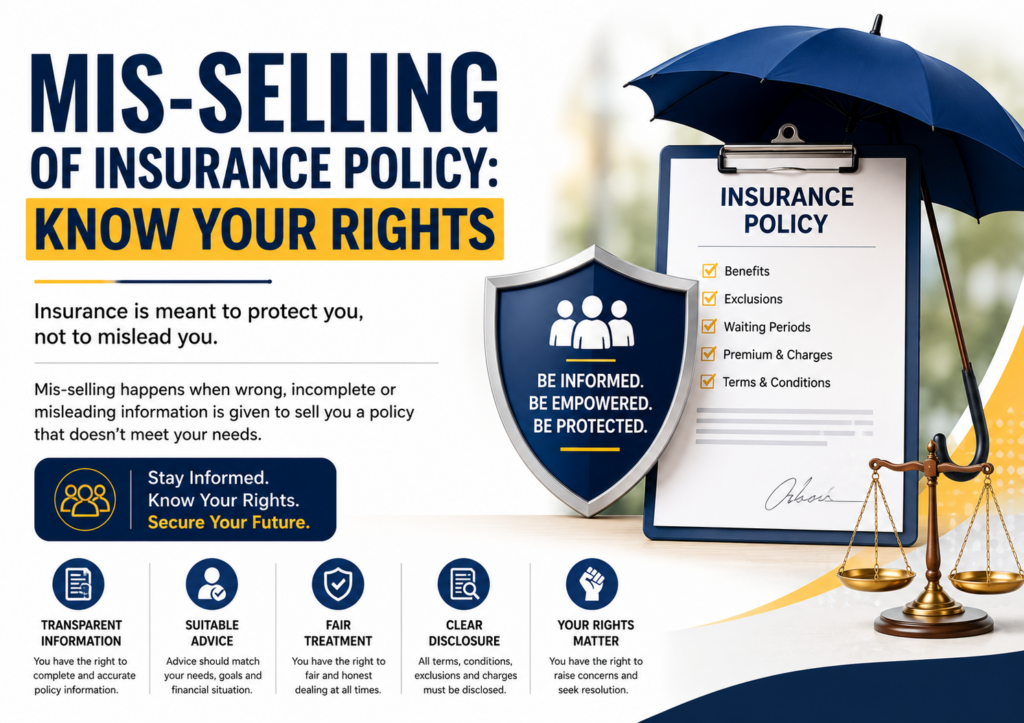
Mis-selling occurs when an insurance policy is sold using misleading, incomplete, or false information. It may also happen when a policy is recommended without considering the customer’s financial needs, objectives, or eligibility.
In many cases, customers believe they are purchasing one type of insurance product but later discover that the actual policy terms are entirely different. Such situations create confusion and can affect the financial security that insurance is supposed to provide.
Common Examples of Insurance Mis-selling
Insurance mis-selling can take different forms, including:
- Promising guaranteed returns that are not mentioned in the policy.
- Selling investment-oriented policies as fixed deposit alternatives.
- Hiding important exclusions and waiting periods.
- Not clearly explaining premium payment obligations.
- Providing incomplete information about surrender charges.
- Selling policies without understanding the customer’s financial goals.
- Misrepresenting benefits, bonuses, or maturity values.
- Issuing policies with incorrect personal or medical details.
These practices may leave policyholders with coverage that does not meet their expectations or financial requirements.
Why Does Mis-selling Happen?
Several factors contribute to insurance mis-selling. Sometimes sales representatives focus on meeting sales targets rather than understanding customer needs. In other cases, customers purchase policies without carefully reviewing the policy document or asking detailed questions.
Lack of awareness about policy features, complex insurance terminology, and hurried sales processes can also increase the chances of mis-selling.
Your Rights as an Insurance Policyholder
Every insurance customer has important rights that should be respected throughout the buying process.
Right to Complete Information
You have the right to receive accurate and transparent information regarding policy benefits, exclusions, waiting periods, premium payments, charges, and claim conditions.
Right to Fair Treatment
Insurance companies and their representatives are expected to deal fairly, honestly, and professionally with customers.
Right to Suitable Advice
Insurance recommendations should match your financial needs, age, income, risk profile, and future goals instead of being based solely on sales targets.
Right to Transparent Documentation
Customers are entitled to receive policy documents, benefit illustrations, and terms and conditions that clearly explain the insurance product.
Right to Raise Concerns
If you believe a policy was mis-sold, you have the right to seek clarification and raise concerns with the insurer through the appropriate grievance channels.
How Mis-selling Can Affect Policyholders
The consequences of insurance mis-selling can be significant. Policyholders may experience:
- Unexpected financial losses
- Lower-than-expected maturity benefits
- Claim disputes or claim rejection
- Difficulty in continuing premium payments
- Inadequate insurance protection
- Stress and loss of trust in financial institutions
Understanding policy features before purchasing insurance helps reduce these risks.
Importance of Reading Policy Documents
Insurance policies contain valuable information about coverage, exclusions, premium schedules, claim conditions, and policy benefits.
Before accepting any insurance policy, customers should carefully review the policy wording, benefit illustrations, declarations, and terms. Asking questions and seeking clarification can help avoid misunderstandings in the future.
Consumer Awareness is the Best Protection
Being an informed consumer is one of the strongest defenses against insurance mis-selling. Compare policies, verify information from official documents, and avoid making decisions based solely on verbal promises or marketing presentations.
Insurance is a long-term financial commitment, and understanding the product before purchasing can prevent future disputes.
Conclusion
Insurance should provide confidence and financial security—not confusion or disappointment. Mis-selling of insurance policies can create long-term financial challenges, making it important for consumers to understand their rights and carefully evaluate every policy before purchase.
Greater awareness, transparent communication, and informed decision-making help build trust between insurers and policyholders. By knowing your rights and understanding insurance products, you can make better financial decisions and protect your interests throughout your insurance journey.
Insurance knowledge empowers consumers, and informed policyholders are better prepared to make choices that truly meet their financial needs
📞 +91 99103-52249
🌐 www.insuranceresolve.com
📧 help@insuranceresolve.com

