

Insurance is purchased with the expectation that it will provide financial support during difficult times. Whether it is a life insurance, health insurance, motor insurance, or any other type of policy, policyholders trust that their claims will be settled fairly when required. However, not every insurance claim is approved. A claim may be rejected for various reasons, leaving policyholders confused and disappointed.
Understanding the possible reasons behind claim rejection can help policyholders become more aware of how insurance policies work. While every claim is assessed based on the policy terms and the facts of the case, knowing the common causes of rejection can help people better understand the insurance claim process.
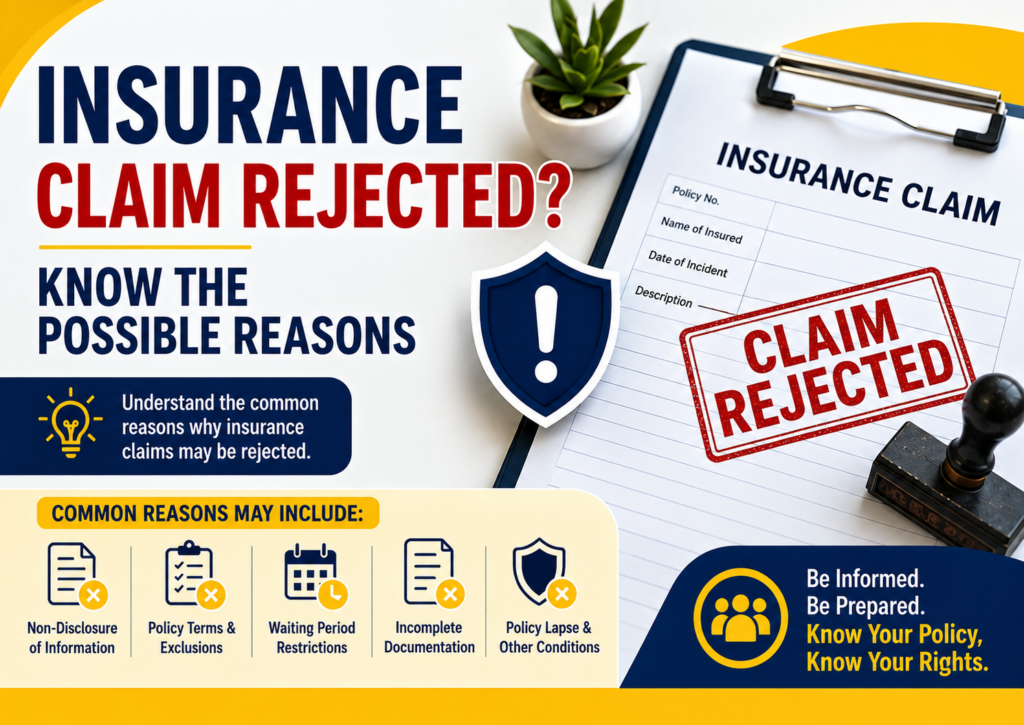
What Does Claim Rejection Mean?
An insurance claim is considered rejected when the insurance company decides not to pay the claimed amount after reviewing the documents, policy conditions, and circumstances of the claim. Claim rejection does not always mean the claim was fraudulent. In many cases, it may result from policy conditions, documentation issues, or differences in interpretation.
Common Reasons Why Insurance Claims May Be Rejected
1. Non-Disclosure of Important Information
One of the most common reasons for claim rejection is the failure to disclose material information while purchasing the policy. Insurance companies rely on the information provided by the policyholder to assess the risk. If important details are omitted or incorrectly stated, the insurer may reject the claim after verification.
2. Policy Terms and Conditions
Every insurance policy contains specific terms, conditions, exclusions, and limitations. If a claim falls outside the coverage provided by the policy or relates to an excluded event, the insurer may decline the claim.
Reading and understanding the policy document is essential to know what is covered and what is not.
3. Policy Lapse
Insurance coverage remains active only if the required premiums are paid on time. If the policy lapses due to non-payment of premium, the insurer may reject claims arising after the lapse date unless the policy has been revived according to the applicable rules.
4. Waiting Period Restrictions
Certain insurance policies, particularly health insurance, include waiting periods for specific illnesses or treatments. If a claim is made during the waiting period for a condition that is not yet covered, it may be rejected.
5. Incorrect or Incomplete Documentation
Insurance companies require supporting documents to verify the claim. Missing, incorrect, or inconsistent documents may delay claim processing or result in rejection if the insurer is unable to establish the validity of the claim.
6. Violation of Policy Conditions
Some policies require policyholders to follow specific obligations. For example, failing to report an incident within the required time or not complying with policy requirements may affect claim eligibility.
7. Claims Beyond the Scope of Coverage
Insurance policies are designed to cover specific risks only. If the claimed event is outside the policy coverage, the insurer may reject the claim even if the policy is otherwise active.
8. Fraudulent or Misrepresented Claims
Insurance companies investigate suspicious claims carefully. If false information, fabricated documents, or intentional misrepresentation is discovered during the investigation, the claim may be rejected.
9. Excluded Events
Every insurance policy includes exclusions that specify situations where no benefits are payable. Examples may include certain high-risk activities, illegal acts, or circumstances specifically excluded in the policy wording.
10. Delay in Intimation
Many insurance policies require policyholders or nominees to inform the insurance company within a reasonable or specified period after the insured event. Significant delays without a valid explanation may create complications during claim assessment.
Claim Rejection Does Not Always Mean the Matter Ends
A rejected insurance claim is not necessarily the final outcome. Policyholders have the right to understand the reason for rejection and seek clarification from the insurance company. In many situations, disputes arise due to misunderstandings, interpretation of policy terms, or documentation-related concerns.
Insurance companies are expected to communicate the reasons for claim decisions clearly, enabling policyholders to review the circumstances and understand the basis of the decision.
Importance of Reading the Policy Carefully
Many claim-related disputes arise simply because policyholders are unaware of the policy’s coverage, exclusions, waiting periods, and conditions. Reading the policy document carefully before purchasing and during the policy period can help build realistic expectations regarding claim eligibility.
It is also important to preserve policy documents, premium receipts, medical records (where applicable), and other relevant records that may become important during claim evaluation.
Conclusion
Insurance claim rejection can occur for a variety of reasons, ranging from policy exclusions and non-disclosure to documentation issues and policy lapses. Understanding these possible reasons helps policyholders become more informed about how insurance claims are assessed and why certain claims may not be approved.
Being aware of policy conditions, maintaining accurate information, and understanding the scope of coverage are essential aspects of responsible insurance planning. An informed policyholder is better equipped to understand claim decisions and make informed choices regarding insurance protection.

