

Receiving a health insurance claim rejection can be frustrating and stressful, especially when you’re already dealing with medical expenses. Many policyholders assume that once a claim is rejected, there is nothing they can do. However, that is not true.
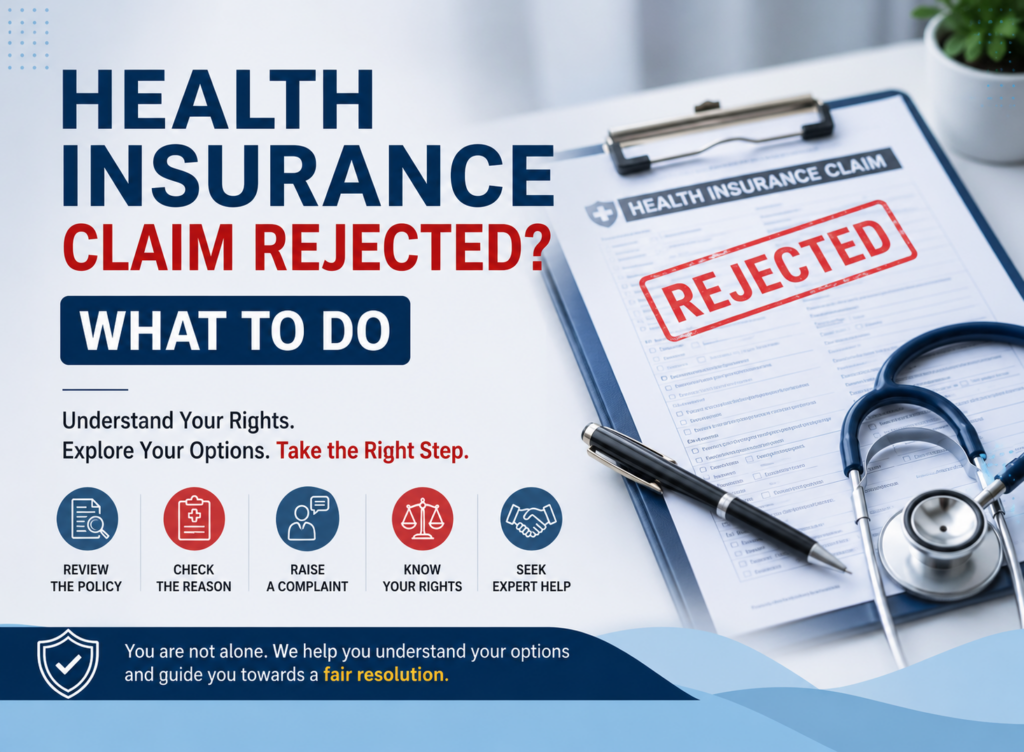
A rejected claim doesn’t always mean you have lost your rights. In many cases, claims are rejected due to missing documents, policy misunderstandings, procedural errors, or technical reasons that can often be corrected. Understanding why your claim was rejected and taking the right steps can significantly improve your chances of getting it approved.
In this guide, we’ll explain the most common reasons for health insurance claim rejection and what you should do next.
Common Reasons Why Health Insurance Claims Get Rejected
Understanding the reason behind the rejection is the first step toward resolving the issue. Some of the most common reasons include:
- Incomplete or incorrect claim documents
- Non-disclosure of pre-existing medical conditions
- Treatment not covered under the policy
- Waiting period not completed
- Delay in informing the insurance company
- Policy exclusions
- Expired or lapsed insurance policy
- Cashless treatment taken at a non-network hospital
- Mismatch in medical records
- Incorrect information provided during policy purchase
Always read the rejection letter carefully to understand the exact reason mentioned by your insurer.
Step 1: Read the Claim Rejection Letter Carefully
Never ignore the rejection letter.
Insurance companies are required to provide the reason for rejecting your claim. Read every point carefully and compare it with your policy document.
Sometimes claims are rejected due to simple documentation issues that can be corrected by submitting additional information.
Step 2: Review Your Health Insurance Policy
Take out your policy document and verify:
- Coverage details
- Waiting periods
- Policy exclusions
- Sum insured
- Claim conditions
- Network hospitals
- Required documents
Many policyholders discover that the rejection was based on a misunderstanding of policy terms.
Step 3: Gather All Supporting Documents
Prepare every medical and insurance-related document before contacting the insurer.
Important documents include:
- Hospital bills
- Medical reports
- Doctor’s prescription
- Diagnostic reports
- Discharge summary
- Pharmacy bills
- Health insurance policy
- Claim form
- Identity proof
- Bank details
- Previous communication with the insurer
Organizing these documents helps strengthen your case.
Step 4: Contact Your Insurance Company
Before assuming the claim cannot be recovered, contact your insurer’s claims department.
Ask for:
- Detailed explanation of rejection
- Missing documents (if any)
- Possibility of reconsideration
- Appeal process
Many claims are approved after submitting additional documents.
Step 5: File an Appeal
If you believe the rejection is unfair, submit a written appeal.
Your appeal should include:
- Policy number
- Claim number
- Reason for disagreement
- Supporting documents
- Medical evidence
A professionally prepared appeal often increases the chances of claim approval.
Step 6: Escalate the Complaint
If the insurer refuses to resolve the issue, you can escalate your complaint.
Possible options include:
- Insurance Company’s Grievance Redressal Officer
- Insurance Ombudsman
- IRDAI Grievance Redressal System
These authorities review disputes between policyholders and insurance companies and may help resolve genuine cases.
Can a Rejected Health Insurance Claim Be Approved Later?
Yes.
Many rejected claims are successfully approved after:
- Submitting missing documents
- Correcting errors in the application
- Providing additional medical evidence
- Filing a proper appeal
- Escalating the complaint through the appropriate channels
Every case is different, but a rejection does not necessarily mean the matter is closed.
How Insurance Resolve Can Help
Insurance Resolve helps policyholders who are facing health insurance claim issues.
Our experts assist with:
- Reviewing your insurance policy
- Understanding the reason for rejection
- Preparing appeal letters
- Document verification
- Communicating with insurance companies
- Guiding you through the grievance process
- Helping you pursue a fair resolution
Our goal is to help policyholders understand their rights and navigate the claims process more effectively.
Tips to Avoid Health Insurance Claim Rejection
You can reduce the chances of claim rejection by following these best practices:
- Read your policy before making a claim.
- Disclose your complete medical history honestly.
- Inform the insurer within the required timeline.
- Keep copies of all hospital and medical records.
- Use network hospitals whenever possible.
- Renew your policy before it expires.
- Submit complete and accurate documents.
- Double-check your claim form before submission.
Frequently Asked Questions (FAQs)
Can I challenge a rejected health insurance claim?
Yes. If you believe the rejection is incorrect or unfair, you can file an appeal with supporting documents.
How long does the appeal process take?
The timeline varies depending on the insurer and the complexity of the case. It may take several weeks to review an appeal.
What is the most common reason for claim rejection?
Common reasons include incomplete documentation, non-disclosure of medical history, policy exclusions, waiting periods, and delayed claim notification.
Can I file a complaint if my insurer rejects my claim unfairly?
Yes. If your issue is not resolved through the insurer’s grievance process, you may escalate it through the appropriate grievance mechanisms available to policyholders.
Is every rejected claim final?
No. Many claims are reconsidered and approved after additional documents or clarification are provided.
Final Thoughts
A health insurance claim rejection can be disappointing, but it doesn’t always mean you’ve reached the end of the road. By understanding the reason for rejection, reviewing your policy carefully, gathering the right documents, and following the correct appeal process, you may still be able to resolve your claim successfully.
If you’re unsure about your next steps or need guidance in understanding the claims process, Insurance Resolve is here to support you with professional assistance and help you navigate the claim resolution journey.
Keywords Targeted (Naturally):
- Health Insurance Claim Rejected
- Health Insurance Claim Help
- Insurance Claim Rejection
- Insurance Claim Appeal
- Health Insurance Claim Settlement
- Insurance Resolve
- Rejected Health Insurance Claim
- Insurance Complaint
- Claim Resolution
