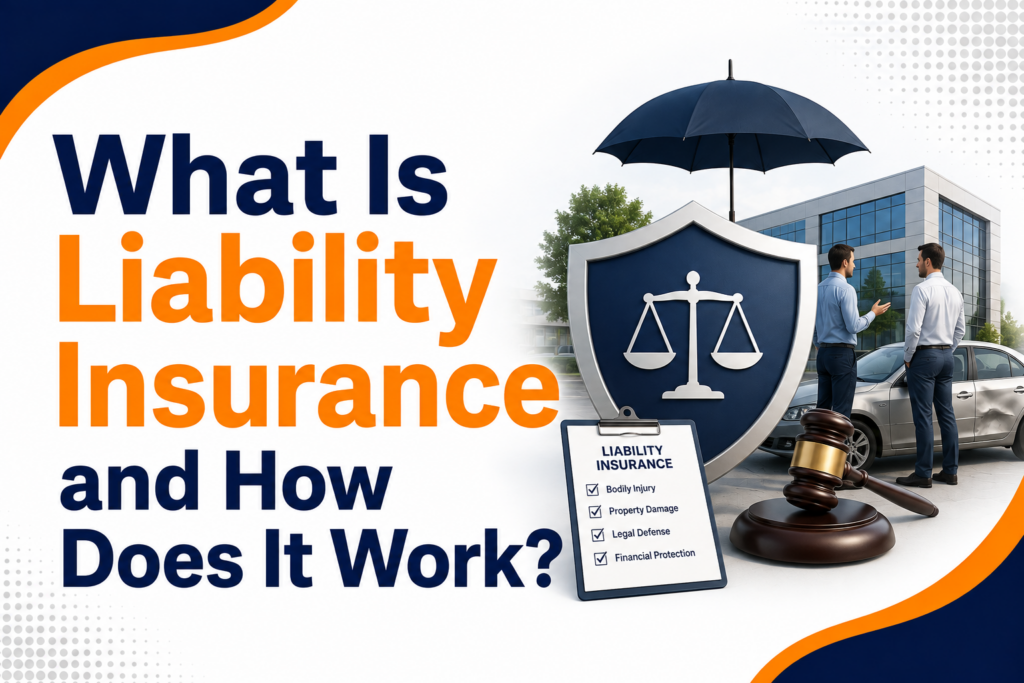

Liability insurance is a type of insurance that provides financial protection against certain legal liabilities arising from claims made by third parties. Businesses, professionals, organizations, and individuals can face situations where their actions, products, services, or activities cause injury, property damage, financial loss, or other harm to another party.
Liability insurance can help protect the insured against specified financial responsibilities arising from covered claims, subject to the policy terms, limits, exclusions, and conditions.
What Is Liability Insurance?
Liability insurance is an insurance contract designed to protect an insured person or business against certain liabilities to third parties.
Under a liability insurance policy, the insurer may provide financial protection for covered claims and related costs, depending on the type of policy and its terms.
The policyholder pays a premium in exchange for the specified liability coverage.
How Does Liability Insurance Work?
Liability insurance works by providing protection when the insured becomes legally liable for a covered event or claim.
For example, a business may face a claim from a customer alleging that an accident at the business premises caused injury. If the circumstances fall within the applicable policy coverage, the insurer may provide protection according to the policy terms.
The insurer may assess the claim, determine whether the policy applies, evaluate the legal liability involved, and calculate the amount payable within the applicable policy limits.
Why Is Liability Insurance Important?
Businesses and professionals can face legal claims even when the financial loss was not intentional.
A liability claim can involve legal expenses, compensation, settlement amounts, or other financial responsibilities.
Liability insurance can provide financial protection against specified risks and can reduce the potential financial impact of covered third-party claims.
Types of Liability Insurance
There are several types of liability insurance, with each designed for different risks.
Public Liability Insurance
Public liability insurance generally provides protection against certain liabilities arising from injury to third parties or damage to third-party property in connection with business activities.
It can be relevant to businesses that interact with customers, visitors, contractors, or members of the public.
Product Liability Insurance
Product liability insurance can provide protection against certain claims arising from products manufactured, supplied, or sold by a business.
A claim may arise when a product allegedly causes injury, property damage, or other covered harm.
Professional Indemnity Insurance
Professional indemnity insurance is designed for certain professionals who may face claims relating to professional services, advice, errors, omissions, or negligence.
It can be relevant to professionals whose clients rely on their expertise or advice.
Employer Liability-Related Coverage
Certain insurance products can provide protection against specified liabilities relating to employees and workplace risks, subject to applicable laws and policy terms.
Directors and Officers Liability Insurance
Directors and Officers Liability Insurance can provide protection for eligible claims made against directors and officers arising from certain decisions, actions, or alleged wrongful acts in their professional capacity.
The exact coverage depends on the policy.
What Can Liability Insurance Cover?
Depending on the type of policy, liability insurance may cover certain financial responsibilities associated with:
- Third-party bodily injury.
- Third-party property damage.
- Legal defence costs.
- Certain compensation payments.
- Settlement amounts.
- Professional errors or omissions.
- Product-related claims.
- Other specified liabilities.
The actual coverage depends on the policy wording and applicable limits.
What Is Not Covered by Liability Insurance?
Liability insurance policies contain exclusions and limitations.
Depending on the policy, exclusions may include:
- Intentional or deliberate acts.
- Certain contractual liabilities.
- Criminal or fraudulent activities.
- Claims outside the policy period.
- Certain known circumstances.
- Liabilities specifically excluded by the policy.
- Fines and penalties where not legally insurable.
- Other exclusions specified in the policy.
The exact exclusions differ between liability insurance products.
Liability Insurance for Businesses
Businesses can face liability risks through their interaction with customers, employees, suppliers, contractors, and members of the public.
A liability claim can potentially result in significant financial costs, depending on the nature of the incident.
Commercial liability insurance can provide protection against specified risks associated with business activities.
The appropriate type of liability insurance depends on the industry and nature of the business.
Liability Insurance for Professionals
Professionals may face claims alleging that their advice, services, errors, omissions, or professional decisions caused financial loss or other harm.
Professional indemnity insurance can provide protection against certain professional liability claims, subject to the applicable policy conditions.
Professions that may consider this type of insurance include consultants, accountants, architects, engineers, lawyers, and other professional service providers, depending on applicable requirements and risks.
Liability Insurance Claims
A liability claim can arise when a third party alleges that the insured caused injury, property damage, financial loss, or another form of covered harm.
The insurer may review:
- The circumstances of the incident.
- The nature of the alleged liability.
- Supporting documents.
- Legal notices or correspondence.
- Applicable policy coverage.
- Policy exclusions.
- The amount of the alleged loss.
The insurer’s responsibility depends on whether the claim falls within the policy coverage.
Why Liability Insurance Claims May Be Rejected
A liability insurance claim may be rejected when the circumstances do not fall within the policy coverage or when an applicable exclusion or condition affects the insurer’s liability.
Possible factors include:
- The claim relates to an excluded risk.
- The incident occurred outside the policy period.
- The activity was not covered.
- An applicable policy exclusion applies.
- The claim is not supported by sufficient evidence.
- The alleged liability is outside the policy scope.
- Policy conditions were not satisfied.
The reason for a claim decision depends on the individual policy and circumstances.
Why Liability Insurance Claims May Be Partially Settled
A liability claim may sometimes be settled for less than the amount claimed.
Possible reasons include:
- Policy limits.
- Deductibles.
- Exclusions.
- Assessment of actual liability.
- Differences in the claimed and established loss.
- Non-covered components.
- Settlement terms.
- Other policy conditions.
A partial settlement means that the insurer accepts some amount as payable rather than completely rejecting the claim.
What Are Policy Limits in Liability Insurance?
Policy limits determine the maximum amount an insurer may be responsible for under the relevant coverage.
A policy may contain different limits for individual claims and total claims during a policy period.
The applicable limits depend on the insurance product and policy terms.
Liability Insurance and Legal Expenses
Some liability insurance policies may provide coverage for certain legal defence expenses associated with covered claims.
The extent of such protection depends on the policy and the type of liability involved.
Legal costs can form a significant part of liability claims, particularly when disputes involve complex factual or legal issues.
Importance of Understanding Liability Insurance Terms
Liability insurance policies can contain detailed provisions concerning covered liabilities, policy limits, exclusions, deductibles, claim conditions, legal expenses, and reporting requirements.
Understanding these provisions provides businesses and professionals with greater clarity regarding the protection available under their liability insurance.
Insurance Resolve – Liability Insurance Claim & Complaint Solutions
Insurance Resolve helps policyholders and businesses understand insurance-related concerns, including liability insurance claim rejection, claim delays, short-settled claims, insurance mis-selling, policy servicing issues, lapsed policies, and other insurance problems.
The objective is to provide greater clarity regarding insurance policies, claim decisions, and insurance-related concerns.
📞 Phone: +91 99103 52249
📧 Email: help@insuranceresolve.com
🌐 Website: www.insuranceresolve.com
Frequently Asked Questions (FAQs)
1. What is liability insurance?
Liability insurance provides financial protection against certain legal liabilities arising from covered third-party claims, subject to the policy terms and conditions.
2. How does liability insurance work?
Liability insurance works by providing financial protection when the insured faces a covered liability claim. The insurer assesses the claim according to the policy before determining whether and how much it will pay.
3. Who needs liability insurance?
Businesses, professionals, organisations, and other parties exposed to third-party liability risks may require or benefit from liability insurance, depending on their activities and applicable requirements.
4. What is public liability insurance?
Public liability insurance generally protects against certain liabilities arising from third-party injury or property damage connected with business activities.
5. What is product liability insurance?
Product liability insurance provides protection against certain claims arising from injury or property damage allegedly caused by products manufactured, supplied, or sold by a business.
6. What is professional indemnity insurance?
Professional indemnity insurance provides protection against certain claims relating to professional services, errors, omissions, or negligence, subject to the policy terms.
7. Does liability insurance cover legal expenses?
Some liability insurance policies provide coverage for specified legal defence expenses associated with covered claims. The exact coverage depends on the policy.
8. Can a liability insurance claim be rejected?
Yes. A claim may be rejected when the circumstances are outside the policy coverage, an exclusion applies, or applicable policy conditions are not satisfied.
9. Can a liability insurance claim be partially settled?
Yes. A liability claim may be partially settled because of policy limits, deductibles, exclusions, assessment of actual liability, or other applicable conditions.
10. What are policy limits in liability insurance?
Policy limits specify the maximum amount the insurer may be responsible for under particular coverage, subject to the policy terms and conditions.
11. Can Insurance Resolve help with liability insurance concerns?
Insurance Resolve assists businesses and policyholders in understanding liability insurance claim rejection, delays, partial settlements, mis-selling, policy servicing issues, and other insurance concerns.
Conclusion
Liability insurance provides financial protection against specified legal liabilities arising from third-party claims. It can be relevant to businesses, professionals, manufacturers, service providers, organisations, and others exposed to liability risks.
Public liability, product liability, professional indemnity, and other liability insurance products provide different forms of protection. The actual coverage depends on the policy, limits, exclusions, deductibles, and applicable conditions.
Understanding these provisions gives businesses and professionals greater clarity about the financial protection available under their liability insurance.