

A mis-sold insurance policy is an insurance product that is sold through misleading, incomplete, inaccurate, or inappropriate information. Mis-selling can cause a policyholder to purchase an insurance product without fully understanding its actual benefits, exclusions, costs, conditions, or limitations.
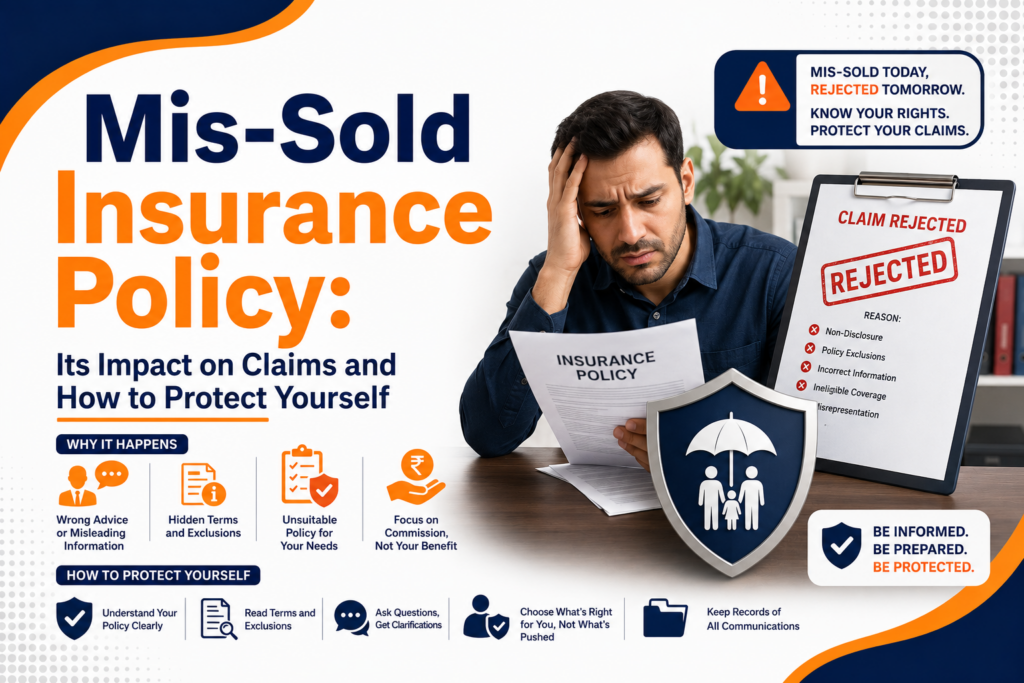
The impact of insurance mis-selling may become particularly visible when a policyholder later tries to use the policy or make an insurance claim. If the coverage is different from what the customer was led to believe, it can result in claim disputes, financial losses, or dissatisfaction with the insurance company.
Understanding insurance mis-selling and its possible impact can help policyholders make more informed decisions about insurance products.
What Is a Mis-Sold Insurance Policy?
A mis-sold insurance policy is a policy that has been sold in circumstances where the customer may have received misleading, inaccurate, incomplete, or unsuitable information about the product.
Mis-selling can involve the way the insurance product is presented rather than simply the existence of an insurance policy.
For example, a policy may be presented as:
- A guaranteed investment when certain benefits are actually non-guaranteed.
- A fixed-return product without properly explaining the insurance component.
- A product with complete protection when significant exclusions apply.
- A short-term financial product when it involves a longer premium commitment.
- A product with benefits that are different from the customer’s actual policy terms.
The circumstances of each case determine whether a particular sale may constitute mis-selling.
Common Forms of Insurance Mis-selling
Insurance mis-selling can occur in several ways.
Misrepresentation of Policy Benefits
A customer may be given an inaccurate understanding of the benefits available under the policy.
Benefits may be described without properly explaining the conditions under which they become payable.
Incorrect Information About Returns
Insurance products can contain guaranteed and non-guaranteed benefits.
If non-guaranteed benefits are represented as guaranteed returns, the customer may develop an incorrect expectation about the amount they will receive.
Insurance Sold as an FD or Investment
One common concern is the presentation of an insurance product as a fixed deposit or investment without adequately explaining that it is an insurance policy.
This can lead the customer to misunderstand the product’s purpose, duration, charges, benefits, and conditions.
Important Exclusions Not Explained
Insurance policies contain exclusions that limit the circumstances in which a claim or benefit may be payable.
If important exclusions are not adequately communicated, the customer may believe that a particular risk is covered when it is not.
Incorrect Information About Premiums
A customer may not fully understand the premium amount, payment frequency, policy duration, or financial commitment associated with a policy.
Incomplete information can create financial difficulties later.
Unsuitable Policy Recommendations
A policy may not be appropriate for a customer’s financial requirements, objectives, risk understanding, or circumstances.
An insurance product should be understood in the context of the customer’s actual requirements rather than simply the product’s features.
How Can a Mis-Sold Policy Affect Insurance Claims?
The relationship between mis-selling and claims can become important when the policyholder discovers that the actual coverage is different from what was represented during the sale.
For example, a customer may believe that a particular loss is covered because of statements made at the time of purchase. When a claim is later submitted, the insurer may assess the claim according to the actual policy wording.
If the event is excluded or the policy does not provide the expected coverage, the claim may be rejected or limited.
This can create a dispute between the policyholder and the insurer.
Mis-selling and Claim Rejection
A claim rejection occurs when an insurer determines that no amount is payable under the applicable policy.
A policyholder may believe that the claim should be covered because of information provided when the policy was sold.
However, the insurer generally assesses the claim based on the policy terms, coverage, exclusions, conditions, and circumstances of the insured event.
When the information provided during the sale materially differs from the actual policy coverage, a mis-selling concern may arise.
Mis-selling and Partial Claim Settlement
Mis-selling can also become relevant when an insurer pays only part of a claim.
For example, a customer may expect complete coverage based on the sales explanation, while the policy contains deductibles, limits, depreciation, exclusions, or other restrictions.
The insurer may therefore settle only the amount payable under the policy.
If the customer was not properly informed about these limitations when purchasing the policy, concerns regarding mis-selling may arise.
Mis-selling and Claim Delays
Mis-selling does not automatically cause a claim delay.
However, disputes about policy coverage can sometimes make the claim assessment more complicated.
If there is disagreement about whether a particular event is covered, the insurer may require additional assessment or clarification before making a final decision.
Why Policy Documents Matter
The policy document is an important source of information because it contains the contractual terms of the insurance product.
Important details may include:
- Policy benefits.
- Coverage.
- Exclusions.
- Premiums.
- Policy duration.
- Deductibles.
- Charges.
- Guaranteed benefits.
- Non-guaranteed benefits.
- Surrender or discontinuance provisions.
- Claim conditions.
- Other applicable terms.
A difference between sales representations and the written policy terms can be important when evaluating an alleged mis-selling concern.
Guaranteed vs Non-Guaranteed Benefits
Understanding this distinction is particularly important.
Guaranteed benefits are benefits specifically guaranteed under the applicable policy terms.
Non-guaranteed benefits may depend on conditions or factors specified by the insurance product and should not automatically be treated as guaranteed returns.
Misunderstanding this difference can result in unrealistic expectations regarding the future value of a policy.
How to Protect Yourself From Insurance Mis-selling
Protection against mis-selling begins with understanding the insurance product rather than relying solely on sales statements.
Important areas of awareness include:
Understand the Nature of the Product
A customer should know whether the product is primarily providing insurance protection, savings benefits, investment-related benefits, or a combination of features.
Understand the Premium Commitment
The premium amount, frequency, policy duration, and financial commitment should be clearly understood.
Understand Exclusions
Exclusions can be just as important as the benefits of an insurance policy because they define situations where coverage may not apply.
Distinguish Guaranteed and Non-Guaranteed Benefits
Customers should understand which benefits are guaranteed and which are conditional or non-guaranteed.
Review the Written Policy
The written policy provides the actual contractual terms and should be considered alongside any information provided during the sales process.
Be Careful With Verbal Assurances
Statements made during a sales discussion may create expectations that are not reflected in the policy document.
Keeping the distinction between verbal representations and documented policy terms in mind can reduce confusion.
Warning Signs of a Potentially Mis-Sold Insurance Policy
Certain situations may indicate a possible mis-selling concern.
These can include:
- The policy was described as something other than insurance.
- Guaranteed returns were promised without corresponding policy terms.
- Important exclusions were not explained.
- Charges were not clearly communicated.
- The customer was pressured to purchase the policy.
- The policy duration was represented incorrectly.
- The customer was told that cancellation would have no financial consequences.
- The actual policy benefits differ significantly from what was represented.
- The customer was not given adequate information about important policy conditions.
These signs do not automatically prove mis-selling, but they can indicate that the sale requires closer examination.
Impact of Mis-Selling on Policyholders
Insurance mis-selling can have several financial and practical consequences.
A policyholder may experience:
- Unexpected premium commitments.
- Lower-than-expected benefits.
- Claim rejection.
- Partial claim settlement.
- Difficulty understanding policy exclusions.
- Unexpected deductions or charges.
- Financial loss from an unsuitable policy.
- Disputes with the insurer.
- Difficulty achieving the financial objective for which the policy was purchased.
The actual impact depends on the type of policy and the circumstances of the sale.
Mis-selling of Motor Insurance
Mis-selling can also occur in motor insurance.
Examples may include inaccurate explanations regarding:
- Comprehensive coverage.
- Third-party coverage.
- Add-on covers.
- Zero depreciation.
- Deductibles.
- Claim eligibility.
- Policy exclusions.
If a customer believes a particular vehicle-related loss is covered but the policy does not provide such coverage, a dispute may arise.
Mis-selling of Property and Commercial Insurance
Businesses and property owners can also face mis-selling concerns.
A commercial or property insurance policy may contain detailed coverage conditions relating to:
- Building damage.
- Stock.
- Machinery.
- Fire.
- Natural disasters.
- Business interruption.
- Liability.
- Other insured risks.
If important limitations or exclusions are not properly communicated, the policyholder may have an incorrect understanding of the protection available.
Insurance Mis-selling and Consumer Awareness
Consumer awareness plays an important role in reducing misunderstandings about insurance.
Insurance policies are contractual products and can involve long-term financial commitments.
Understanding the difference between marketing statements and actual policy terms is particularly important when the policy involves substantial premiums, long durations, investment-related benefits, or significant insurance coverage.
Insurance Resolve – Insurance Mis-selling & Claim Solutions
Insurance Resolve helps policyholders understand insurance-related concerns, including mis-sold insurance policies, claim rejection, claim delays, short-settled claims, lapsed policies, service issues, policy disputes, and other insurance problems.
The objective is to provide greater clarity regarding insurance policies, sales representations, claim decisions, and insurance-related concerns.
📞 Phone: +91 99103 52249
📧 Email: help@insuranceresolve.com
🌐 Website: www.insuranceresolve.com
Frequently Asked Questions (FAQs)
1. What is a mis-sold insurance policy?
A mis-sold insurance policy is a policy sold through misleading, inaccurate, incomplete, or inappropriate information that may cause the customer to misunderstand the product or its important terms.
2. Can a mis-sold insurance policy affect a claim?
Yes. If the customer was led to believe that a particular risk was covered but the actual policy does not provide that coverage, it can result in a claim dispute or rejection.
3. Can insurance mis-selling cause claim rejection?
Mis-selling itself is different from claim rejection. However, if a policyholder was given an incorrect understanding of coverage, a later claim rejection can lead to a dispute regarding the original sale.
4. What is an example of insurance mis-selling?
An example can be presenting an insurance policy as a guaranteed investment or fixed deposit without adequately explaining its insurance features, conditions, exclusions, and actual benefits.
5. Can non-guaranteed returns be presented as guaranteed?
Representing non-guaranteed benefits as guaranteed can create a serious mis-selling concern because it may give the customer an inaccurate understanding of the policy’s financial benefits.
6. Can hidden exclusions lead to mis-selling concerns?
Yes. If significant exclusions are not properly communicated and the customer is led to believe that the relevant risk is covered, it may raise a mis-selling concern.
7. Does every claim rejection mean the policy was mis-sold?
No. A claim can be rejected for valid reasons under the policy terms. Mis-selling is a separate issue concerning how the insurance product was represented and sold.
8. Why are policy documents important in a mis-selling dispute?
Policy documents contain the actual contractual terms, including benefits, exclusions, charges, conditions, and limitations. They can be important when comparing the policy terms with representations made during the sale.
9. Can verbal promises be relevant to insurance mis-selling?
Verbal representations may be relevant depending on the circumstances and available evidence, particularly when they materially differ from the written policy terms.
10. Can an insurance policy be mis-sold through a bank?
Yes. Insurance products distributed through banks or other channels can potentially be subject to mis-selling concerns if misleading or inappropriate representations are made during the sale.
11. Can motor insurance be mis-sold?
Yes. Mis-selling concerns can arise in motor insurance when coverage, add-ons, exclusions, deductibles, or other benefits are incorrectly represented.
12. Can Insurance Resolve help with a mis-sold insurance policy?
Insurance Resolve assists policyholders in understanding concerns related to insurance mis-selling, claim rejection, claim delays, short settlements, service issues, lapsed policies, and other insurance-related problems.
Conclusion
A mis-sold insurance policy can create significant financial and practical problems when the actual policy terms do not match the customer’s understanding at the time of purchase.
Mis-selling may involve incorrect information about benefits, returns, exclusions, premiums, charges, policy duration, cancellation conditions, or the nature of the insurance product.
Its impact can become particularly significant when a policyholder later makes a claim and discovers that the expected coverage is different from the actual policy coverage.
Understanding policy documents, exclusions, guaranteed and non-guaranteed benefits, premium commitments, and other important conditions can help consumers make more informed insurance decisions and recognise potential mis-selling concerns.

