
Commercial insurance provides financial protection to businesses against different risks that can affect their property, employees, operations, customers, and legal responsibilities. Businesses of different sizes and industries may require different types of insurance depending on their activities and risk exposure.
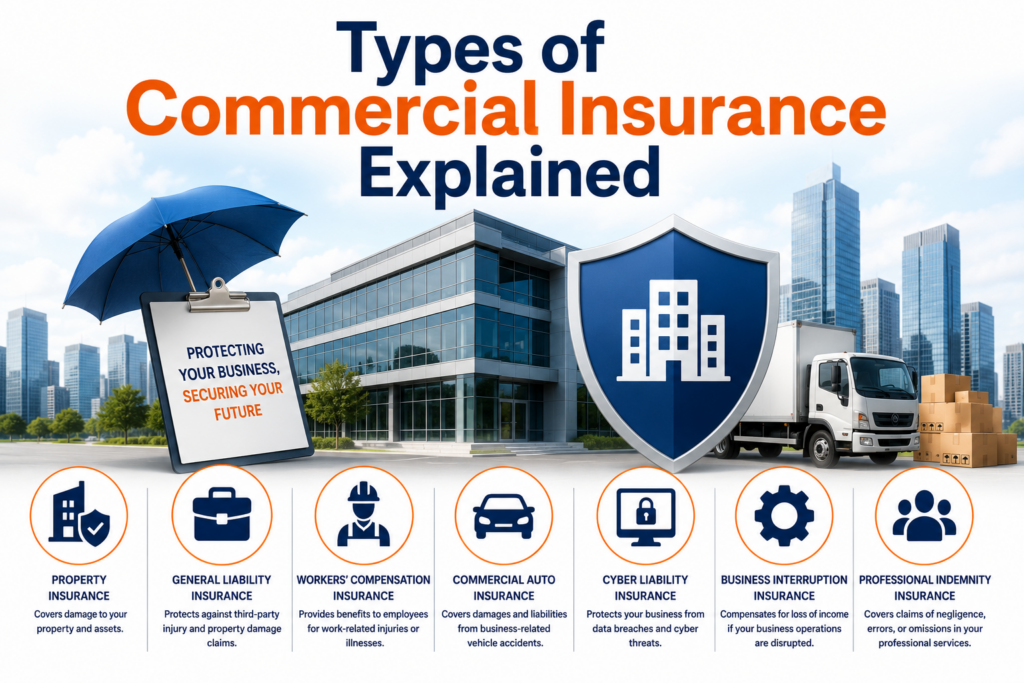
Commercial insurance is not a single type of policy. It includes several insurance products designed to protect different aspects of a business.
What Is Commercial Insurance?
Commercial insurance is insurance designed specifically for businesses and commercial activities. It can provide protection against risks such as property damage, liability claims, employee-related risks, business interruption, and other losses covered under the applicable policy.
The type and level of coverage depend on the nature of the business, its assets, operations, and specific insurance requirements.
Common Types of Commercial Insurance
1. Commercial Property Insurance
Commercial property insurance protects business premises and specified business assets against covered risks.
It may cover:
- Office buildings
- Shops
- Warehouses
- Factories
- Furniture
- Equipment
- Machinery
- Stock and inventory
Coverage depends on the policy and insured risks.
2. Fire Insurance
Commercial fire insurance provides protection against covered losses caused by fire and certain related risks.
It can be relevant for businesses with buildings, machinery, stock, equipment, and other physical assets.
The policy may also contain specific exclusions and conditions relating to fire-related losses.
3. Liability Insurance
Liability insurance provides financial protection against certain legal liabilities arising from claims made by third parties.
Depending on the policy, it may relate to:
- Bodily injury
- Property damage
- Product-related claims
- Professional services
- Other specified liabilities
Different liability policies are designed for different business risks.
4. Marine Cargo Insurance
Marine cargo insurance protects goods during transportation against specified risks.
It can be relevant to businesses involved in importing, exporting, manufacturing, trading, and distribution.
Despite its name, marine cargo insurance may cover goods transported by sea, road, rail, or air, depending on the policy.
5. Business Interruption Insurance
Business interruption insurance can provide financial protection against certain losses resulting from an interruption of business operations caused by an insured event.
Depending on the policy, it may relate to lost income or certain additional operating expenses.
Coverage is subject to specific conditions and limits.
6. Machinery and Equipment Insurance
Businesses that depend on machinery and specialised equipment may require insurance protection against specified damage or breakdown risks.
This type of coverage can be particularly relevant to manufacturing, industrial, construction, and other equipment-intensive businesses.
7. Employee-Related Insurance
Businesses may also have insurance products designed to provide protection relating to employees.
Depending on the applicable policy and legal requirements, this can include coverage associated with workplace injuries, employee benefits, or other employment-related risks.
8. Cyber Insurance
Cyber insurance is designed to provide protection against certain cyber-related risks faced by businesses.
Depending on the policy, it may cover specified losses associated with:
- Data breaches
- Cyberattacks
- Business interruption
- Data recovery
- Certain third-party liabilities
Cyber coverage varies significantly between policies.
Why Do Businesses Need Commercial Insurance?
Businesses can face risks that may result in substantial financial losses.
These can include:
- Fire or property damage
- Theft
- Equipment breakdown
- Accidents
- Customer injury
- Legal liability
- Cargo damage
- Business interruption
- Cyber incidents
Commercial insurance can help transfer certain financial risks to an insurer, subject to the policy terms.
What Does Commercial Insurance Usually Not Cover?
Commercial insurance policies contain exclusions and limitations.
Depending on the type of policy, exclusions may include:
- Intentional damage
- Normal wear and tear
- Uninsured property
- Certain excluded events
- Losses outside policy limits
- Certain consequential losses
- Other exclusions mentioned in the policy
The exclusions vary according to the insurance product.
Commercial Insurance and Policy Limits
Every commercial insurance policy has specific coverage limits and conditions.
The amount payable for a claim can depend on:
- Policy limits
- Deductibles
- Valuation
- Extent of damage
- Type of insured risk
- Applicable exclusions
- Other policy conditions
Therefore, having commercial insurance does not necessarily mean that every business loss will be fully compensated.
Insurance Resolve – Commercial Insurance Solutions
Insurance Resolve helps businesses and policyholders understand insurance concerns, including commercial insurance claim rejection, claim delays, short-settled claims, policy disputes, insurance mis-selling, service issues, and other insurance problems.
📞 Phone: +91 99103 52249
📧 Email: help@insuranceresolve.com
🌐 Website: www.insuranceresolve.com
Frequently Asked Questions
1. What is commercial insurance?
Commercial insurance provides businesses with financial protection against specified risks affecting property, operations, liabilities, employees, and other business interests.
2. What are the main types of commercial insurance?
Common types include commercial property, fire, liability, marine cargo, business interruption, machinery, employee-related, and cyber insurance.
3. Does commercial insurance cover business property?
Commercial property insurance can cover specified business property such as buildings, equipment, machinery, furniture, and stock against covered risks.
4. What is commercial liability insurance?
Commercial liability insurance provides protection against certain legal liabilities arising from third-party claims, depending on the type of liability policy.
5. Does commercial insurance cover business interruption?
Some commercial policies provide business interruption coverage for losses resulting from specified insured events, subject to policy terms.
6. Is cyber insurance a type of commercial insurance?
Yes. Cyber insurance is a commercial insurance product designed to provide protection against specified cyber-related risks.
7. Does commercial insurance cover every business risk?
No. Coverage depends on the specific policy, insured risks, exclusions, limits, and conditions.
Conclusion
Commercial insurance includes a range of insurance products designed to protect businesses against different financial risks. Commercial property, fire, liability, marine cargo, business interruption, machinery, employee-related, and cyber insurance are some common forms.
The right coverage depends on the nature of the business and its specific risks. Policy limits, exclusions, deductibles, and conditions also determine the extent of protection available.

