

Home and property insurance are often used interchangeably, but they can refer to different levels of protection. Understanding the difference is important because the type of insurance you need depends on what you own, how the property is used, and what risks you want to protect against.
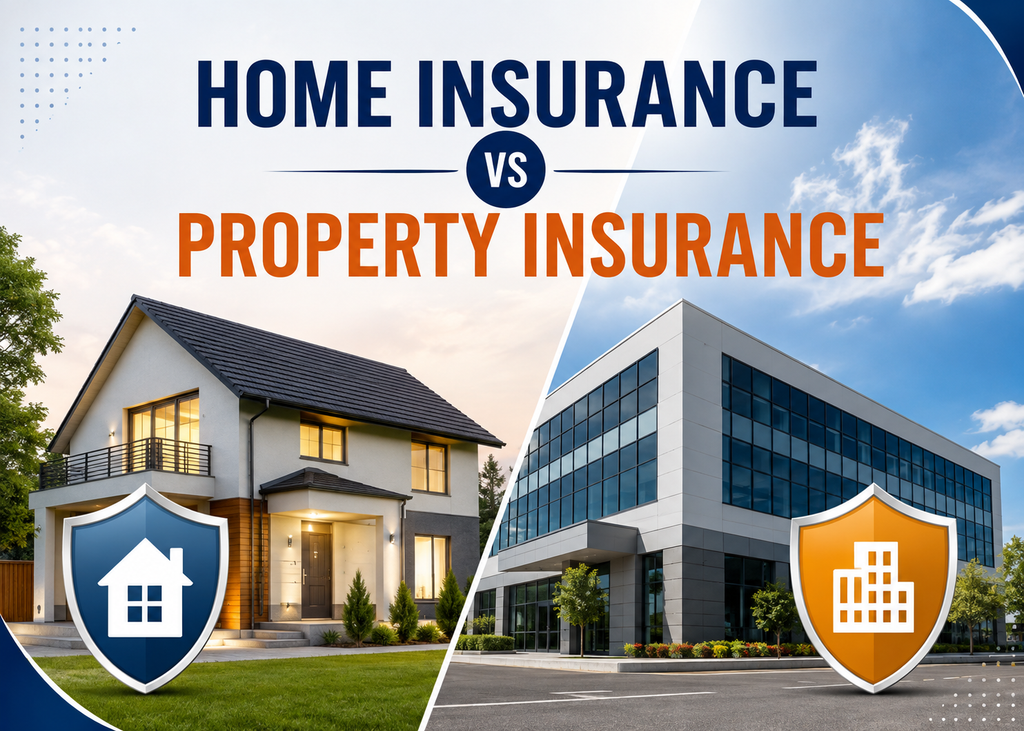
What Is Home Insurance?
Home insurance is generally designed to protect a residential home and the things associated with it. Depending on the policy, it may cover the physical structure of the house as well as household contents such as furniture, appliances, electronics, and other belongings.
Home insurance may provide protection against risks such as fire, certain natural disasters, theft, and other insured events, subject to the policy terms and exclusions.
For homeowners, it can provide financial protection when unexpected damage affects the house or its contents.
What Is Property Insurance?
Property insurance is a broader term used for insurance that protects physical property against specified risks. It can apply to residential, commercial, or other types of properties depending on the policy.
Commercial property insurance, for example, may protect buildings, equipment, stock, furniture, and other business-related assets against covered events.
The exact coverage depends on the type of property, policy wording, insured value, and selected coverage.
Home Insurance vs Property Insurance
The main difference is often the scope and purpose of the coverage.
| Home Insurance | Property Insurance |
|---|---|
| Mainly associated with residential homes | Can cover residential or commercial property |
| May cover the home and household contents | May cover buildings, contents, equipment, stock, and other assets |
| Designed primarily for personal or residential risks | Can be designed for personal or business risks |
| Usually focuses on risks related to a home | Coverage depends on the type and use of the property |
The terminology can vary between insurers, so the policy document is more important than the name of the insurance product.
Does Property Insurance Cover the Home?
A residential property can be insured under a property insurance policy. However, the coverage depends on the specific policy.
Some policies may focus mainly on the building, while others can also include household contents or additional protections. Therefore, it is important to understand exactly what is insured rather than assuming that every property policy provides the same protection.
What Can Home Insurance Cover?
Depending on the policy, home insurance may include protection for:
- The residential building
- Household contents
- Furniture and appliances
- Electrical and electronic items
- Personal belongings
- Certain liabilities associated with the home
- Damage caused by specified insured events
Coverage, limits, deductibles, and exclusions differ from one policy to another.
What Can Property Insurance Cover?
Property insurance may provide protection for different physical assets depending on the nature of the property.
For a business, this could include:
- Commercial buildings
- Machinery and equipment
- Furniture and fixtures
- Stock and inventory
- Office contents
- Other insured physical assets
Some businesses may also require additional policies for risks that are not covered under standard property insurance.
Why Policy Terms Matter
Two policies may have similar names but provide very different coverage. One policy may cover a wider range of risks, while another may have significant exclusions or lower limits.
Important factors include the insured property, sum insured, covered perils, exclusions, deductibles, conditions, and claim requirements.
Understanding these details can help prevent confusion when a claim arises.
Common Misunderstanding About Home and Property Insurance
A common misunderstanding is that having insurance automatically means every type of property damage will be covered.
Insurance coverage is based on the policy terms. If a particular event is excluded, the insurer may not be responsible for that loss. Similarly, inadequate insurance values or specific policy conditions can affect the amount payable under a claim.
This is why simply comparing policy names is not enough.
Which Insurance Is Better?
There is no single answer because home insurance and property insurance serve different needs.
A person protecting a residential house and personal belongings may look for suitable home insurance coverage. A business owner protecting a commercial building, stock, equipment, or other business assets may require property insurance designed for commercial risks.
The right choice depends on the nature, value, use, and risks associated with the property.
Final Thoughts
Home insurance and property insurance can overlap, but they are not necessarily identical. Home insurance generally focuses on residential property and household belongings, while property insurance can have a broader application across residential and commercial assets.
Before relying on any insurance policy, it is important to understand what is covered, what is excluded, and what conditions apply to claims. The actual policy wording should always be considered when determining the extent of protection.

