

Fire can cause significant damage to homes, commercial properties, factories, warehouses, and other insured assets. When a fire-related loss occurs, policyholders typically need to provide various documents to support their insurance claim. These documents help insurers verify the incident, assess the extent of damage, and determine the amount payable under the policy.
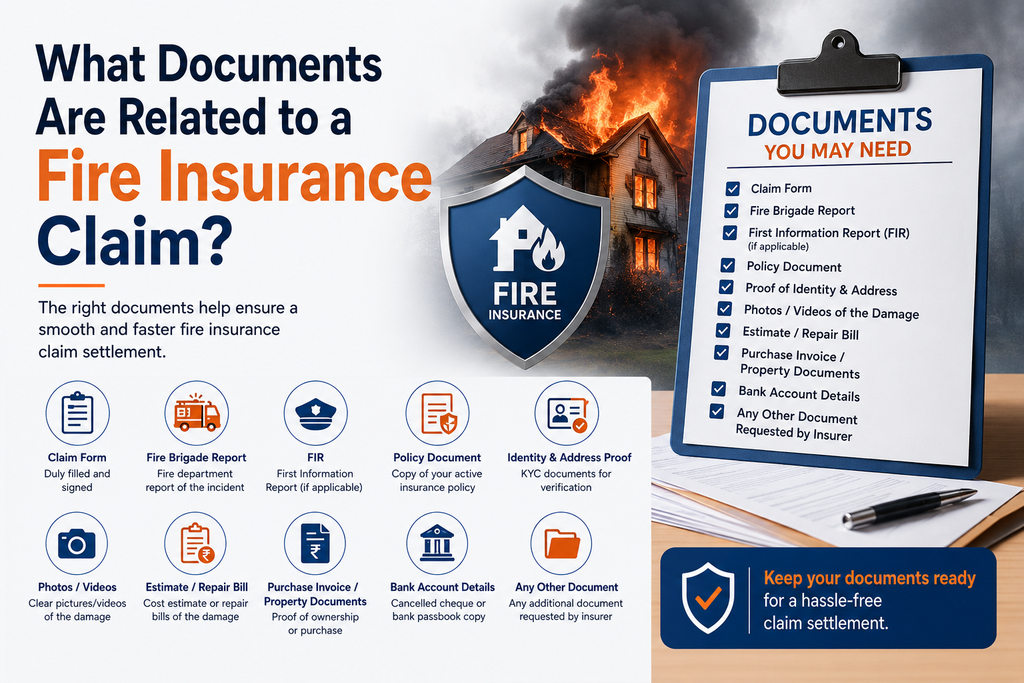
The exact documentation requirements may vary depending on the insurer, the nature of the property, and the extent of the loss. However, certain documents are commonly associated with most fire insurance claims.
Fire Insurance Claim Form
The claim form is one of the primary documents required in the claims process. It contains essential details about the policyholder, the insured property, the date and cause of the fire, and the estimated loss. Accurate and complete information in the claim form helps facilitate claim assessment.
Copy of the Insurance Policy
A copy of the fire insurance policy is often required to verify coverage details, policy limits, insured assets, and applicable terms and conditions. The policy document serves as the basis for evaluating the claim.
Fire Brigade Report
If the local fire department responded to the incident, their report may provide important information regarding the fire, including its location, severity, and possible cause. Insurers frequently review this report as part of the investigation process.
Photographs of the Damage
Photographs taken after the fire can help document the extent of the damage to the insured property. Visual evidence supports the assessment of losses and assists surveyors in evaluating the claim.
Surveyor’s Report
Insurance companies often appoint a surveyor or loss assessor to inspect the damaged property. The surveyor’s report provides an independent evaluation of the cause of loss, extent of damage, and estimated value of the claim.
Property Ownership Documents
Documents establishing ownership or legal interest in the damaged property may be required. These may include sale deeds, lease agreements, registration certificates, or other ownership records, depending on the nature of the property.
Inventory of Damaged Items
For claims involving stock, machinery, furniture, equipment, or household contents, policyholders may be asked to submit a detailed inventory of damaged items. The list generally includes descriptions, quantities, and estimated values.
Purchase Invoices and Bills
Invoices, purchase receipts, and bills can help establish the value of damaged assets. These documents are particularly important when claiming losses for machinery, equipment, inventory, electronics, or other valuable property.
Repair or Replacement Estimates
Insurers may request quotations, repair estimates, or replacement cost assessments to understand the financial impact of the damage and evaluate claim amounts.
Financial and Accounting Records
For commercial and industrial claims, financial documents such as stock registers, inventory records, balance sheets, and accounting statements may be required to verify the value of damaged assets and business losses.
Police Report (If Applicable)
In certain situations, such as suspected arson, theft following a fire, or other unusual circumstances, a police report may be requested as part of the claim documentation.
Importance of Proper Documentation
Comprehensive documentation helps insurers assess claims accurately and efficiently. Missing or incomplete records can make it difficult to verify losses and may lead to delays during the claim evaluation process. Maintaining organized records of insured assets can be beneficial in the event of a fire-related loss.
Conclusion
Fire insurance claims typically involve multiple documents that help establish the occurrence of the fire, ownership of the damaged property, and the extent of the loss. Commonly required documents include the claim form, insurance policy, fire brigade report, photographs, surveyor’s report, ownership records, invoices, and repair estimates. Understanding these documents can help policyholders better navigate the fire insurance claim process and support a smoother assessment of their losses.

