

Baggage Loss Coverage is a type of protection available under some travel insurance policies that provides financial compensation when a traveller’s checked-in baggage is permanently lost during a covered journey.
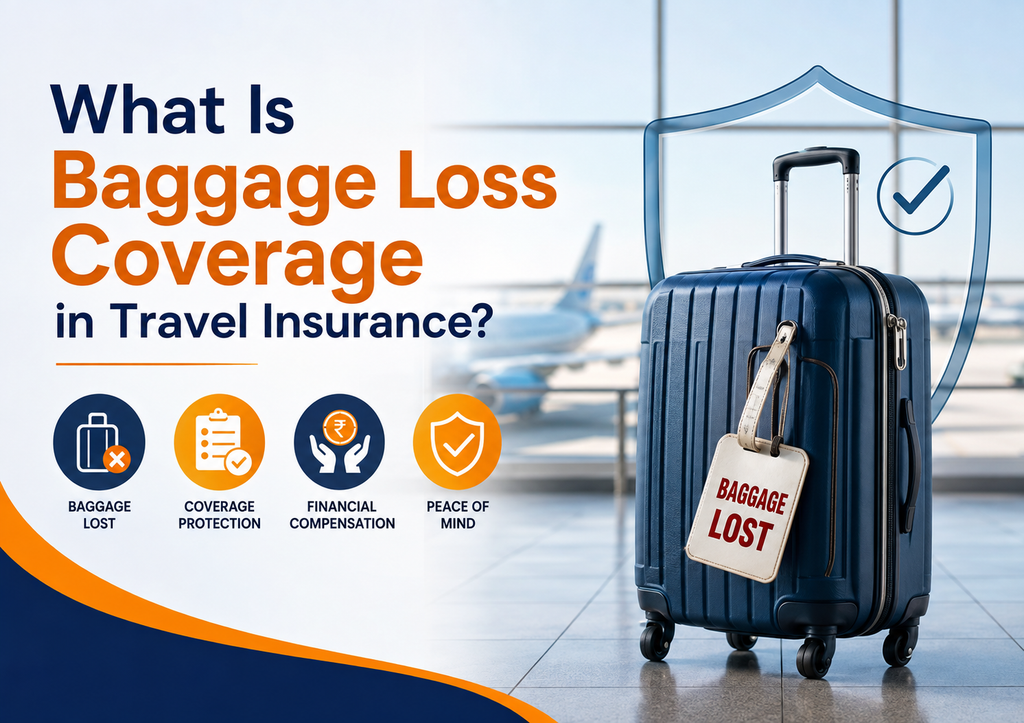
Losing baggage while travelling can result in the loss of clothes, personal belongings, documents, and other items. Baggage loss coverage is designed to reduce the financial impact of such a situation, subject to the terms and conditions of the policy.
What Does Baggage Loss Coverage Mean?
Baggage Loss Coverage generally applies when checked-in baggage is lost by the airline or transport provider and cannot be recovered.
The insurer may provide compensation up to the limit specified in the travel insurance policy. The amount payable can depend on the value of the lost belongings, applicable policy conditions, and the overall baggage coverage limit.
What Is Usually Covered?
Depending on the travel insurance policy, baggage loss coverage may protect against the permanent loss of checked-in baggage during the insured journey.
Covered belongings can include personal items packed inside the baggage, subject to the policy’s definitions, limits, and exclusions.
Some policies may also apply separate limits to individual items or categories of belongings.
Is Delayed Baggage the Same as Lost Baggage?
No. Lost baggage and delayed baggage are generally treated as different situations.
Lost baggage refers to baggage that is permanently lost and cannot be recovered.
Delayed baggage refers to baggage that is temporarily unavailable but is expected to be delivered later.
Travel insurance policies may provide separate benefits for these situations. Delayed baggage coverage may help with essential purchases when baggage is delayed for a specified period, while baggage loss coverage relates to permanent loss.
How Is Compensation Determined?
Compensation is normally subject to the maximum amount mentioned in the policy.
The insurer may consider factors such as the value of the lost belongings, applicable depreciation or item limits, supporting documents, and the terms of the policy.
Therefore, the total value of belongings carried by a traveller does not necessarily mean the same amount will be payable if the baggage is lost.
What May Not Be Covered?
Baggage loss coverage can contain several exclusions and limitations.
Depending on the policy, certain valuable items, cash, documents, fragile articles, electronic equipment, or other specific belongings may have restricted coverage or may be excluded altogether.
Loss resulting from circumstances that fall outside the insured risks may also not be covered.
Why Policy Conditions Matter
Baggage coverage can differ significantly between travel insurance policies. The maximum baggage benefit, item-wise limits, exclusions, deductibles, and conditions can all vary.
For this reason, the policy wording is important when determining whether a particular baggage loss is covered and how much compensation may be payable.
Baggage Loss Coverage and Travel Insurance
Baggage Loss Coverage is generally one component of a broader travel insurance policy. Travel insurance may also include other benefits related to situations such as medical emergencies, trip cancellation, travel delays, passport loss, or other covered travel-related problems.
The availability and extent of each benefit depend on the specific policy.
Final Thoughts
Baggage Loss Coverage provides financial protection against the permanent loss of checked-in baggage during a covered trip. It can help reduce the financial impact of losing personal belongings while travelling.
However, coverage limits, exclusions, item restrictions, and claim conditions vary between policies. Understanding these provisions is important when evaluating the protection offered by travel insurance.

