
Motor insurance provides valuable financial protection against accidents, theft, and damage to vehicles. However, many policyholders assume that every type of loss or damage will be covered by their insurance policy. In reality, motor insurance policies contain specific exclusions that define situations where the insurer may not provide compensation.
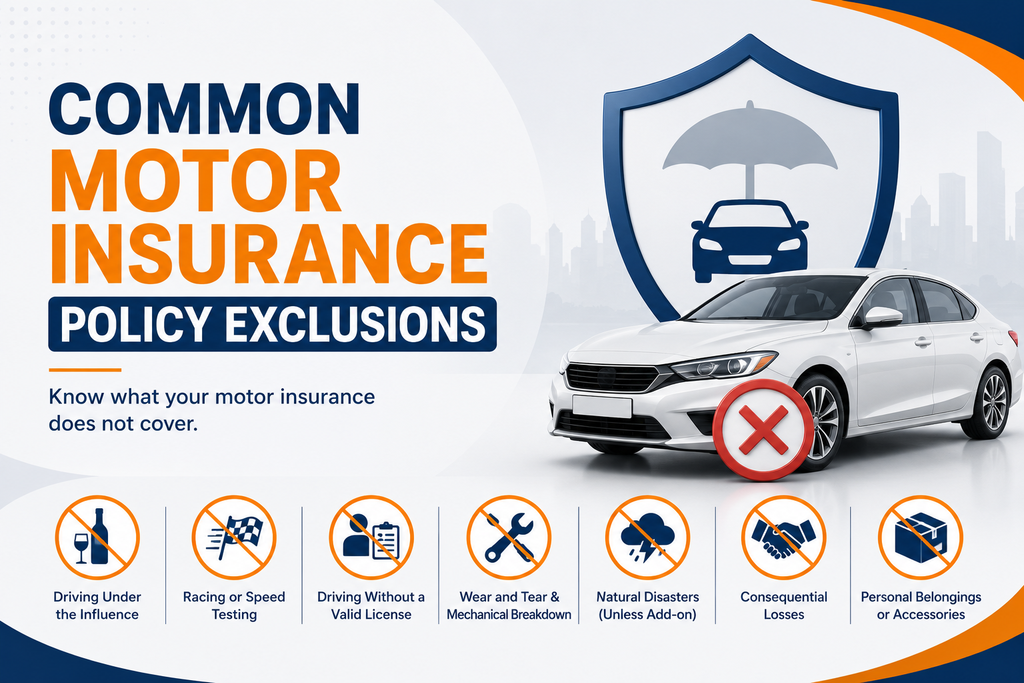
Understanding these exclusions is essential for avoiding surprises during the claims process and ensuring that you have realistic expectations about your coverage.
What Are Motor Insurance Policy Exclusions?
Policy exclusions are circumstances, events, or losses that are specifically not covered under a motor insurance policy. These exclusions help insurers define the scope of coverage and manage risks that fall outside the intended protection offered by the policy.
While exclusions may vary between insurers and policy types, several common exclusions are found in most motor insurance policies.
Common Motor Insurance Policy Exclusions
Normal Wear and Tear
Motor insurance does not cover the gradual deterioration of vehicle parts due to regular usage. Components such as tyres, brake pads, batteries, and other parts naturally wear out over time and are considered maintenance-related expenses.
Mechanical or Electrical Breakdown
Damage resulting solely from mechanical or electrical failure is generally excluded from standard motor insurance policies. Insurance is intended to cover accidental losses rather than routine mechanical issues.
Driving Without a Valid Licence
If the driver involved in an accident does not possess a valid driving licence, the insurer may reject the claim. Compliance with legal driving requirements is a fundamental condition of most policies.
Driving Under the Influence
Claims arising from accidents caused while driving under the influence of alcohol, drugs, or other intoxicating substances are commonly excluded from coverage.
Consequential Loss
Motor insurance typically covers direct physical damage to the vehicle. Indirect or consequential losses, such as loss of business income or additional expenses resulting from the accident, are generally not covered.
Using the Vehicle Beyond Permitted Purpose
A vehicle insured for private use may not be covered if it is being used for commercial activities or other purposes not permitted under the policy at the time of the incident.
Damage Outside Geographical Limits
Most policies define geographical limits within which coverage applies. Damage occurring outside the approved territory may not be covered unless specifically endorsed in the policy.
War and Nuclear Risks
Losses arising from war, invasion, civil unrest, nuclear events, or related risks are usually excluded from motor insurance coverage.
Intentional or Deliberate Damage
Insurance policies generally do not cover losses caused intentionally by the policyholder or any person acting on their behalf.
Unauthorised Modifications
Certain modifications that significantly alter the vehicle’s performance or structure may affect coverage if they have not been disclosed to the insurer.
Driving in Restricted Conditions
Participation in racing, speed testing, endurance events, or similar activities is generally excluded unless special coverage has been obtained.
Depreciation and Age-Related Reduction
Although not always a claim rejection issue, insurers may apply depreciation deductions to certain parts during claim settlement, reducing the payable amount.
Why Understanding Exclusions Matters
Better Claim Expectations
Knowing what is excluded helps policyholders avoid misunderstandings when filing a claim.
Improved Risk Management
Understanding exclusions allows vehicle owners to take preventive measures and reduce potential financial risks.
Policy Selection
Reviewing exclusions before purchasing a policy can help ensure that the coverage meets your specific needs.
Compliance with Policy Terms
Following policy conditions, maintaining a valid licence, and using the vehicle appropriately can help avoid claim-related disputes.
Reviewing Your Motor Insurance Policy
Before relying on your motor insurance coverage, it is advisable to carefully review:
- Policy terms and conditions
- Coverage limits
- Exclusions
- Deductibles
- Endorsements and add-on covers
- Claim procedures
A clear understanding of these details can help prevent unexpected claim issues in the future.
Final Thoughts
Motor insurance provides essential protection against many types of financial losses, but it does not cover every situation. Exclusions such as wear and tear, mechanical breakdowns, driving without a valid licence, intoxicated driving, unauthorised vehicle use, and intentional damage are among the most common reasons claims may be denied.
Being aware of these exclusions can help policyholders make informed decisions, comply with policy requirements, and avoid unnecessary disputes during the claims process.
If you are facing difficulties with a motor insurance claim, claim rejection, delay, short settlement, or policy dispute, professional guidance may help you better understand your options.
Contact Us
Insurance Resolve
📞 +91 99103 52249
🌐 www.insuranceresolve.com
📧 help@insuranceresolve.com

