
Commercial insurance policy exclusions are specific risks, events, circumstances, or types of losses that an insurance policy does not cover. Understanding these exclusions is important for businesses because a policy may provide broad protection while still leaving certain risks uninsured.
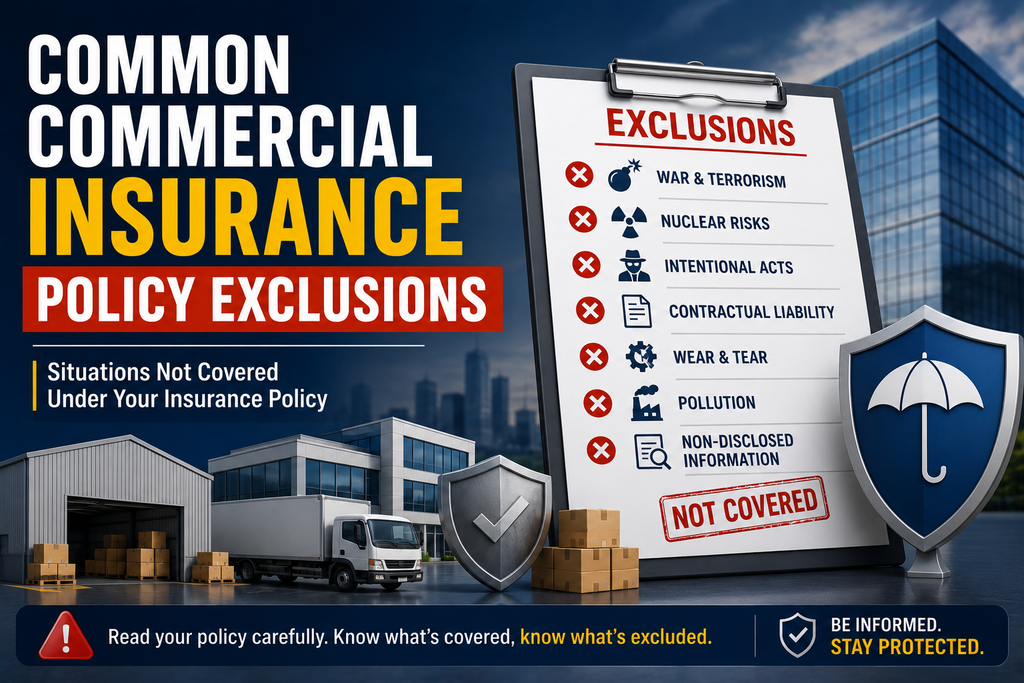
The exact exclusions depend on the type of commercial insurance, insurer, industry, and policy wording.
Normal Wear and Tear
Commercial insurance generally does not cover damage caused by ordinary wear and tear, gradual deterioration, or ageing.
For example, equipment that stops working because of normal use may not be covered as an accidental loss.
Poor Maintenance
Losses resulting from inadequate maintenance, neglect, or failure to properly maintain business property may be excluded.
Businesses are generally expected to take reasonable care of insured property.
Intentional Damage
Commercial insurance is generally not designed to cover losses that are deliberately caused by the policyholder or through fraudulent actions.
Intentional acts may therefore be excluded under the policy.
Certain Natural Disasters
Some commercial property policies may exclude or limit specific natural disasters, such as earthquake, flood, or landslide, unless additional coverage is purchased.
Businesses should check whether the natural risks relevant to their location are included.
War and Nuclear Risks
Many commercial insurance policies contain exclusions relating to:
- War
- Civil war
- Nuclear risks
- Radioactive contamination
- Certain acts of terrorism
Specialised coverage may sometimes be available for particular risks.
Pollution and Environmental Damage
Pollution-related liabilities and environmental damage may be excluded or subject to specific conditions under commercial policies.
Businesses involved in manufacturing, chemicals, waste management, or other environmentally sensitive activities should pay particular attention to these provisions.
Cyber Risks
Traditional commercial insurance policies may not automatically cover all cyberattacks, data breaches, ransomware incidents, or cyber-related losses.
Businesses may require dedicated cyber insurance depending on their risk exposure and existing policy coverage.
Employee-Related Claims
Certain employee injuries, workplace disputes, or employment-related liabilities may fall outside a standard commercial property or liability policy.
Businesses may require specific covers depending on their workforce and legal obligations.
Contractual Liabilities
Some liabilities that arise solely because of contractual obligations may be excluded or restricted.
Businesses should review insurance requirements before accepting significant contractual responsibilities.
Fraud and Dishonesty
Losses caused by fraud, dishonesty, or deliberate misconduct may be excluded, although some specialised policies can provide limited protection for certain employee-related dishonest acts.
Unauthorised Business Activities
If a business performs activities that were not disclosed or are outside the scope of the insured operations, a claim may be affected.
Businesses should provide accurate information about their activities when purchasing and renewing insurance.
Consequential or Indirect Losses
Some policies may not cover indirect financial losses unless specific business interruption or other additional coverage has been included.
For example, lost profits following property damage may require separate business interruption protection.
Why Should Businesses Understand Policy Exclusions?
Understanding exclusions can help businesses:
- Identify gaps in insurance protection
- Choose appropriate additional covers
- Avoid unexpected claim disputes
- Understand their policy obligations
- Estimate potential uninsured risks
- Make better insurance decisions
How to Review Commercial Insurance Exclusions
Before purchasing or renewing a commercial insurance policy, businesses should carefully check:
- Covered risks
- Exclusions
- Policy limits
- Deductibles
- Conditions and warranties
- Geographic limits
- Business activities covered
- Additional endorsements
- Claim notification requirements
If an exclusion is unclear, businesses should seek clarification before relying on the policy.
Conclusion
Commercial insurance can provide valuable financial protection, but no policy covers every possible business risk. Exclusions define important boundaries of coverage and can significantly affect whether a claim is payable.
Businesses should review their commercial insurance policies regularly and consider additional coverage where important risks are excluded.
Contact Insurance Resolve
For assistance with commercial insurance policy exclusions, coverage reviews, claim disputes, and insurance-related concerns:
📞 Call: 99103-52249
📧 Email: help@insuranceresolve.com

