
Motor insurance provides financial protection against certain losses or damages involving an insured vehicle. However, not every claim is automatically approved. A motor insurance claim may be rejected when the circumstances of the loss, policy coverage, documents, or information provided do not meet the terms and conditions of the policy.
Motor insurance claim rejection means that the insurer has decided that the reported loss or damage is not payable under the applicable policy terms. Understanding the common reasons for rejection can help vehicle owners better understand their insurance coverage and the factors that can affect a claim.
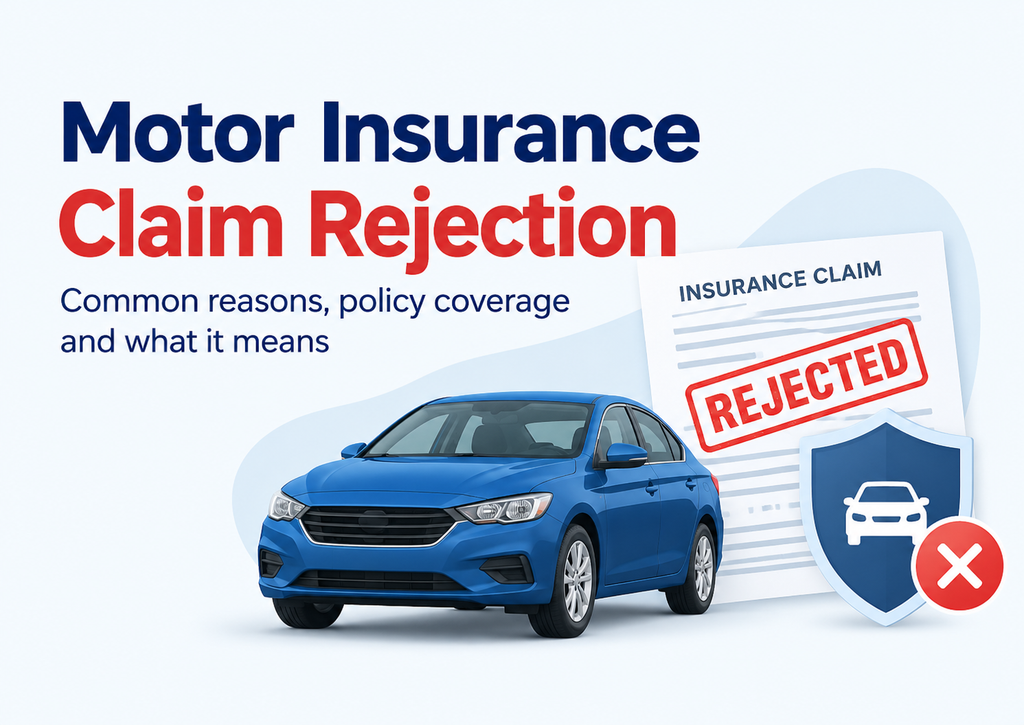
What Does Motor Insurance Claim Rejection Mean?
When a vehicle owner reports an insured loss, the insurance company examines the policy, circumstances of the incident, vehicle details, and relevant records before making a claim decision.
If the insurer determines that the loss is not covered or that an important policy condition has not been satisfied, the claim may be rejected.
A rejection decision is based on the specific facts of the claim and the terms of the insurance policy. Therefore, the reason for rejection can differ from one case to another.
Common Reasons for Motor Insurance Claim Rejection
1. Policy Exclusions
Motor insurance policies contain specific exclusions that identify situations or losses that are not covered.
If the circumstances of an accident, damage, or loss fall within an applicable exclusion, the insurer may reject the claim.
2. Driving Without a Valid Licence
A valid driving licence is an important requirement under motor insurance and applicable law.
If the vehicle was being driven by a person who did not hold the required valid licence at the relevant time, it may affect the admissibility of the claim, depending on the policy terms and circumstances.
3. Policy Lapse
Motor insurance coverage generally depends on the policy being valid and in force when the insured event occurs.
If the policy had expired or otherwise ceased to provide coverage before the incident, a claim may not be payable.
4. Incorrect or Incomplete Information
Incorrect information about the vehicle, its use, ownership, registration, or other material details can create issues during claim assessment.
Where the insurer determines that relevant information was incorrectly declared or withheld, the claim may be affected.
5. Use of Vehicle Outside Policy Terms
Motor policies may specify the permitted use of a vehicle.
For example, a vehicle insured for private use may have different coverage conditions from a vehicle used for commercial purposes. If the vehicle was being used outside the applicable policy terms at the time of the incident, it may affect the claim.
6. Unauthorised Modifications
Significant modifications to a vehicle may be relevant to insurance coverage and risk assessment.
If modifications have not been appropriately disclosed or are inconsistent with the policy requirements, they may become relevant during claim assessment.
7. Delayed Reporting or Notification
Motor insurance policies may contain requirements concerning the timely notification of an accident, theft, or other insured event.
A delay in reporting may make it more difficult to verify the circumstances of the loss and can affect a claim where the applicable policy conditions are not satisfied.
8. Fraud or Misrepresentation
Providing false, misleading, or materially inaccurate information in connection with a claim can have serious consequences.
If an insurer determines that a claim involves fraud or material misrepresentation, it may be rejected in accordance with the policy terms and applicable regulations.
Own Damage and Third-Party Claims
The reasons affecting a motor insurance claim can also depend on the type of coverage involved.
An own-damage claim generally relates to damage or loss involving the insured vehicle, subject to the policy coverage.
A third-party claim relates to liability arising from injury, death, or property damage caused to another party, subject to applicable law and insurance provisions.
The applicable policy, legal requirements, and circumstances of the incident determine whether a particular claim is payable.
Motor Insurance Claim Rejection vs Claim Delay
A claim rejection and a claim delay are different situations.
A claim delay means the claim has not yet reached a final decision and may still be under assessment, verification, investigation, or documentation review.
A claim rejection means the insurer has made a decision that the claim is not payable based on the applicable policy terms or other relevant grounds.
Understanding this distinction is important when evaluating the status of a motor insurance claim.
Impact of Motor Insurance Claim Rejection
A rejected motor insurance claim can leave the vehicle owner responsible for expenses that they expected the insurance policy to cover.
Depending on the circumstances, these expenses may include vehicle repair costs, replacement costs, or other financial losses associated with the incident.
The financial impact depends on the type of policy, extent of damage, applicable coverage, and reason for rejection.
Importance of Understanding Motor Insurance Coverage
Motor insurance policies contain definitions, coverage conditions, exclusions, limits, deductibles, and other provisions that determine the extent of protection.
Understanding these terms provides a clearer picture of what the policy is intended to cover and the circumstances in which a claim may not be payable.
The exact outcome of a claim depends on the policy wording and the facts of the individual case.
Conclusion
Motor insurance claim rejection can occur for various reasons, including policy exclusions, an invalid policy, licensing issues, incorrect information, unauthorised vehicle use, delayed notification, or misrepresentation.
A claim rejection should be understood in the context of the specific insurance policy and circumstances of the incident. General information about motor insurance cannot determine whether an individual claim is valid or payable.
Contact Insurance Resolve – Motor Insurance Claim Rejection
For assistance with motor insurance claim rejection, claim disputes, policy reviews, insurance mis-selling concerns, and other insurance-related matters:
📞 Call: 99103-52249
📧 Email: help@insuranceresolve.com
🌐 Website: www.insuranceresolve.com

