

Receiving an insurance claim rejection can be stressful and frustrating, especially when you need financial support during a medical emergency, accident, or other unforeseen event. However, a rejected insurance claim does not always mean the end of the road. Many claim rejections can be reviewed, appealed, or resolved with the right guidance and proper documentation. Policyholders have multiple grievance and appeal options if they believe a claim has been unfairly denied.
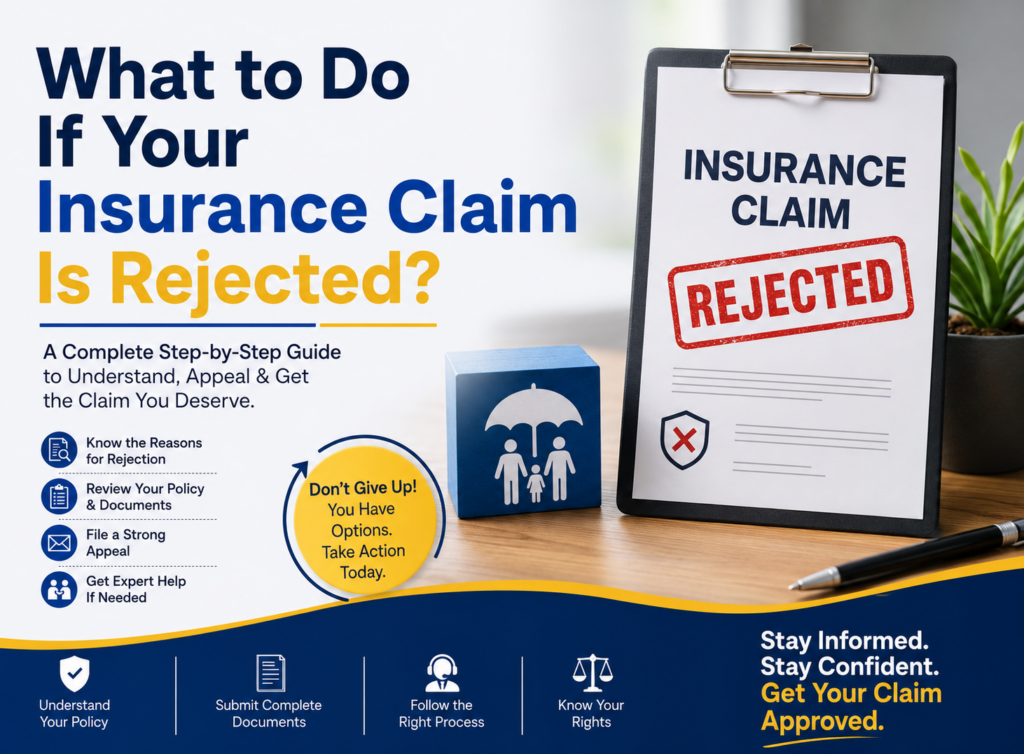
At Insurance Resolve, we help policyholders understand the reason behind claim rejection and guide them through the process of seeking a fair resolution.
Common Reasons Why Insurance Claims Are Rejected
Insurance companies may reject claims for several reasons, including:
- Incomplete or incorrect documentation
- Non-disclosure or incorrect information in the proposal form
- Claim falls under policy exclusions
- Policy lapse due to unpaid premiums
- Waiting period not completed
- Delay in claim intimation
- Treatment or event not covered under the policy
- Fraudulent or misleading information
Understanding the exact reason for rejection is the first step toward resolving the issue.
Read the Rejection Letter Carefully
Never ignore the rejection letter.
Check for:
- Exact reason for rejection
- Policy clause cited
- Missing documents (if any)
- Claim reference number
- Date of rejection
If the reason is unclear, request a detailed written explanation from the insurance company. Clear written reasons are important if you decide to challenge the decision.
Review Your Policy Document
Compare the rejection reason with your policy wording.
Verify:
- Coverage details
- Exclusions
- Waiting periods
- Terms and conditions
- Sum insured
- Claim procedure
Sometimes claims are rejected due to misunderstandings or incorrect interpretation of policy terms.
Collect every document that supports your claim, such as:
Gather Supporting Documents
- Policy copy
- Claim form
- Medical reports
- Hospital bills
- Discharge summary
- Doctor’s prescriptions
- Investigation reports
- Identity proof
- Communication with the insurer
Organizing documents properly can significantly improve the chances of a successful review.
Contact the Insurance Company’s Grievance Cell
If you believe the rejection is unfair, file a written grievance with the insurer’s Grievance Redressal Officer (GRO).
Include:
- Policy Number
- Claim Number
- Reason why you disagree
- Supporting documents
- Request for reconsideration
Maintain copies of all emails and letters for future reference.
Escalate the Complaint If Necessary
If the insurer does not resolve your grievance satisfactorily, you may escalate your complaint through the available regulatory and dispute-resolution mechanisms, including the Insurance Ombudsman or other appropriate forums, depending on your case. India provides a structured escalation process for policyholders seeking review of disputed claim decisions.
Tips to Avoid Insurance Claim Rejection
You can reduce the chances of claim rejection by following these best practices:
- Read the policy carefully before purchasing.
- Disclose all relevant information honestly.
- Pay premiums on time.
- Inform the insurer promptly after an incident.
- Submit complete and accurate documents.
- Keep copies of every communication.
- Understand policy exclusions and waiting periods.
How Insurance Resolve Can Help
Insurance claim disputes can be complex, especially when policy terms and documentation are involved.
Insurance Resolve assists policyholders by:
- Reviewing claim rejection reasons
- Examining policy terms
- Identifying documentation gaps
- Guiding the grievance process
- Helping prepare appeals and supporting documents
- Assisting throughout the claim resolution journey
Our objective is to help policyholders pursue a fair review of their insurance claims.
Frequently Asked Questions (FAQs)
Can a rejected insurance claim be approved later?
Yes. If the rejection resulted from missing documents, procedural issues, or an incorrect interpretation of policy terms, many claims can be reconsidered after review.
How long does the grievance process take?
The timeline varies depending on the insurer and the complexity of the case.
Should I accept the rejection immediately?
No. Always understand the reason for rejection before making a decision. Many policyholders successfully resolve claim disputes after submitting additional evidence or pursuing formal grievance channels.
Can Insurance Resolve assist with rejected claims?
Yes. Insurance Resolve helps policyholders understand rejection reasons, prepare documentation, and navigate the available grievance and claim resolution process.
Conclusion
An insurance claim rejection can feel overwhelming, but it does not necessarily mean your case is closed. By understanding the reason for rejection, reviewing your policy, submitting the required documents, and using the available grievance mechanisms, you may be able to obtain a fair review of your claim.
If your insurance claim has been rejected and you need professional assistance, Insurance Resolve is here to support you throughout the claim resolution process.
Need Help?
Insurance Resolve
📞 +91 99103-52249

