
Buying an insurance policy is an important financial decision. Whether it is life insurance, health insurance, motor insurance, or any other type of policy, you trust that the product being offered matches your needs. Unfortunately, this is not always the case.
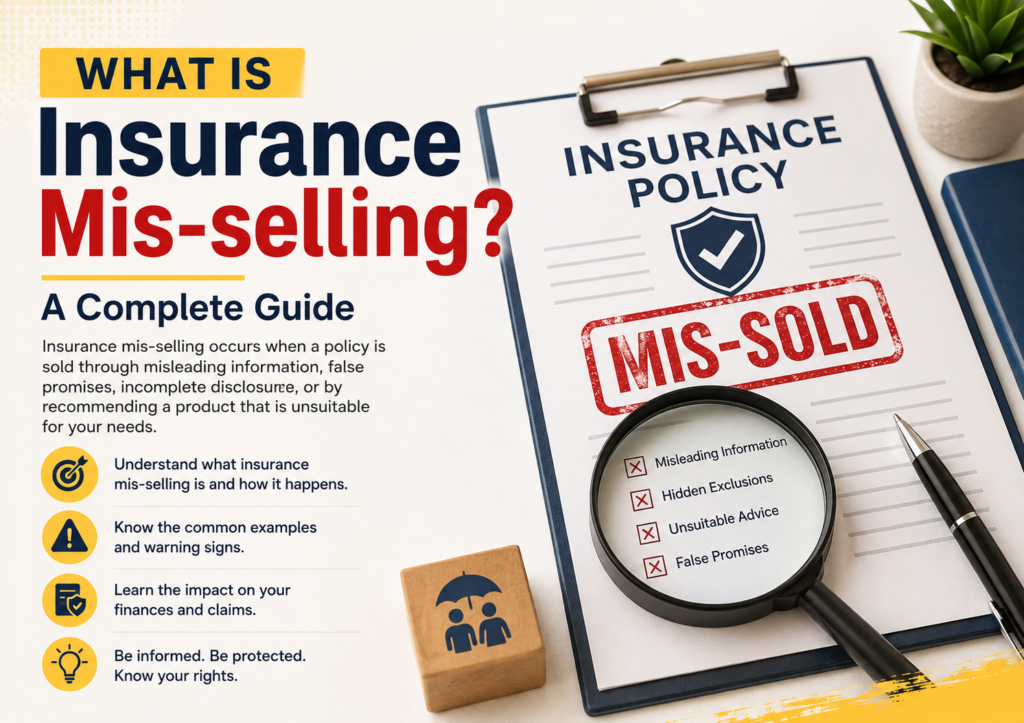
Insurance mis-selling has become one of the most common problems faced by policyholders. Many people discover years later that the policy they purchased is different from what was promised. Some learn about hidden conditions only when they file a claim, while others realize that the expected benefits never existed.
Understanding insurance mis-selling can help you make informed decisions and protect your financial future.
What Is Insurance Mis-selling?
Insurance mis-selling occurs when an insurance policy is sold through misleading information, false promises, incomplete disclosure, or without considering whether the product is suitable for the customer’s needs. Under the 2024 IRDAI Protection of Policyholders Regulations, mis-selling includes misleading statements, hiding important exclusions or benefits, undue influence, or failing to ensure the policy is suitable for the customer.
In simple words, if you purchase a policy based on incorrect or incomplete information, you may have been a victim of insurance mis-selling.
Mis-selling is not limited to one type of insurance. It can happen with life insurance, health insurance, investment-linked policies, retirement plans, and even general insurance products.
Why Insurance Mis-selling Happens
Insurance products can be complex. Many policies contain technical terms, exclusions, waiting periods, surrender conditions, and premium commitments that are difficult for an average customer to understand.
Mis-selling often occurs because:
- Customers rely entirely on the advice of the seller.
- Important policy terms are not properly explained.
- Returns or benefits are exaggerated.
- Risks and exclusions are hidden.
- Unsuitable products are recommended simply to complete a sale.
IRDAI has repeatedly identified mis-selling as a significant concern and continues to strengthen consumer protection measures across the insurance industry.
Common Examples of Insurance Mis-selling
Insurance mis-selling can take many forms. Some of the most common examples include:
Insurance Sold as an Investment
A customer is told that the policy will provide guaranteed high returns similar to a fixed deposit or investment plan, but later discovers that returns depend on market performance or long-term policy conditions.
Insurance Sold as a Fixed Deposit
One of the most frequent complaints is when customers believe they are investing in a bank fixed deposit but later realize they have purchased an insurance policy with lock-in periods and surrender charges.
Hidden Exclusions
Important exclusions are not disclosed during the sale. When the policyholder files a claim, the insurer rejects it because the excluded condition was never explained.
Incorrect Benefit Explanation
The salesperson promises benefits that are not mentioned anywhere in the policy document.
Unsuitable Policy Recommendation
A policy is recommended without understanding the customer’s age, financial goals, family responsibilities, or insurance requirements.
Incomplete Disclosure
The customer is not informed about premium payment duration, surrender penalties, waiting periods, policy charges, or renewal conditions.
Signs That You May Have Been Mis-sold an Insurance Policy
Many policyholders only realize they were mis-sold after several months or years.
Some warning signs include:
- The policy is completely different from what was explained.
- Promised returns do not match official documents.
- Premium commitments are much longer than expected.
- Hidden charges reduce policy value.
- Claim benefits differ from verbal assurances.
- Important exclusions were never discussed.
- The policy does not meet your financial objectives.
Impact of Insurance Mis-selling
Insurance mis-selling affects more than just finances. It can create long-term financial stress and loss of confidence in the insurance system.
Possible consequences include:
- Financial losses
- Claim rejection
- Unexpected surrender charges
- Long-term premium obligations
- Inadequate insurance protection
- Delay in achieving financial goals
- Emotional stress during claim settlement
These problems become even more serious when families depend on insurance during medical emergencies or after the death of the insured person.
Insurance Mis-selling in India
Insurance mis-selling has remained a major concern in India for many years. Regulatory authorities have introduced several consumer protection measures to improve transparency and accountability.
Recent regulations require insurers and distribution channels to avoid misleading statements, disclose important policy information clearly, and recommend products that are suitable for the customer’s needs.
The focus today is on ensuring that customers understand exactly what they are buying before making any long-term financial commitment.
Why Customers Often Do Not Realize Immediately
Unlike many financial products, insurance policies are usually purchased for future protection.
A customer may continue paying premiums for several years before discovering that:
- Coverage is different than expected.
- Returns are lower than promised.
- Certain medical conditions are excluded.
- The claim cannot be settled due to policy conditions.
This delayed realization makes insurance mis-selling particularly harmful.
Importance of Reading Policy Documents
Insurance documents contain important information such as:
- Policy benefits
- Coverage limits
- Exclusions
- Waiting periods
- Premium obligations
- Surrender conditions
- Claim requirements
Reading these documents carefully helps policyholders understand their rights and responsibilities before relying on the policy.
Consumer Awareness Is the Best Protection
The best defence against insurance mis-selling is awareness.
Consumers should understand:
- What type of insurance they actually need
- How the policy works
- What risks are covered
- What situations are excluded
- How long premiums must be paid
- Whether the policy matches their financial goals
An informed buyer is far less likely to become a victim of misleading sales practices.
Conclusion
Insurance is designed to provide financial security during uncertain times. However, when a policy is sold through misleading information, false promises, or incomplete disclosure, it defeats that purpose.
Insurance mis-selling can lead to financial loss, claim disputes, and years of unnecessary stress. Understanding how mis-selling occurs, recognizing common warning signs, and carefully reviewing policy documents can help policyholders make informed decisions.
If you believe your insurance policy was sold using false promises, misleading information, or important facts were concealed, it is important to understand your rights and seek appropriate guidance. Staying informed is the first step toward protecting your financial interests.
FAQs
What is insurance mis-selling?
Insurance mis-selling refers to selling an insurance policy using misleading information, false promises, hidden terms, or by recommending a policy that is unsuitable for the customer’s needs.
Can insurance mis-selling happen in health insurance?
Yes. Mis-selling can occur in health insurance when coverage, waiting periods, exclusions, or benefits are incorrectly explained or not disclosed.
Is selling insurance as a fixed deposit considered mis-selling?
If a customer is led to believe they are purchasing a fixed deposit but actually receives an insurance policy, it may constitute insurance mis-selling depending on the facts and disclosures.
How do I know if my insurance policy was mis-sold?
If the policy benefits, premium obligations, returns, or coverage differ from what was promised during the sale, it may indicate possible mis-selling.
Why is insurance mis-selling a serious issue?
It can result in financial loss, claim disputes, inadequate coverage, and long-term premium commitments that the customer never intended to undertake.

