
IDV (Insured Declared Value) is an important term in motor insurance. It represents the approximate current market value of an insured vehicle and is generally used as the basis for calculating the maximum amount payable when a vehicle is considered a total loss or is stolen, subject to the policy terms and conditions.
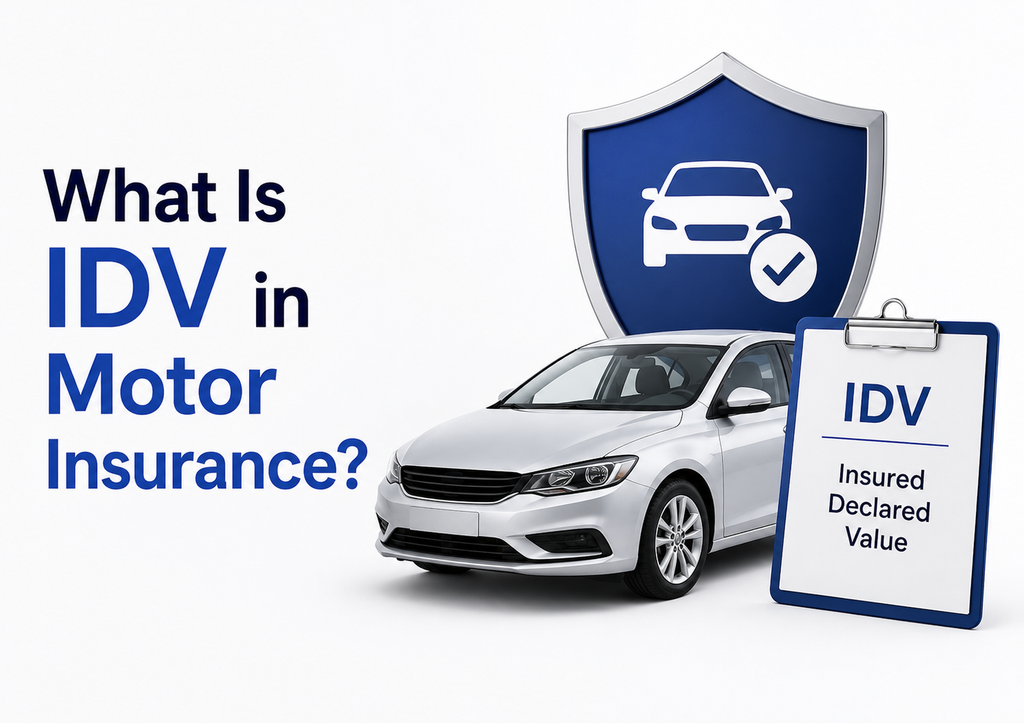
Understanding IDV can help vehicle owners better understand their motor insurance coverage and premium.
How Is IDV Determined?
The IDV of a vehicle is generally linked to factors such as its original listed price, age, and applicable depreciation. As a vehicle becomes older, its IDV usually decreases because of depreciation.
For vehicles with accessories or additional equipment, the applicable valuation can depend on how those items are covered under the policy.
Why Is IDV Important?
IDV is important because it represents the insured value of the vehicle under a motor insurance policy.
For a total loss or theft claim, the applicable IDV can influence the maximum claim amount payable, subject to the policy’s terms, conditions, deductibles, and other applicable provisions.
IDV and Motor Insurance Premium
The IDV can also affect the own-damage portion of a motor insurance premium.
Generally, a higher IDV can result in a higher premium, while a lower IDV may reduce the premium. However, choosing an appropriate IDV is important because an unnecessarily low value can affect the financial protection available in the event of a total loss or theft.
IDV vs Market Value
IDV and the actual market value of a vehicle are related but are not necessarily identical.
IDV is the value specified for insurance purposes under the policy, while the actual market value may vary depending on factors such as the vehicle’s condition, demand, mileage, location, and other market factors.
Does IDV Apply to Every Motor Insurance Claim?
No. IDV is particularly relevant to situations such as total loss, constructive total loss, or theft, depending on the policy.
For partial damage claims, the settlement is generally based on the assessed repair or replacement costs and the applicable policy terms rather than simply paying the full IDV.
What Happens to IDV as a Vehicle Gets Older?
IDV generally decreases as the vehicle ages because depreciation is taken into account.
This means the insured value of an older vehicle may be considerably lower than the amount originally paid when the vehicle was purchased.
Why Should Policyholders Understand IDV?
Understanding IDV can help vehicle owners evaluate their motor insurance coverage and appreciate how vehicle valuation may affect premiums and certain types of claims.
It is also useful when comparing motor insurance policies because a lower premium is not necessarily better if the insured value does not provide adequate protection.
Motor Insurance Claim Problems Related to Vehicle Valuation
Policyholders may sometimes face disagreements regarding vehicle valuation, claim settlement, depreciation, or the amount offered by an insurer.
If a motor insurance claim is delayed, rejected, or short-settled, understanding the policy terms and the basis of the insurer’s assessment can be important.
Get Help With Motor Insurance Claim Issues
If you are facing a motor insurance claim rejection, claim delay, short settlement, or valuation-related concern, Insurance Resolve provides professional guidance for policyholders dealing with insurance claim and complaint-related issues.
Insurance Resolve – Insurance Claim & Complaint Solutions
📞 Phone: +91 99103-52249
📧 Email: help@insuranceresolve.com
🌐 Website: www.insuranceresolve.com
Frequently Asked Questions
What does IDV mean in motor insurance?
IDV stands for Insured Declared Value. It represents the insured value of a vehicle for certain claim situations, particularly total loss or theft, subject to the policy terms.
Does IDV affect motor insurance premium?
Yes. IDV can affect the own-damage portion of a motor insurance premium. The relationship depends on the policy and vehicle details.
Does IDV decrease every year?
Generally, IDV decreases as the vehicle becomes older because depreciation is considered when determining the insured value.
Is IDV the same as the market value of a car?
Not necessarily. IDV is an insurance valuation, while actual market value can vary based on the vehicle’s condition, demand, mileage, and other factors.

