
Business insurance can protect companies against certain financial losses arising from events such as fire, theft, property damage, liability, and business interruption. However, having an active policy does not automatically guarantee that every loss will be covered.
A business insurance claim may be rejected when the insurer determines that the circumstances of the loss do not meet the policy’s coverage, conditions, or requirements.
The Loss Is Excluded From the Policy
Insurance policies contain specific exclusions. If the reported loss falls under an exclusion, the insurer may decline the claim.
Understanding exclusions is therefore important when evaluating business insurance coverage.
The Event Is Not Covered
A business may have insurance but still face a loss that is outside the specific coverage purchased. For example, a policy may cover certain property risks but not every type of damage or business interruption.
The exact coverage depends on the policy wording.
Policy Conditions Were Not Met
Business insurance policies can contain conditions that the policyholder is expected to follow. If the insurer determines that a relevant policy condition was not satisfied, it may affect the claim.
Incomplete or Inaccurate Information
Information provided when purchasing or renewing a policy can be important to the insurer’s assessment of risk. Significant inaccuracies or missing information may create problems when a claim is reviewed.
Insufficient Evidence of Loss
The insurer may require evidence to establish the nature and value of the loss. Inadequate records, invoices, photographs, stock records, repair estimates, or other supporting information can make a claim difficult to assess.
Underinsurance
A business may insure its property or assets for an amount lower than their actual value. In such situations, the claim settlement may be affected by the policy terms and applicable underinsurance provisions.
This does not always mean the entire claim will be rejected, but it can significantly affect the amount payable.
Late Notification
Some policies contain requirements regarding notification of a loss. If a business does not report an insured event within the applicable requirements, the insurer may consider whether the delay affected its ability to investigate the claim.
Misrepresentation or Non-Disclosure
If important information was intentionally or materially misrepresented or withheld, the insurer may investigate whether this affects the validity of the policy or the claim.
Loss Falls Outside the Policy Period
Insurance coverage generally applies during the policy period and according to the specific terms of the contract. If the event occurred outside the applicable coverage period, the claim may not be payable.
Claim Investigation Findings
For larger or more complex business claims, the insurer may conduct a detailed investigation into the circumstances of the loss.
If the investigation identifies issues relating to coverage, policy conditions, or the circumstances of the incident, the claim may be declined.
Rejected Claim vs Delayed Claim
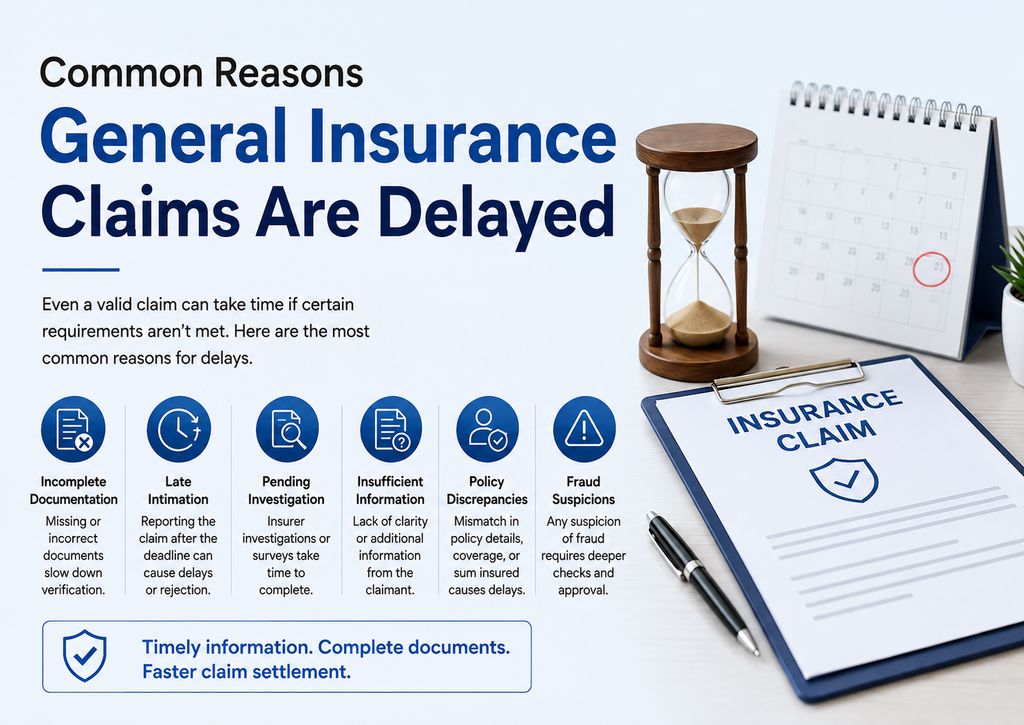
A rejected business insurance claim is different from a delayed claim.
A delayed claim may still be under assessment, whereas a rejected claim means the insurer has made a decision not to pay the claim based on stated grounds.
What Should Policyholders Understand?
When a business insurance claim is rejected, it is important to understand the reason given by the insurer and how it relates to the policy wording.
Coverage, exclusions, conditions, evidence, and the circumstances of the loss can all influence the claim decision.
Get Help With Business Insurance Claim Rejection
If your business insurance claim has been rejected, delayed, or short-settled, Insurance Resolve provides professional guidance for policyholders and businesses dealing with insurance claim and complaint-related concerns.
Insurance Resolve – Insurance Claim & Complaint Solutions
Phone: +91 99103-52249
Email: help@insuranceresolve.com
Website: www.insuranceresolve.com
Frequently Asked Questions
Why can a business insurance claim be rejected?
A claim may be rejected because the loss is excluded, outside the policy coverage, unsupported by sufficient evidence, or affected by policy conditions or other relevant circumstances.
Does underinsurance cause claim rejection?
Underinsurance can affect the amount payable under a policy. Whether it results in rejection or reduced settlement depends on the policy terms and circumstances.
Can incomplete documents cause a business insurance claim problem?
Yes. Missing or insufficient evidence can make it difficult for the insurer to verify and assess the claim.
Can Insurance Resolve help with a rejected business insurance claim?
Insurance Resolve provides professional guidance for businesses and policyholders facing claim rejection, delays, short settlement, and other insurance-related concerns.