

Commercial Property Insurance is a type of business insurance that provides financial protection for commercial buildings, business property, equipment, stock, furniture, fixtures, and other insured assets against specified risks.
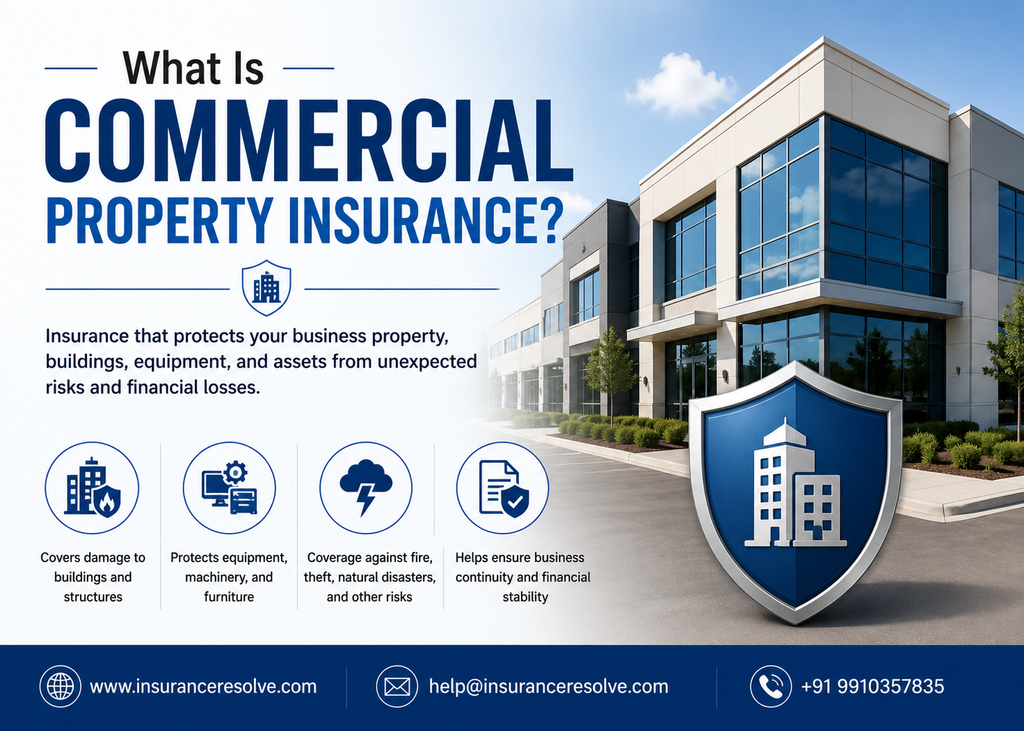
Businesses can face unexpected losses from events such as fire, theft, storms, floods, and other covered incidents. Commercial Property Insurance is designed to help protect the financial value of business property when an insured event causes damage or loss.
What Does Commercial Property Insurance Cover?
The coverage depends on the policy and the protection selected by the business. A commercial property policy may cover different types of business assets, including:
- Commercial buildings
- Office premises
- Shops and retail properties
- Warehouses
- Machinery and equipment
- Furniture and fixtures
- Business stock and inventory
- Electronic equipment
- Other specified business property
The risks covered also depend on the policy wording.
Common Risks Covered
Depending on the policy, Commercial Property Insurance may provide protection against certain events such as:
- Fire
- Lightning
- Explosion
- Storms and other specified natural events
- Flood, where covered
- Burglary or theft, where included
- Accidental physical damage
- Other insured perils
Not every policy covers all these risks automatically. Coverage, limits, and conditions can vary between policies.
Who Needs Commercial Property Insurance?
Commercial Property Insurance can be relevant to businesses that own or occupy property or have valuable physical assets.
Examples include:
- Retail stores
- Offices
- Factories
- Warehouses
- Restaurants
- Hotels
- Clinics and commercial establishments
- Manufacturing businesses
- Service businesses with physical assets
The type and amount of coverage required can depend on the nature of the business and the value of the property being insured.
Building and Contents Coverage
Commercial Property Insurance may provide protection for both the building and its contents, depending on the policy.
Building coverage can relate to the physical structure, while contents coverage can protect business assets such as furniture, equipment, machinery, stock, and fixtures.
These covers may be available separately or together, depending on the insurance product.
What Is Business Interruption Coverage?
Some commercial property policies may also provide business interruption or loss-of-profit coverage following an insured event.
If an insured property suffers significant damage and business operations are interrupted, this type of coverage may help address certain eligible financial losses, subject to the policy terms.
Business interruption coverage is different from ordinary property damage coverage because it relates to the financial impact of the interruption rather than only the physical damage.
Common Exclusions
Commercial Property Insurance policies contain exclusions that identify circumstances or losses that are not covered.
Depending on the policy, exclusions may include:
- Normal wear and tear
- Gradual deterioration
- Certain maintenance-related issues
- Intentional damage
- Uninsured risks
- Certain types of natural events unless specifically covered
- Losses exceeding applicable policy limits
The actual exclusions depend on the specific policy wording.
Importance of the Sum Insured
The sum insured represents the amount of insurance selected for the covered property or assets.
If property is insured for an amount significantly lower than its appropriate value, underinsurance may become an issue when a claim occurs. Depending on the policy, an average clause or similar provision may affect the amount payable.
This makes appropriate valuation an important part of understanding commercial property protection.
Commercial Property Insurance Claims
When damage occurs, the insurer generally assesses the circumstances and extent of the loss before determining the amount payable under the policy.
The final claim settlement may depend on:
- Nature and extent of the damage
- Sum insured
- Policy coverage
- Applicable deductible
- Depreciation or valuation provisions
- Salvage
- Policy exclusions
- Limits and sub-limits
- Other policy conditions
Therefore, the amount claimed by a business and the amount ultimately settled by the insurer may be different.
Commercial Property Insurance vs Home Insurance
Commercial Property Insurance is designed for business-related property and assets, while Home Insurance generally protects residential property and personal belongings.
A business operating from a commercial premises may require insurance specifically designed around commercial risks, assets, and activities.
Conclusion
Commercial Property Insurance provides financial protection for eligible business property and assets against specified insured risks. Depending on the policy, it may cover buildings, stock, machinery, equipment, furniture, fixtures, and certain business interruption losses.
Because coverage varies between policies, understanding the insured risks, exclusions, limits, deductibles, and valuation provisions is important for knowing the actual protection available to a business.

