
Shop Insurance is a type of business insurance designed to protect a shop or retail business against certain financial losses arising from risks such as fire, theft, natural disasters, accidents, and other insured events.
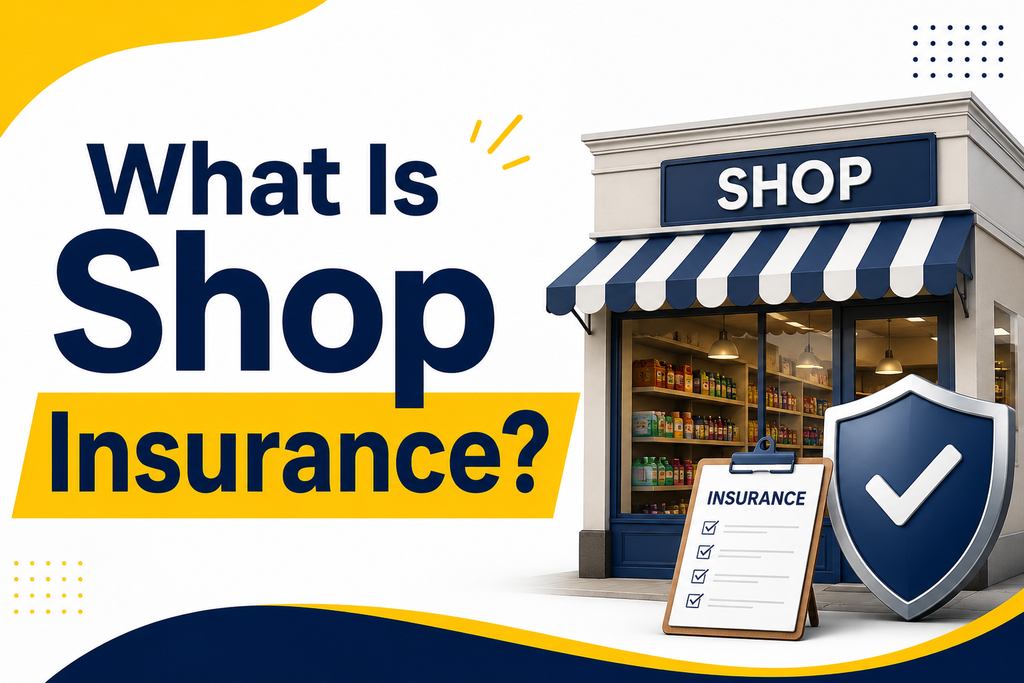
A shop may contain valuable stock, furniture, equipment, fixtures, electronic systems, and other business assets. Damage to these assets can result in significant financial losses. Shop Insurance can provide protection against covered risks, depending on the policy selected.
What Does Shop Insurance Cover?
The coverage under a Shop Insurance policy depends on the insurer, policy type, and selected benefits.
Depending on the policy, coverage may include:
- Shop building: Protection for the insured premises against specified risks.
- Stock: Coverage for eligible loss or damage to goods and inventory.
- Furniture and fixtures: Protection for items such as shelves, counters, fittings, and other business fixtures.
- Equipment: Coverage for eligible business equipment and electronic assets.
- Fire and related risks: Protection against covered fire and associated perils.
- Theft: Certain policies may provide coverage for loss caused by burglary or theft, subject to policy conditions.
- Natural disasters: Some policies may cover specified events such as floods, storms, or earthquakes.
- Business interruption: Certain policies may provide financial protection for loss of income or additional expenses following an insured event.
Not every Shop Insurance policy provides all these covers automatically. Coverage depends on the policy wording and the benefits selected.
Why Is Shop Insurance Important?
A shop represents both an investment and a source of income. An unexpected event can damage property, destroy stock, interrupt operations, or create additional expenses.
For example, a fire could damage the shop’s interior and inventory, while burglary could result in the loss of valuable goods. A suitable insurance policy can help reduce the financial impact of covered events.
Shop Insurance for Different Businesses
Shop Insurance can be relevant to many types of retail and small businesses.
Examples include:
- Clothing stores
- Grocery shops
- Electronics stores
- Mobile phone shops
- Medical stores
- Furniture shops
- Jewellery stores
- General retail outlets
- Small commercial establishments
The risks and insurance requirements can vary considerably between businesses.
What Is Usually Not Covered?
Shop Insurance policies also contain exclusions, which are situations or losses that are not covered by the policy.
Depending on the policy, exclusions may relate to certain types of damage, intentional acts, wear and tear, improper maintenance, uninsured risks, or other specified circumstances.
Policyholders should therefore understand both the coverage and exclusions rather than assuming that every loss involving the shop will be insured.
Shop Insurance and Business Assets
One important aspect of Shop Insurance is that different types of assets may have different coverage conditions.
For example, the value of stock may change regularly, while furniture, fixtures, and equipment may have different methods of valuation.
The amount of insurance selected should therefore reflect the nature and value of the assets that the business wants to protect.
Shop Insurance and Claims
When an insured event occurs, the claim settlement generally depends on the policy terms, the nature and extent of the loss, available evidence, and applicable conditions.
The insurer may assess the damaged property or stock and determine the amount payable under the policy.
The final settlement may differ from the initial estimate of the business owner because of factors such as deductibles, depreciation, policy limits, exclusions, valuation, or other applicable conditions.
Understanding Shop Insurance
Shop Insurance is not a single standard product with identical coverage for every business. Different insurers may offer different combinations of protection, limits, exclusions, and additional covers.
Understanding the policy wording is therefore important for knowing what risks are insured and what financial protection is actually available.
Conclusion
Shop Insurance provides financial protection for eligible risks affecting a retail shop and its business assets. Depending on the policy, it may cover the building, stock, equipment, furniture, fixtures, theft, fire, natural disasters, and certain business interruption losses.
The exact protection depends on the policy terms, coverage limits, exclusions, and selected benefits. For this reason, understanding what a Shop Insurance policy covers—and what it does not—is important for every shop owner.

