

An insurance policy is designed to provide financial protection during unexpected events, but that protection generally depends on the policy remaining active. When a policy is not renewed within the required period, it may lapse and the coverage associated with it can be affected.
A lapsed policy does not necessarily mean that the policy can never be continued. The effect of a lapse depends on the type of insurance, the policy terms, the duration of the lapse, and the insurer’s applicable conditions.
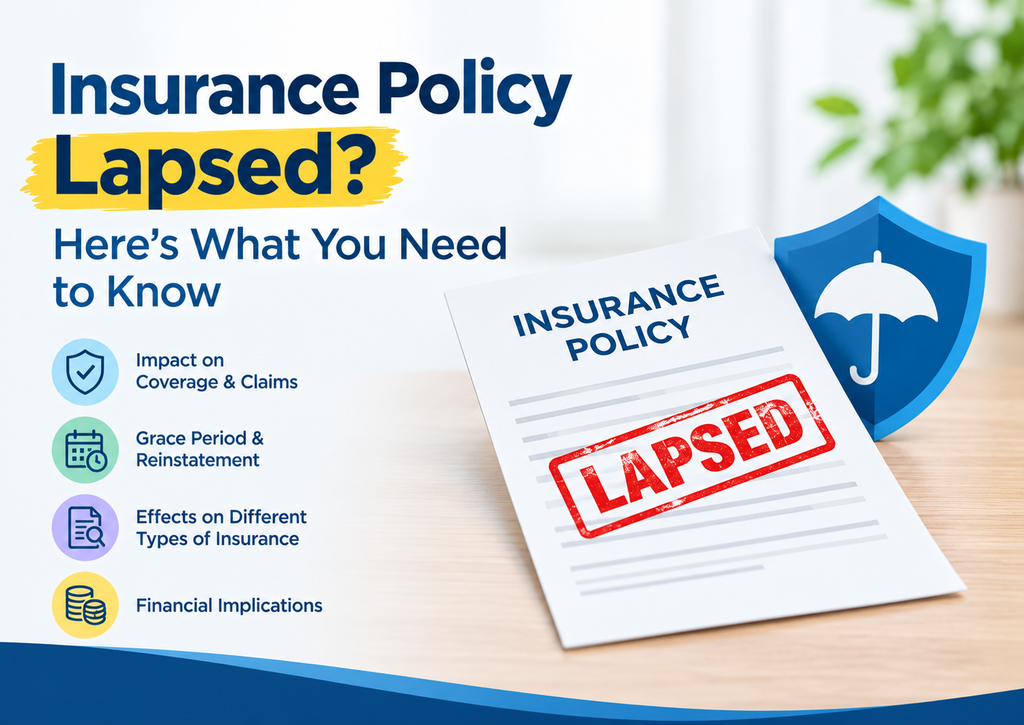
What Does an Insurance Policy Lapse Mean?
An insurance policy is considered lapsed when the required premium has not been paid within the applicable period and the policy is no longer providing coverage according to its terms.
The consequences of a lapse can differ significantly between life insurance, health insurance, motor insurance, and other types of insurance.
What Happens When a Policy Lapses?
The most important consequence of a lapse is that the policyholder may no longer have the expected insurance protection during the period in which the policy is inactive.
Depending on the policy, a lapse may affect:
- Insurance coverage
- Eligibility for certain benefits
- Claim availability
- Waiting-period-related benefits
- Accumulated policy benefits
- Policy continuity
- Renewal or reinstatement conditions
The exact impact depends on the specific policy.
Grace Period and Policy Lapse
Many insurance policies provide a grace period after the premium due date. During this period, the policyholder may have an opportunity to pay the outstanding premium under the applicable policy conditions.
A grace period should not automatically be treated as an extension of all policy benefits in every situation. The applicable terms can vary by insurance product and policy.
Can a Lapsed Policy Be Restored?
In some cases, insurers may provide an option to reinstate or revive a lapsed policy.
Reinstatement conditions can vary depending on the type of insurance, how long the policy has been inactive, and the insurer’s terms. Additional requirements, premium payments, interest, declarations, or other conditions may apply.
Therefore, a lapsed policy and a permanently terminated policy are not necessarily the same thing.
Impact on Life Insurance Policies
A lapse can have significant implications for life insurance because the policy may not provide the intended life cover while it remains inactive.
Depending on the policy, accumulated benefits or other policy features may also be affected by a lapse.
Some life insurance policies may have provisions relating to revival, paid-up status, surrender value, or other policy benefits. These provisions depend on the individual policy contract.
Impact on Health Insurance
A lapsed health insurance policy can affect access to coverage when the policy is inactive.
A lapse may also have implications for continuity-related benefits, waiting periods, or other features depending on the policy and applicable terms.
This is particularly important because health insurance coverage can involve waiting periods and conditions linked to continuous coverage.
Impact on Motor Insurance
Motor insurance coverage can also be affected when a policy expires or lapses.
If an applicable motor insurance policy is not active, the vehicle owner may not have the expected insurance protection for an incident occurring during the uninsured period.
The consequences can depend on the type of motor insurance cover and the applicable legal and policy requirements.
Does a Lapse Affect Insurance Claims?
A claim arising from an event that occurred while a policy was inactive may not be payable simply because the policy had previously been active.
Claim eligibility generally depends on whether the policy was in force when the insured event occurred and whether the claim satisfies the applicable policy conditions.
This makes policy continuity an important consideration for policyholders.
Lapsed Policy vs Expired Policy
A policy can become inactive for different reasons, and the terminology may vary between insurance products.
An expired policy may refer to a policy reaching the end of its contractual period without renewal, while a lapsed policy commonly refers to a policy becoming inactive because required premium payments were not made within the applicable period.
The exact meaning can depend on the insurance product and policy wording.
Financial Consequences of a Policy Lapse
A lapse can potentially create unexpected financial exposure.
Without active coverage, a policyholder may have to bear certain losses or expenses personally. In addition, restoring a policy may involve additional financial or contractual requirements depending on the insurer and product.
For this reason, maintaining appropriate insurance continuity can be financially important.
Why Policy Continuity Matters
Insurance is primarily valuable when protection is available at the time an unexpected event occurs.
A lapse can create a gap between the protection a policyholder believes they have and the coverage actually available under the policy. Understanding renewal dates, premium requirements, grace periods, and policy conditions can help policyholders maintain a clearer understanding of their insurance protection.
Conclusion
An insurance policy lapse can affect coverage, claims, policy benefits, and financial protection. The consequences are not identical for every type of insurance and depend on the specific policy terms and circumstances.
Whether the policy is related to life, health, motor, property, or another form of insurance, understanding the effect of a lapse is important for every policyholder.
Contact Insurance Resolve – Insurance Policy Lapsed
For assistance with insurance policy lapse, claim disputes, policy reviews, insurance mis-selling concerns, and other insurance-related matters:
📞 Call: 99103-52249
📧 Email: help@insuranceresolve.com
🌐 Website: www.insuranceresolve.com

