

Insurance provides financial protection against various risks, but that protection generally applies only while the policy is active. When an insurance policy reaches its expiry date, timely renewal becomes important to maintain continuous coverage.
Whether it is health insurance, motor insurance, home insurance, life insurance, travel insurance, or commercial insurance, understanding the importance of renewal can help policyholders avoid unnecessary coverage gaps.
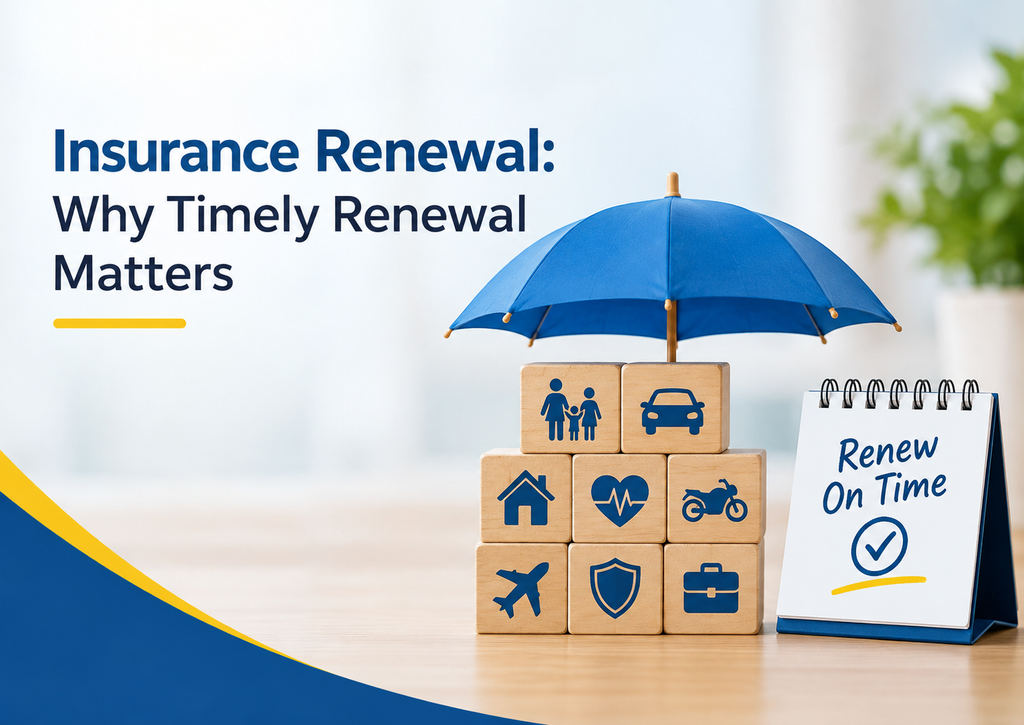
What Is Insurance Renewal?
Insurance renewal is the process of continuing an existing insurance policy for another policy period. The renewal may involve payment of the applicable premium and acceptance of the insurer’s updated terms and conditions.
The renewed policy may have changes in premium, coverage, exclusions, limits, or other conditions. Therefore, renewal is also an opportunity for policyholders to review their insurance protection.
Why Is Timely Insurance Renewal Important?
Helps Avoid a Coverage Gap
One of the primary reasons for timely renewal is to avoid a gap in insurance coverage. Once a policy expires, the protection available under that policy may no longer apply.
An incident occurring during a period when there is no active coverage may therefore create financial difficulties for the policyholder.
Maintains Continuity of Protection
Timely renewal helps maintain continuity of insurance protection. Depending on the type of policy, continuity may also be relevant to certain benefits, waiting periods, or policy conditions.
The exact effect of a break in coverage depends on the policy and applicable terms.
Reduces the Risk of Uncovered Claims
Insurance is intended to provide financial protection against specified risks. If a policy has expired, an event occurring after expiry may not be covered by the expired policy.
Renewing on time can help reduce the possibility of being without active protection.
Provides Time to Review Policy Terms
Renewal is not simply about paying the premium. It is also an opportunity to check the policy’s coverage, exclusions, limits, deductibles, premium, and other conditions.
Reviewing these details can help policyholders understand what protection they will have during the next policy period.
What Happens When an Insurance Policy Expires?
The consequences of policy expiry vary depending on the type of insurance and the insurer’s terms.
An expired policy may result in:
- Loss of active insurance coverage
- A gap between two policy periods
- Claims during the gap potentially remaining outside coverage
- Changes in renewal conditions
- Additional requirements for reinstatement or obtaining coverage
- Possible changes in premium or policy terms
Policyholders should refer to their individual policy documents because renewal and expiry conditions can differ.
Insurance Renewal Is an Opportunity to Review Your Coverage
Circumstances can change over time. A person’s financial responsibilities, assets, vehicle, business activities, family requirements, or other circumstances may be different when the policy comes up for renewal.
For this reason, renewal can be a useful time to check whether the existing coverage continues to meet the policyholder’s requirements.
Important details may include:
- Sum insured or coverage amount
- Policy limits
- Premium
- Deductibles or excess
- Exclusions
- Additional benefits
- Nominee or beneficiary details
- Personal and contact information
- Policy period and renewal date
Timely Renewal and Lapsed Policies
A policy that is not renewed by its expiry date may be treated differently from an active policy. Some insurance products may have specific provisions for renewal after expiry or reinstatement, while others may require additional conditions.
Therefore, a policyholder should not assume that an expired or lapsed policy automatically provides the same protection as an active policy.
Why Policyholders Should Keep Renewal Records
Keeping copies of renewal notices, policy documents, premium receipts, and relevant communications can be useful.
These records provide evidence of the policy period and can help clarify the status of coverage if questions arise later regarding renewal, premium payment, or a claim.
Conclusion
Timely insurance renewal is an important part of maintaining continuous financial protection. Allowing a policy to expire can create a coverage gap and may affect protection against events occurring during that period.
Policyholders should review their policy terms, renewal date, premium, coverage, exclusions, and other important conditions before continuing their insurance.
Understanding the renewal terms can help policyholders make informed decisions about their insurance protection.
Need Help With an Insurance-Related Problem?
If you are facing an insurance-related issue such as a claim rejection, claim delay, short settlement, lapsed policy issue, mis-selling, or other service-related problem, Insurance Resolve can help you understand and address your insurance concern.
Insurance Resolve
🌐 Website: www.insuranceresolve.com
📧 Email: help@insuranceresolve.com
📞 Phone: +91 9910352249

