
Introduction
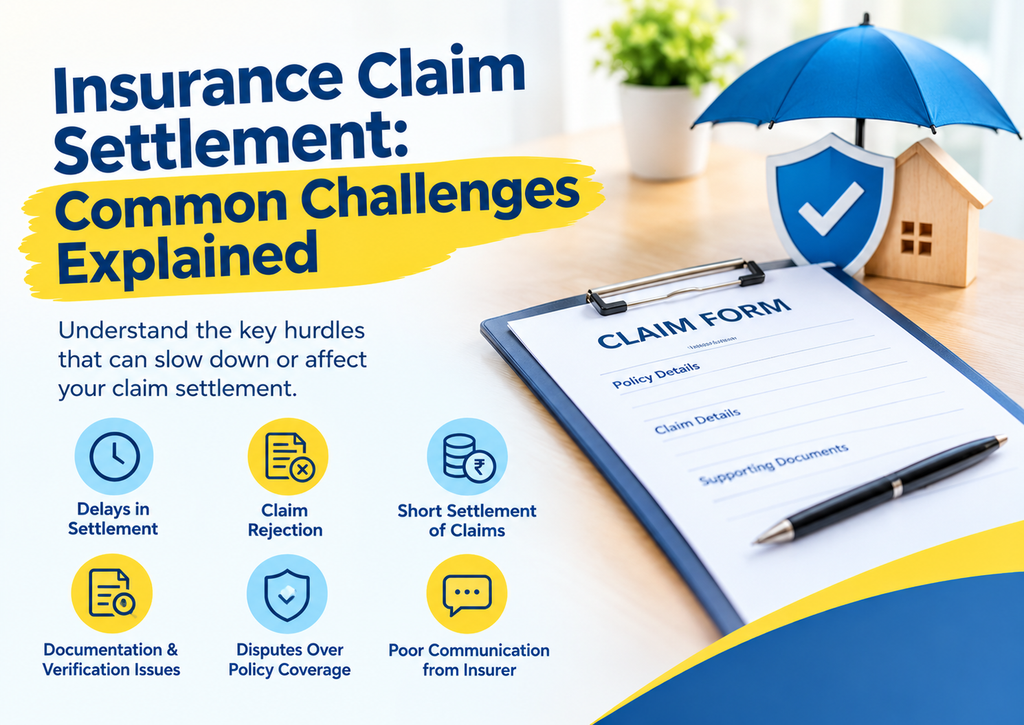
Insurance is intended to provide financial protection during unexpected situations, such as medical emergencies, accidents, property damage, or the loss of a loved one. However, settling an insurance claim is not always straightforward. Policyholders may face delays, claim rejection, reduced payments, documentation issues, or difficulties communicating with the insurance company.
Understanding these common challenges can help policyholders make informed decisions and better understand their options when a claim does not proceed as expected.
1. Delays in Insurance Claim Settlement
One of the most common problems is a delay in claim settlement. Claims may take longer because of incomplete documentation, additional verification, investigations, or disagreements over the circumstances of the loss.
Such delays can create financial pressure, especially when a family is waiting for health insurance reimbursement or financial support following an accident or death.
Policyholders should be able to understand the status of their claim and the reasons for any significant delay.
2. Insurance Claim Rejection
Claim rejection can be stressful, particularly when policyholders believe their loss should be covered.
An insurance company may reject a claim because of policy exclusions, incomplete disclosures, unmet policy conditions, or insufficient supporting evidence.
However, every rejection should be considered in light of the policy wording, the facts of the case, and applicable regulations. A rejection does not automatically mean that the insurer’s decision is beyond question.
3. Short Settlement of Insurance Claims
Sometimes, an insurance company approves a claim but pays less than the amount expected by the policyholder. This is known as a short settlement.
The difference may result from deductibles, depreciation, co-payment clauses, coverage limits, sub-limits, or the insurer’s assessment of the loss.
For example, a motor insurance claim may be reduced after applying depreciation and the applicable excess. In health insurance, certain expenses may not be payable under the policy terms.
When a settlement amount appears incorrect, policyholders can request a detailed explanation of the calculations and the policy provisions applied.
4. Documentation and Verification Issues
Insurance claims often require supporting documents, such as medical records, hospital bills, repair estimates, police reports, death certificates, or proof of ownership.
Missing, unclear, or inconsistent information may result in additional queries and delays. Insurers may also request further documents to verify the circumstances of a claim.
Keeping copies of submitted documents and written communications can help policyholders track their claims and respond to outstanding requirements.
5. Disputes Over Policy Coverage
A policyholder may believe that a particular loss is covered, while the insurance company interprets the policy differently.
These disagreements can arise because of exclusions, waiting periods, deductibles, coverage limits, or specific conditions attached to the policy.
Reading the policy wording and schedule of benefits is important for understanding the extent of coverage. If a dispute arises, the insurer’s decision should be reviewed against the actual policy terms and applicable law.
6. Poor Communication from the Insurance Company
A lack of clear communication can make the claim process confusing. Policyholders may struggle to obtain updates, understand document requirements, or determine why their claims have not progressed.
Clear explanations are particularly important when an insurer requests additional information or decides to reduce or reject a claim.
Maintaining records of emails, letters, complaint reference numbers, and other communications can help establish a clear history of the matter.
7. Insurance Mis-selling and Incorrect Expectations
Some policyholders discover during the claim process that the policy benefits differ from what they understood when purchasing the insurance.
This can happen when exclusions, limitations, waiting periods, or other important conditions are not adequately explained. Misunderstandings about coverage can lead to disappointment and disputes at the time of settlement.
If a policyholder believes incorrect information was provided during the sale, application forms, sales documents, policy wording, and written communications may help clarify the issue.
8. Investigation and Assessment of Claims
Some claims require additional investigation to establish the cause or extent of a loss. For example, an insurer may review medical records, inspect damaged property, or request further evidence following an accident.
Although verification may be necessary, policyholders may become concerned when an investigation takes an unusually long time or when the reasons for additional queries are unclear.
Understanding what information is required and why can help policyholders respond appropriately and identify unresolved issues.
9. Difficulties in Resolving Insurance Disputes
When a policyholder disagrees with a claim decision, resolving the matter can be challenging. Disputes may involve technical policy language, medical evidence, settlement calculations, or the interpretation of documents.
Depending on the circumstances, a policyholder may raise the matter through the insurer’s grievance redressal process or approach an appropriate external dispute-resolution forum.
A clear explanation of the disputed decision, supported by relevant documents, can help the matter receive a more focused review.
Conclusion
Insurance claim settlement can involve several challenges, including delays, rejection, short payments, documentation issues, and disagreements over policy coverage. These problems can create uncertainty when policyholders need financial support the most.
Understanding the reasons behind a claim decision, reviewing the applicable policy terms, maintaining proper documentation, and knowing the available complaint channels can help policyholders make informed decisions.
Every claim depends on its individual circumstances, policy terms, and applicable law. Therefore, a claim decision should be assessed on its merits rather than assuming that every delay or rejection is justified or unjustified.
Need Assistance With an Insurance-Related Problem?
If you are facing claim rejection, delays in claim processing, short settlement, insurance mis-selling, or another insurance-related service issue, Insurance Resolve can help you understand your concern and explore appropriate options for further action.
Contact Insurance Resolve
- Phone/WhatsApp: +91 9910352249
- Email: help@insuranceresolve.com
- Website: https://insuranceresolve.com/
Insurance Resolve – We Resolve. You Relax.