

Financial Circumstances: A policyholder may decide to cancel a policy because of financial difficulties or a change in personal circumstances.
Non-Payment of Premiums: Failure to pay premiums within the permitted period may lead to a policy lapse or termination, depending on the policy conditions.
Incorrect or Incomplete Information: Material inaccuracies or omissions in an insurance application may result in cancellation, rejection, or other action by the insurer, depending on the facts and applicable rules.
Duplicate or Unnecessary Coverage: A policyholder may choose to discontinue a policy after obtaining overlapping coverage or deciding that the existing policy no longer meets their needs.
Insurer-Related Issues: In certain circumstances, an insurer may initiate cancellation or termination in accordance with the contract and applicable regulations.
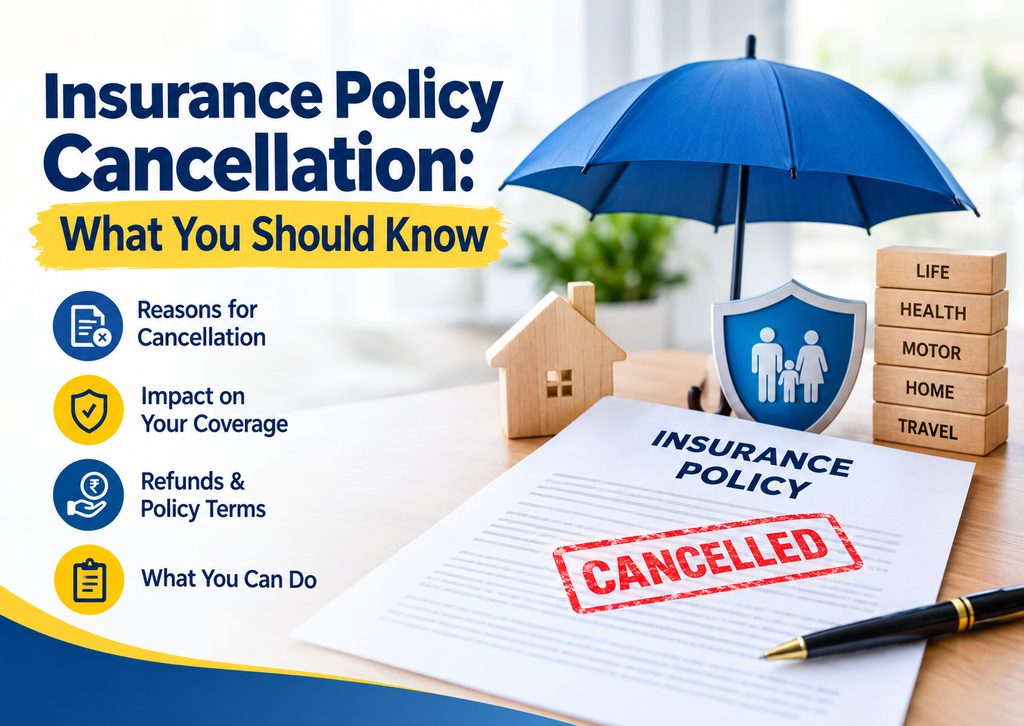
Can an Insurance Company Cancel a Policy?
An insurance company cannot necessarily cancel every policy whenever it chooses. Its rights depend on the type of insurance, the policy wording, the reason for cancellation, and the applicable legal and regulatory requirements.
For example, life insurance policies, health insurance policies, and motor insurance policies may be subject to different conditions. Policyholders should carefully review any cancellation notice to understand the stated reason, effective date, and available options.
If the cancellation appears unjustified or the explanation is unclear, the policyholder may have grounds to raise a complaint through the insurer’s grievance redressal process or another appropriate forum.
What Happens to Your Insurance Coverage After Cancellation?
Once a policy is cancelled or terminated, coverage may cease from the applicable effective date, subject to the policy terms and relevant rules. This can leave the policyholder financially exposed if an accident, illness, property loss, or other insured event occurs after coverage ends.
A cancelled motor insurance policy, for example, may leave the vehicle without the required insurance protection. Similarly, cancellation of a health insurance policy may affect access to coverage for future medical expenses.
The exact consequences depend on the policy type and the circumstances of cancellation. Policyholders should avoid assuming that coverage continues after receiving a cancellation notice.
Are You Entitled to a Premium Refund?
A premium refund may be available in some cancellation situations, but it is not guaranteed in every case. The amount, if any, depends on the policy terms, the reason for cancellation, the period of coverage already provided, and the applicable regulations.
Some policies may provide for a proportionate refund or other refund calculation, while different conditions may apply to other policies. Any outstanding premium, claim, or contractual condition may also affect the final amount.
Policyholders should review the cancellation terms and seek a clear explanation if the insurer’s refund calculation appears inconsistent with the applicable conditions.
Insurance Policy Cancellation and Claim Rejection
Policy cancellation and claim rejection are two different matters. Cancellation concerns the termination of insurance coverage, whereas claim rejection concerns the insurer’s decision not to pay a particular claim.
However, the two issues can sometimes be connected. For example, an insurer may question the validity of coverage when a claim is submitted, or a dispute may arise over the policy’s status on the date of the incident.
The relevant policy documents, cancellation notice, premium records, claim correspondence, and applicable terms can be important when understanding such disputes.
What If You Believe Your Policy Was Cancelled Unfairly?
An unexpected or disputed cancellation can cause considerable stress, particularly when a policyholder believes the policy was active or that the cancellation was not properly explained.
The circumstances should be examined in light of the policy wording, the insurer’s stated reasons, the communication history, and the applicable regulatory requirements. Depending on the nature of the dispute, the policyholder may be able to seek clarification, request reconsideration, or pursue the appropriate grievance redressal channel.
Conclusion
Insurance policy cancellation can have significant consequences for financial security, claim eligibility, and continuity of coverage. Understanding the cancellation terms, refund conditions, and insurer’s reasons is important for every policyholder.
If you are facing an insurance-related problem involving policy cancellation, disputed termination, premium refunds, or claim complications, Insurance Resolve can help you understand your concern and explore appropriate resolution options.
Insurance Resolve – We Resolve. You Relax.
Contact Insurance Resolve
- Website: https://insuranceresolve.com/
- Email: help@insuranceresolve.com
- WhatsApp / Contact No.: +91 9910352249

