

Comprehensive motor insurance is a type of motor insurance that provides broader financial protection for an insured vehicle compared with third-party-only insurance. Depending on the policy, it can provide coverage for damage to the insured vehicle as well as certain third-party liabilities.
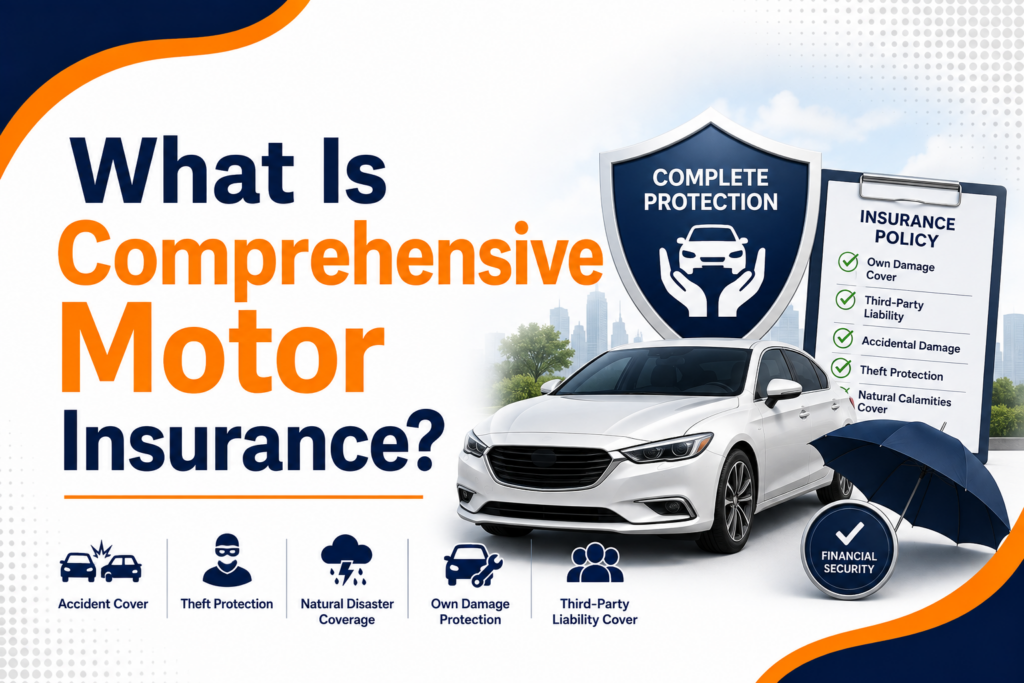
Comprehensive motor insurance can be relevant for cars, two-wheelers, and other eligible vehicles. The actual protection depends on the policy wording, selected coverage, exclusions, deductibles, limits, and applicable conditions.
What Is Comprehensive Motor Insurance?
Comprehensive motor insurance is a policy that generally combines own-damage protection with third-party liability coverage.
Own-damage coverage relates to specified loss or damage to the insured vehicle, while third-party liability coverage relates to specified legal liabilities arising from injury, death, or property damage caused to a third party.
The exact scope of coverage varies between insurance policies.
How Does Comprehensive Motor Insurance Work?
The policyholder pays a premium to the insurer for the selected coverage.
If the insured vehicle suffers damage or loss because of a covered event during the policy period, the policyholder may have a claim under the own-damage section of the policy.
The insurer assesses the circumstances, examines the damage and supporting information, and determines the amount payable according to the policy terms.
Third-party claims are assessed separately according to the nature of the liability and applicable legal and policy provisions.
What Does Comprehensive Motor Insurance Cover?
Depending on the policy, comprehensive motor insurance may provide protection against:
- Accidental damage to the insured vehicle.
- Theft of the insured vehicle.
- Fire-related damage.
- Lightning.
- Natural calamities such as floods, storms, or cyclones, where covered.
- Certain man-made events.
- Third-party liability.
- Other specified risks mentioned in the policy.
The presence and extent of each coverage depend on the individual insurance policy.
Own-Damage Coverage
One of the main features of comprehensive motor insurance is protection for the insured vehicle against specified risks.
Own-damage coverage can be relevant when the vehicle is damaged because of a covered accident, fire, natural event, theft, or another insured peril.
The insurer’s liability is subject to applicable deductibles, depreciation, policy limits, exclusions, and other conditions.
Third-Party Liability Coverage
Comprehensive motor insurance generally includes third-party liability protection as part of the motor insurance arrangement.
Third-party liability coverage relates to specified legal liabilities arising from injury, death, or property damage caused to another party by the insured vehicle.
The scope of third-party protection is governed by applicable law and policy provisions.
What Is Not Covered by Comprehensive Motor Insurance?
Comprehensive does not mean that every possible loss is covered.
Common exclusions or limitations may include:
- Normal wear and tear.
- Mechanical or electrical breakdown not covered by the policy.
- Driving without a valid licence.
- Certain prohibited or unlawful uses.
- Damage caused intentionally.
- Certain consequential losses.
- Losses outside the policy coverage.
- Depreciation or other deductions applicable to a claim.
- Other exclusions specified in the policy.
The exact exclusions vary between insurers and policies.
What Is IDV in Comprehensive Motor Insurance?
IDV, or Insured Declared Value, represents the insured value of the vehicle for certain claim-related purposes.
IDV can be particularly important in cases involving theft or total loss, subject to the policy terms and applicable valuation provisions.
The IDV is not necessarily the same as the amount a vehicle owner originally paid for the vehicle.
What Is a Deductible?
A deductible is an amount that the policyholder may be required to bear when a covered claim occurs.
Motor insurance may include different types of deductibles, depending on the policy.
The deductible can affect the final amount payable by the insurer.
What Is No Claim Bonus?
A No Claim Bonus (NCB) is a benefit that may be available to eligible policyholders who do not make certain claims during the applicable policy period.
NCB is generally associated with the own-damage portion of motor insurance and may provide a discount on the applicable premium at renewal, subject to the policy conditions.
Comprehensive Motor Insurance and Add-On Covers
Some insurers offer optional add-on covers that can extend or modify the protection available under a comprehensive motor insurance policy.
Depending on the insurer and product, add-ons may include features such as:
- Zero depreciation cover.
- Engine protection.
- Roadside assistance.
- Return-to-invoice protection.
- Consumables cover.
- Key protection.
- Other specialised benefits.
Add-ons are not automatically included in every comprehensive policy. Their availability and terms depend on the specific insurance product.
Comprehensive Motor Insurance Claims
When an insured vehicle suffers covered damage or loss, the policyholder may make a claim under the policy.
The insurer may assess:
- Cause of the incident.
- Vehicle damage.
- Policy coverage.
- Applicable exclusions.
- Deductibles.
- Depreciation.
- Repair or replacement costs.
- Policy limits.
- Other relevant information.
The final settlement amount depends on the applicable policy provisions and assessment of the covered loss.
Why Comprehensive Motor Insurance Claims May Be Rejected
A comprehensive motor insurance claim may be rejected when the circumstances do not fall within the policy coverage or when an exclusion or policy condition applies.
Possible factors include:
- The incident is excluded.
- The policy was not active.
- The vehicle was being used outside the permitted conditions.
- The driver did not meet applicable licence requirements.
- The reported damage is not consistent with the insured event.
- The loss is outside the policy coverage.
- Other applicable policy conditions were not satisfied.
The specific reason for rejection depends on the individual policy and circumstances.
Why Comprehensive Motor Insurance Claims May Be Partially Settled
A comprehensive motor insurance claim may be settled for less than the amount claimed.
Possible reasons include:
- Deductibles.
- Depreciation.
- Policy limits.
- Non-covered items.
- Exclusions.
- Repair cost assessment.
- Differences in valuation.
- Other policy conditions.
A partially settled claim means that the insurer has accepted some amount as payable rather than completely rejecting the claim.
Comprehensive Motor Insurance vs Third-Party Insurance
The main difference is the scope of protection.
Third-party insurance primarily provides protection against specified liabilities toward third parties.
Comprehensive motor insurance generally provides third-party liability protection along with broader protection for the insured vehicle against specified risks.
Comprehensive insurance therefore generally provides wider coverage, although the exact protection depends on the policy.
Importance of Understanding the Policy
A comprehensive policy may provide broad protection, but it still contains exclusions, deductibles, limits, conditions, and other restrictions.
Understanding these provisions helps vehicle owners know the extent of protection available and the circumstances in which a claim may be payable.
Insurance Resolve – Motor Insurance Claim & Complaint Solutions
Insurance Resolve helps policyholders understand motor insurance concerns, including claim rejection, claim delays, short-settled claims, insurance mis-selling, policy servicing issues, lapsed policies, and other insurance problems.
The objective is to provide greater clarity regarding insurance policies, claim decisions, and insurance-related concerns.
📞 Phone: +91 99103 52249
📧 Email: help@insuranceresolve.com
🌐 Website: www.insuranceresolve.com
Frequently Asked Questions (FAQs)
1. What is comprehensive motor insurance?
Comprehensive motor insurance generally provides protection for the insured vehicle against specified risks along with third-party liability coverage, subject to the policy terms.
2. What does comprehensive motor insurance cover?
Depending on the policy, it may cover accidental damage, theft, fire, natural calamities, certain man-made events, and third-party liabilities.
3. Does comprehensive insurance cover theft?
Yes, vehicle theft can generally be covered under comprehensive motor insurance, subject to the applicable policy terms and conditions.
4. Does comprehensive insurance cover accidental damage?
Yes. Accidental damage to the insured vehicle is generally one of the main components of comprehensive motor insurance, subject to the policy coverage.
5. Does comprehensive insurance cover natural disasters?
Many comprehensive policies provide coverage for specified natural events such as floods, storms, and cyclones. The exact coverage depends on the policy.
6. What is IDV in comprehensive motor insurance?
IDV stands for Insured Declared Value. It represents the insured value of the vehicle used for certain claim-related purposes, subject to the policy provisions.
7. What is a deductible in motor insurance?
A deductible is an amount that the policyholder may have to bear when a covered claim occurs. The applicable deductible depends on the policy.
8. What is No Claim Bonus?
No Claim Bonus is a benefit that may provide eligible policyholders with a discount on the applicable own-damage premium after a claim-free period, subject to the relevant conditions.
9. Can a comprehensive motor insurance claim be rejected?
Yes. A claim can be rejected when the circumstances are outside the coverage, an exclusion applies, or applicable policy conditions are not satisfied.
10. Can a comprehensive motor insurance claim be partially settled?
Yes. A claim may be partially settled because of deductibles, depreciation, policy limits, non-covered items, valuation differences, or other policy conditions.
11. Is comprehensive motor insurance the same as third-party insurance?
No. Third-party insurance primarily covers specified third-party liabilities, while comprehensive insurance generally combines third-party protection with own-damage coverage.
12. Can Insurance Resolve help with comprehensive motor insurance claims?
Insurance Resolve assists policyholders in understanding comprehensive motor insurance concerns, including claim rejection, claim delays, partial settlements, mis-selling, and service-related issues.
Conclusion
Comprehensive motor insurance provides broader protection than third-party-only insurance by generally combining third-party liability coverage with protection for the insured vehicle against specified risks.
Coverage may include accidental damage, theft, fire, natural calamities, and other insured events. However, comprehensive insurance does not mean unlimited coverage. Exclusions, deductibles, depreciation, policy limits, add-on conditions, and other provisions determine the actual protection available.
Understanding the terms and conditions of a comprehensive motor insurance policy provides vehicle owners with greater clarity about their coverage and potential claim settlement.

