

Insurance claims can sometimes lead to disagreements between policyholders and insurance companies. A claim may be rejected, delayed, partially settled, or disputed because of differences in how the policy terms and circumstances of the loss are interpreted.
The Insurance Ombudsman is an important mechanism in India for addressing certain complaints and disputes between policyholders and insurance companies. It provides an alternative forum for eligible insurance grievances, particularly where a policyholder has a complaint against an insurer or certain insurance-related entities.
Understanding the role of the Insurance Ombudsman helps policyholders become more aware of the available insurance grievance redressal framework.
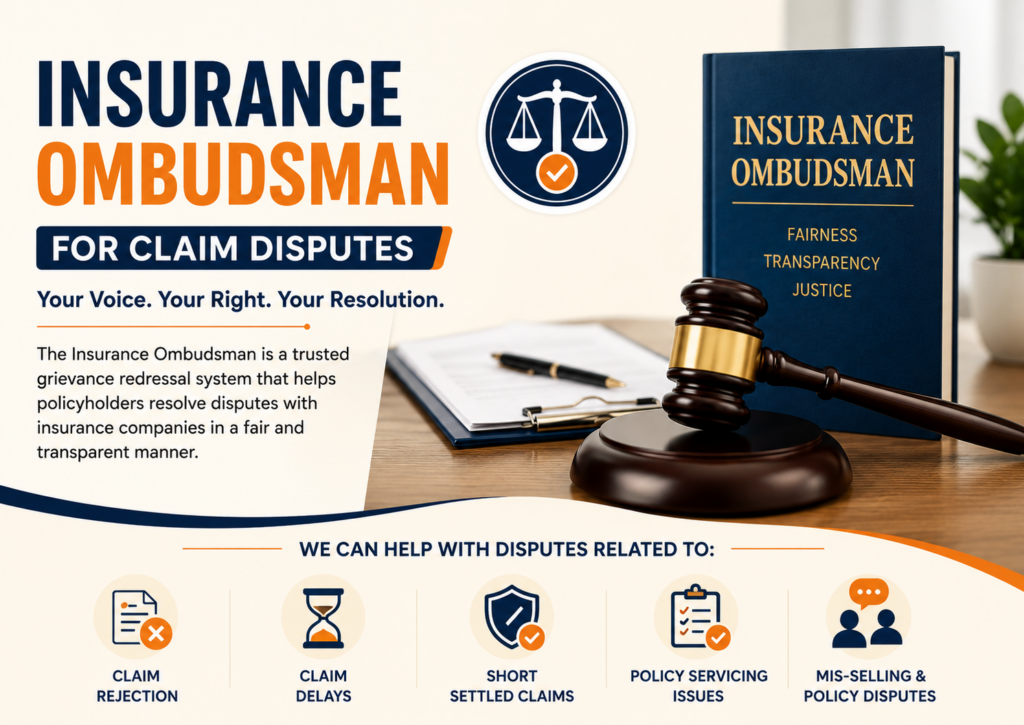
What Is an Insurance Ombudsman?
The Insurance Ombudsman is part of India’s insurance grievance redressal system. The Ombudsman mechanism provides a forum for resolving eligible complaints involving insurance policies and services.
The system is intended to provide policyholders with an accessible and relatively simple avenue for addressing certain disputes with insurers.
The Insurance Ombudsman mechanism operates under the applicable regulatory framework and rules governing insurance ombudsman services in India.
What Is the Role of the Insurance Ombudsman?
The Insurance Ombudsman deals with eligible complaints relating to insurance services and certain disputes between policyholders and insurers.
Its role can include matters involving:
- Claim rejection.
- Claim delays.
- Partial or short settlement of claims.
- Disputes regarding policy terms.
- Policy servicing issues.
- Premium-related concerns.
- Misrepresentation or mis-selling-related complaints.
- Other eligible insurance grievances.
The exact matters that can be considered depend on the applicable rules and jurisdiction.
Insurance Ombudsman and Claim Disputes
Claim disputes are among the important types of insurance grievances that may come before the Ombudsman mechanism.
A policyholder may have concerns when an insurer:
- Rejects an insurance claim.
- Delays a claim decision.
- Settles a claim for an amount lower than expected.
- Disputes the interpretation of policy coverage.
- Applies an exclusion that the policyholder believes does not apply.
- Disputes the amount payable under the policy.
The Ombudsman mechanism provides a forum for eligible disputes to be considered according to the applicable framework.
Claim Rejection and the Insurance Ombudsman
A claim rejection means that the insurer has declined liability for the claim.
The reason for rejection may relate to policy exclusions, coverage limitations, policy conditions, documentation, disclosure issues, or other circumstances.
Where an eligible dispute remains between the policyholder and insurer, the Insurance Ombudsman mechanism can provide an avenue for consideration of the complaint under the applicable rules.
Short-Settled Insurance Claims
A short-settled claim occurs when an insurer accepts liability for a claim but pays an amount lower than the amount claimed or expected by the policyholder.
Disagreements may arise regarding:
- Valuation of the loss.
- Depreciation.
- Policy limits.
- Deductibles.
- Exclusions.
- Assessment of damage.
- Interpretation of policy terms.
Eligible disputes concerning claim settlement can fall within the scope of insurance grievance mechanisms, including the Ombudsman framework where applicable.
Delayed Insurance Claims
Claim delays can create financial difficulties for policyholders, particularly when the claim relates to property damage, business losses, motor vehicle damage, or other significant expenses.
A delay may occur for different reasons, including assessment requirements, document verification, investigation, or disputes regarding coverage.
Where a policyholder has an eligible grievance regarding the insurer’s handling of a claim, the Insurance Ombudsman framework may be relevant.
What Types of Insurance Complaints Can the Ombudsman Consider?
The Ombudsman mechanism can consider eligible complaints relating to various insurance matters.
Depending on the applicable rules, these may include:
Insurance Claim Disputes
Disagreements concerning the settlement, rejection, or handling of an insurance claim.
Policy Servicing Complaints
Concerns relating to services provided by an insurance company in connection with an insurance policy.
Premium-Related Issues
Certain disputes concerning premiums, policy charges, or related matters may fall within the applicable grievance framework.
Mis-Selling or Misrepresentation
Complaints involving allegations that an insurance policy was incorrectly represented, mis-sold, or materially misrepresented may be considered where they fall within the applicable jurisdiction.
Policy Terms and Conditions
Disagreements regarding the interpretation or application of policy provisions can also form part of eligible insurance grievances.
Which Insurance Policies Can Be Involved?
Insurance Ombudsman complaints can relate to different categories of insurance, depending on the applicable rules and jurisdiction.
These may include:
- General insurance.
- Health insurance.
- Life insurance.
- Personal accident insurance.
- Property-related insurance.
- Motor insurance.
- Commercial insurance.
- Other eligible insurance products.
The specific jurisdiction and eligibility depend on the applicable regulations and circumstances.
What Is the Difference Between an Insurance Company and the Insurance Ombudsman?
An insurance company provides insurance coverage and is responsible for assessing and settling claims according to the policy.
The Insurance Ombudsman is part of the grievance redressal framework and provides an independent forum for eligible disputes between policyholders and insurers.
The Ombudsman does not function as an insurance company and does not issue insurance policies.
Is the Insurance Ombudsman a Court?
The Insurance Ombudsman is not the same as a conventional court.
It is a specialised insurance grievance redressal mechanism established to provide an alternative forum for eligible insurance complaints.
The proceedings and powers of the Ombudsman are governed by the applicable insurance ombudsman rules and regulatory framework.
Why Is the Insurance Ombudsman Important?
Insurance disputes can sometimes become complicated because policies contain detailed terms, exclusions, limits, conditions, and definitions.
The Ombudsman mechanism provides policyholders with a specialised forum for eligible grievances without making every dispute dependent on conventional litigation.
It is an important part of the broader insurance consumer protection and grievance redressal system.
Limitations of the Insurance Ombudsman
The Ombudsman mechanism does not necessarily apply to every insurance dispute.
Eligibility can depend on factors such as:
- The nature of the complaint.
- The type of insurance policy.
- The parties involved.
- Applicable jurisdiction.
- The value or nature of the dispute.
- Whether the complaint meets the applicable requirements.
Therefore, not every disagreement between a policyholder and insurer automatically falls within the Ombudsman’s jurisdiction.
Insurance Ombudsman and Insurance Claim Settlement
The Ombudsman mechanism can be particularly relevant where a policyholder believes that an insurer has not handled a claim appropriately.
Examples can include:
- Claim rejection disputes.
- Claim settlement disputes.
- Short-settlement concerns.
- Claim delay complaints.
- Disagreements regarding policy coverage.
- Disputes concerning exclusions.
- Other eligible claim-related grievances.
The consideration of a dispute depends on the applicable rules and the facts of the particular case.
Insurance Resolve – Insurance Claim & Complaint Solutions
Insurance Resolve helps policyholders understand insurance-related concerns, including claim rejection, claim delays, short-settled claims, insurance mis-selling, lapsed policies, service issues, policy disputes, and insurance grievance-related matters.
The objective is to provide greater clarity regarding insurance policies, claim decisions, and insurance-related concerns.
📞 Phone: +91 99103 52249
📧 Email: help@insuranceresolve.com
🌐 Website: www.insuranceresolve.com

