

When choosing motor insurance, two common options are Comprehensive Motor Insurance and Third-Party Motor Insurance. Both provide important protection, but their coverage is different.
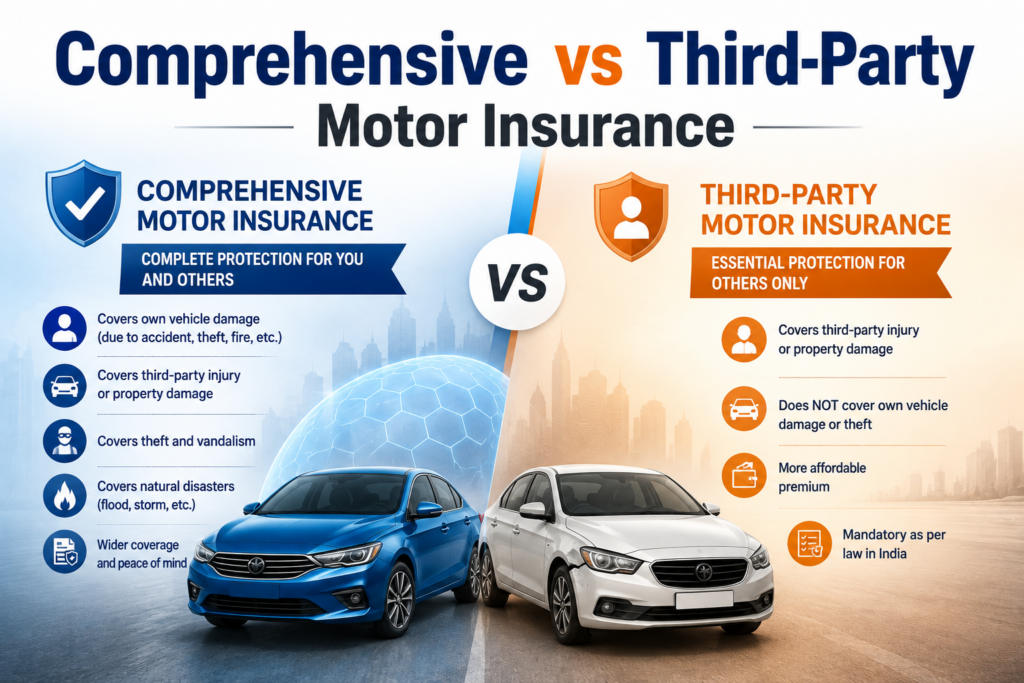
Third-party motor insurance mainly protects against certain legal liabilities arising from injury, death, or property damage caused to another person. Comprehensive motor insurance generally provides broader protection by combining third-party liability coverage with cover for specified damage to the insured vehicle.
Understanding the difference between comprehensive and third-party motor insurance can help vehicle owners better understand the protection available under their policy.
What Is Third-Party Motor Insurance?
Third-party motor insurance provides financial protection against specified legal liabilities caused by the insured vehicle to a third party.
It can cover eligible liabilities relating to:
- Third-party bodily injury
- Third-party death
- Third-party property damage
Third-party insurance generally does not cover damage to the policyholder’s own vehicle.
In India, applicable third-party motor insurance is legally required for vehicles used on public roads, subject to applicable laws and regulations.
What Is Comprehensive Motor Insurance?
Comprehensive motor insurance generally combines third-party liability coverage with protection against specified risks affecting the insured vehicle.
Depending on the policy, it may cover own-vehicle losses resulting from:
- Accidents
- Theft
- Fire
- Natural calamities
- Certain man-made events
- Other specified risks
The exact coverage depends on the policy wording, exclusions, deductibles, and applicable conditions.
Comprehensive vs Third-Party Motor Insurance
| Feature | Third-Party Insurance | Comprehensive Insurance |
|---|---|---|
| Third-party liability | Yes | Yes |
| Third-party property damage | Yes, subject to applicable terms | Yes, subject to applicable terms |
| Own vehicle accident damage | Generally not covered | Generally covered for specified risks |
| Theft of own vehicle | No | Generally covered |
| Fire damage to own vehicle | No | Generally covered |
| Natural calamity damage | No for own vehicle | Generally covered |
| Coverage level | Basic | Broader |
Which Motor Insurance Provides More Coverage?
Comprehensive motor insurance generally provides broader protection because it combines third-party liability coverage with specified own-damage protection.
Third-party insurance is primarily focused on liabilities toward other people and their property.
However, broader coverage usually comes with a higher premium, and comprehensive insurance still contains exclusions and policy limits.
Does Comprehensive Insurance Cover Everything?
No. The word “comprehensive” does not mean that every possible loss is covered.
A comprehensive motor insurance policy can contain exclusions relating to:
- Normal wear and tear
- Mechanical or electrical breakdown in certain circumstances
- Driving without a valid licence
- Certain prohibited uses of the vehicle
- Intentional damage
- Policy exclusions
- Deductibles and applicable limits
The exact exclusions depend on the policy.
Comprehensive Insurance and Add-On Covers
Comprehensive motor insurance may also allow certain optional add-on covers.
Depending on the insurer and policy, these can include features such as zero depreciation, engine protection, roadside assistance, return-to-invoice, and other additional benefits.
Add-ons are separate from the basic coverage and may involve additional premium and specific conditions.
Third-Party vs Comprehensive: Cost Difference
Third-party motor insurance is generally less expensive because its coverage is more limited.
Comprehensive insurance generally costs more because it can also provide protection for the insured vehicle against specified risks.
The actual premium depends on factors such as the vehicle, location, age, insured value, coverage, deductibles, and applicable pricing.
Insurance Resolve – Motor Insurance Solutions
Insurance Resolve helps policyholders understand motor insurance concerns, including claim rejection, claim delays, short-settled claims, insurance mis-selling, policy disputes, service issues, and other insurance problems.
📞 Phone: +91 99103 52249
📧 Email: help@insuranceresolve.com
🌐 Website: www.insuranceresolve.com
Frequently Asked Questions
What is the difference between comprehensive and third-party insurance?
Third-party insurance mainly covers specified liabilities toward other people, while comprehensive insurance generally includes third-party liability along with specified protection for the insured vehicle.
Is comprehensive motor insurance mandatory?
Third-party motor insurance is legally required for applicable vehicles on public roads. Comprehensive insurance is generally not mandatory, but it provides broader protection for the insured vehicle.
Does third-party insurance cover my own car damage?
Generally, no. Third-party insurance primarily covers specified liabilities toward third parties.
Does comprehensive insurance cover theft?
Generally, comprehensive policies include theft protection for the insured vehicle, subject to the policy terms and conditions.
Is comprehensive insurance more expensive than third-party insurance?
Generally, yes. Comprehensive insurance provides broader coverage and therefore usually has a higher premium than basic third-party insurance.
Does comprehensive insurance cover natural calamities?
It can cover specified natural calamity-related damage to the insured vehicle, subject to the policy terms, exclusions, and conditions.
Conclusion
The main difference between comprehensive and third-party motor insurance is the scope of protection. Third-party insurance primarily protects against specified liabilities toward other people and their property, while comprehensive motor insurance generally provides broader protection that also includes specified risks affecting the insured vehicle.
The right type of coverage depends on the vehicle owner’s requirements, budget, risk exposure, and desired level of protection. Regardless of the policy type, understanding its coverage, exclusions, limits, and conditions is important.

