

Insurance complaints can arise when a policyholder is dissatisfied with a claim decision, delayed settlement, policy service, premium issue, mis-selling, or another insurance-related matter. While many complaints are resolved through the insurer’s grievance process, some remain unresolved for an extended period.
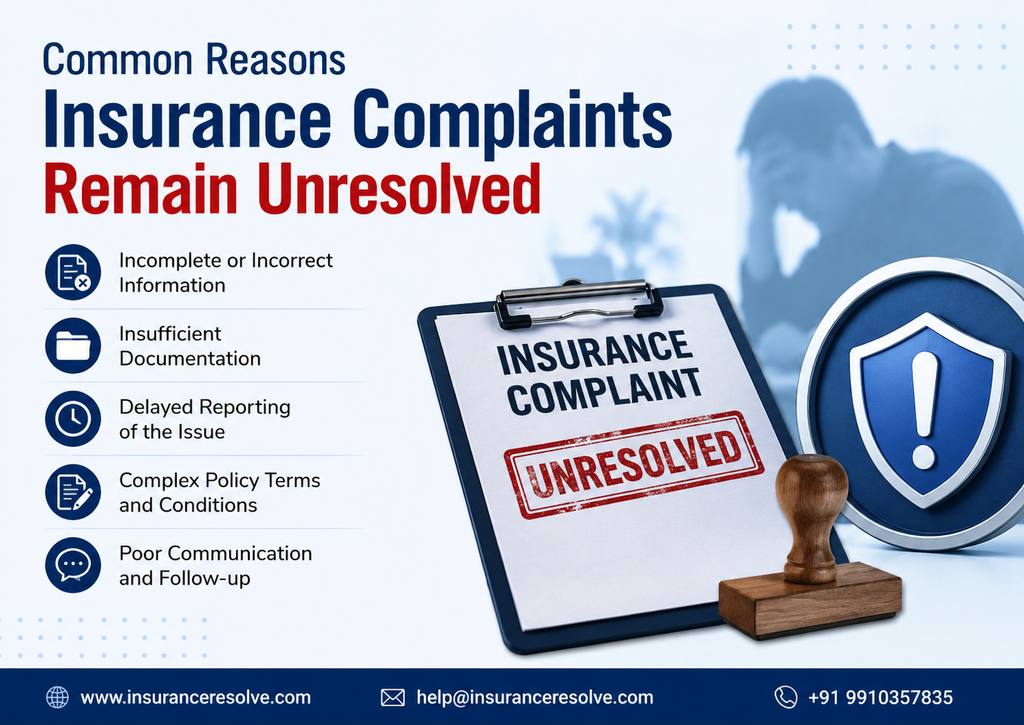
An unresolved complaint does not always mean that the insurer has acted incorrectly. In many cases, the issue may involve incomplete information, disagreement about policy terms, or differences in how the matter is assessed.
Lack of Clear Communication
One common reason an insurance complaint remains unresolved is poor or incomplete communication between the policyholder and the insurer.
A policyholder may not receive a clear explanation about the status of a complaint, the reason for a particular decision, or the information required to address the issue.
When communication is unclear, the same issue can continue without reaching a satisfactory resolution.
Disagreement Over Policy Terms
Insurance policies contain specific terms, conditions, exclusions, limits, and definitions.
A complaint may remain unresolved when the policyholder believes a particular loss or benefit is covered, while the insurer interprets the policy differently.
Such disagreements can require a closer examination of the actual policy wording and the circumstances of the case.
Claim Assessment Disputes
Sometimes the insurer accepts that a loss has occurred but disagrees with the amount claimed by the policyholder.
This can happen because of differences in valuation, depreciation, deductibles, underinsurance, repair costs, or assessment of the actual loss.
A disagreement over the amount payable can therefore continue even when the underlying claim itself is not completely rejected.
Missing or Incomplete Information
Insurance complaints may also remain pending when relevant information or supporting documents are unavailable or incomplete.
The insurer may require additional records to assess the complaint or claim, while the policyholder may believe that enough information has already been provided.
This can create delays and repeated requests for information.
Mis-Selling Disputes
Complaints relating to insurance mis-selling can be more complicated because they may involve a difference between what was represented during the sale and what is written in the policy.
For example, a policyholder may state that a product was presented as providing guaranteed returns or particular coverage, while the policy document contains different terms.
Resolving such a dispute may depend on the available evidence regarding the sales representation and the actual policy conditions.
Policy Exclusions
Another common source of disagreement is the application of policy exclusions.
A policyholder may expect a particular event to be covered, but the insurer may determine that an exclusion applies.
Whether the exclusion is applicable can sometimes become the central issue in a complaint.
Delays in Grievance Handling
A complaint may remain unresolved simply because the grievance process takes longer than expected.
Internal review, claim investigation, document verification, communication between departments, or other administrative processes can contribute to delays.
However, prolonged or unexplained delays can themselves become a source of concern for the policyholder.
Difference Between Complaint and Claim
Sometimes a policyholder raises a complaint about a claim without clearly distinguishing the underlying claim issue from the grievance about how the claim has been handled.
For example, the original issue may be a claim amount, while the complaint may concern the delay in receiving a decision.
Understanding the difference between the two can help clarify what exactly needs to be resolved.
Lack of a Clear Resolution
A complaint may remain unresolved when the insurer provides a response but does not adequately address the main concern raised by the policyholder.
For example, a generic response may explain the policy terms without directly addressing why a particular deduction, rejection, delay, or service decision occurred.
This can lead to further disagreement even though a formal response has been issued.
Understanding Unresolved Insurance Complaints
An unresolved insurance complaint can result from many different factors, including communication gaps, policy interpretation, claim assessment differences, documentation issues, exclusions, mis-selling concerns, and delays in grievance handling.
The nature of each complaint is different. Understanding the policy wording, the insurer’s explanation, the relevant documents, and the specific issue being disputed is important when evaluating why a complaint remains unresolved.
Conclusion
Insurance complaints do not always remain unresolved because an insurer simply refuses to address them. Many cases involve differences in policy interpretation, claim valuation, documentation, communication, or the application of exclusions and conditions.
For policyholders, understanding the reason behind an unresolved complaint is an important part of understanding the dispute itself. A clear distinction between the original insurance issue and the grievance surrounding it can also make the nature of the complaint easier to understand.

